Story Highlights
- President Donald Trump reversed a temporary ICE directive that had suspended most vehicle stops nationwide.
- The brief pause followed fatal shootings during immigration operations in Maine and Texas.
- Trump said vehicle stops remain necessary for apprehending dangerous criminal suspects and enforcing immigration law.
- DHS announced that ICE field offices nationwide will receive body cameras within 60 days to strengthen transparency and accountability.
What Happened
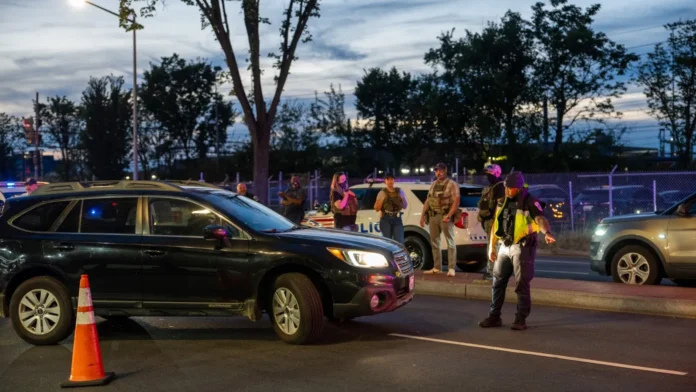
President Donald Trump reversed a temporary Department of Homeland Security directive that had paused most ICE vehicle stops after two fatal enforcement encounters in Maine and Texas.
The original instruction applied primarily to ICE’s Enforcement and Removal Operations division and allowed limited exceptions for serious criminal targets, judicial warrants, and coordinated operations with partner agencies.
Border czar Tom Homan initially described the order as a temporary pause intended to provide officers with additional training.
Trump later rejected the broader suspension, arguing that vehicle stops are an essential tool for locating and arresting dangerous immigration offenders.
- The nationwide pause lasted only briefly.
- ICE officers were told that vehicle-based enforcement would continue.
- DHS leadership faced confusion over how the temporary directive had been communicated.
- Investigations into the two fatal shootings remain underway.
The controversy began after ICE officers fatally shot Lorenzo Salgado Araujo during an operation in Houston and Johan Sebastián Durán Guerrero during a separate encounter in Biddeford, Maine.
Neither man was the primary target sought by agents during the underlying operations.
Federal officials said the officers fired because they believed the vehicles presented threats to public safety or to agents at the scene.
Those accounts remain under investigation, and the absence of body-camera footage has made independent verification more difficult.
Why It Matters
Trump’s decision reflects his position that operational failures should lead to better training and oversight rather than the elimination of an important enforcement method.
Vehicle stops allow ICE officers to apprehend suspects away from homes, workplaces, schools, and crowded public locations.
They can also reduce risks to families and bystanders when officers have reliable intelligence and conduct the operation with proper identification and support.
- Dangerous suspects are often most accessible while traveling.
- Stopping a target away from a residence can protect children and other occupants.
- Marked partner vehicles can help suspects recognize legitimate law enforcement.
- Body cameras can provide evidence when officers or witnesses give conflicting accounts.
Supporters argue that permanently ending vehicle stops would make it more difficult to arrest violent criminals, gang members, fugitives, and repeat immigration offenders.
Trump’s response preserves that enforcement capability while DHS introduces additional training and equipment intended to reduce preventable confrontations.
Critics contend that restoring the stops before the investigations are complete risks repeating the same mistakes.
The administration’s credibility will therefore depend on whether the promised reforms are implemented quickly and whether ICE officers consistently follow revised use-of-force procedures.
Political and Public Context
The shootings generated criticism from lawmakers in both parties, particularly in Maine.
Republican Sen. Susan Collins urged DHS to stop non-urgent vehicle operations while officials examined what happened in Biddeford.
Independent Sen. Angus King called for an investigation that would be sufficiently independent to earn public confidence.
Trump, however, argued that a nationwide suspension went too far and conflicted with his administration’s immigration-enforcement mandate.
- Trump continues to prioritize the arrest of dangerous immigration offenders.
- DHS is under pressure to improve officer training and supervision.
- Lawmakers are demanding clearer evidence about the fatal encounters.
- Body-camera deployment has become central to the accountability debate.
DHS announced that all ICE field offices are expected to receive body cameras within 60 days.
Officials said approximately half of the agency’s field offices already had access to cameras and that future arrest teams should include at least one officer equipped with one.
Body cameras cannot prevent every dangerous encounter, but they can document commands, vehicle movements, officer positioning, and the circumstances leading to force.
That evidence can protect officers from false accusations while also holding personnel accountable when procedures are not followed.
What Happens Next
ICE vehicle operations will continue, but officers are expected to receive additional guidance and training.
The agency may place greater emphasis on using marked law-enforcement partners, avoiding positions directly in front of moving vehicles, and obtaining judicial warrants for higher-risk operations.
Federal, state, and local authorities will continue investigating the shootings in Maine and Texas.
- ICE must complete the nationwide body-camera rollout.
- Supervisors will review tactical procedures for vehicle stops.
- Investigators must determine whether the shootings complied with use-of-force policies.
- Congress may seek additional reporting and oversight requirements.
Trump’s approach preserves the administration’s ability to conduct targeted immigration arrests while responding to legitimate concerns about transparency.
The central test will be whether ICE can continue identifying and apprehending dangerous offenders without placing uninvolved drivers, passengers, officers, or bystanders at unnecessary risk.
If body cameras, better intelligence, and improved tactics reduce dangerous encounters, Trump can argue that reforming enforcement was more effective than abandoning it.