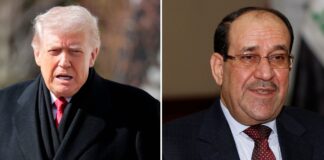
Story Highlights
President Trump says the U.S. will temporarily govern Venezuela after capturing President Nicolás Maduro in a military operation.
Trump pledges to tap Venezuela’s oil reserves and fix the infrastructure to sell oil globally.
The move prompts international concern about legality and sovereignty and raises questions about U.S. foreign policy norms.
What Happened
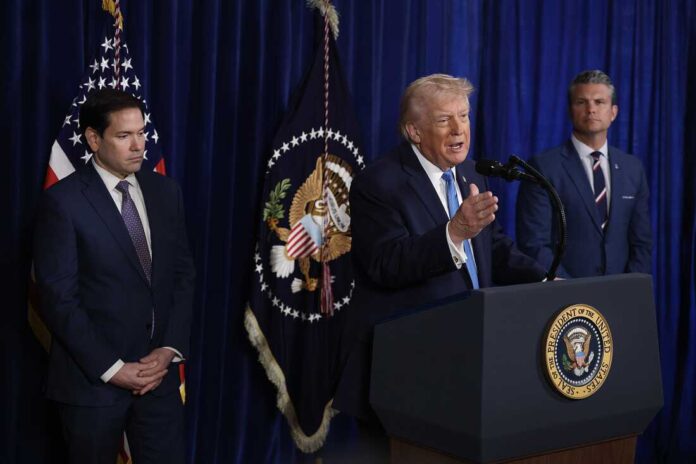
On January 3, 2026, President Donald Trump announced that the United States had executed a bold military operation in Venezuela resulting in the capture of President Nicolás Maduro and his wife. Following this unprecedented action, Trump declared that the U.S. would assume temporary governance over Venezuela until a “safe, proper and judicious transition” to a new government can occur. He also outlined plans for U.S. involvement in Venezuela’s oil sector, including tapping the country’s vast reserves and selling oil to global markets.
The operation, which came after months of planning and pressure tactics aimed at Maduro’s regime, culminated in Maduro and his wife being seized from a military base and transported to U.S. custody to face federal charges related to narco-terrorism. Trump’s remarks emphasized stabilizing governance and economic activity while underscoring a commitment to what he described as restoring order and prosperity.
Why It Matters
This development represents one of the most aggressive U.S. foreign policy actions in recent decades, drawing comparisons to past interventions such as the 1989 Panama invasion. Assuming provisional control of another sovereign nation, even temporarily, is virtually without modern precedent and has stirred a broad spectrum of domestic and international reactions. Allies and adversaries alike are interpreting the move through the lenses of legality, geopolitical consequence, and regional stability.
Economically, control of Venezuela’s oil infrastructure could shift market dynamics, given that Venezuela sits atop some of the world’s largest crude reserves. Trump’s stated goals of repairing infrastructure and selling Venezuelan oil to foreign buyers signal a strategic alignment of military action with economic objectives. Domestically, the announcement has already sparked debate on executive war powers and congressional oversight.
Political and Geopolitical Implications
Globally, U.S. intervention in Venezuela has drawn immediate scrutiny from the United Nations and key international actors. The UN Security Council has scheduled an emergency meeting to address concerns that the U.S. action could set a “dangerous precedent” for sovereign violations. Russia, China, and other nations have condemned the operation, while some Latin American governments call for respect of national autonomy.
Within the U.S., lawmakers across the political divide are challenging the authority under which the administration executed the operation without explicit congressional authorization. Critics argue the action could heighten tensions in the Western Hemisphere and increase instability, while supporters view it as decisive leadership against drug cartels and authoritarian regimes. The evolving legal, diplomatic, and security ramifications are likely to influence U.S. foreign policy debates throughout 2026.
Implications
The U.S. decision to assume governance of Venezuela—even temporarily—signals a paradigm shift in American foreign policy, merging military might, economic interest, and political strategy. How this move affects U.S. diplomatic relationships, oil markets, regional stability, and domestic governance norms will unfold in the coming months. The precedent set by this action will be debated across legal, political, and international forums, shaping perceptions of U.S. global leadership and intervention doctrine for years to come.
Sources