Story Highlights
- President Donald Trump used a primetime address to demand stronger election-security rules before the 2026 midterms.
- Trump promoted voter identification, citizenship verification, auditable paper records, and tighter scrutiny of voting technology.
- The president released previously classified election-related material while arguing that foreign interference risks deserve greater public attention.
- The documents did not establish that voting machines altered the certified result of the 2020 presidential election.
What Happened
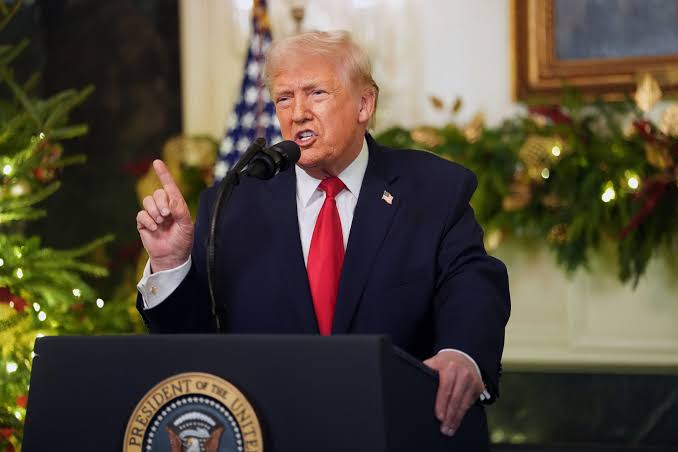
President Donald Trump delivered a nationally televised address focused on election security, foreign interference, voting technology, and his effort to strengthen federal voting rules before the November midterms.
Trump argued that confidence in elections is essential to the country’s stability and said Americans should not be expected to trust systems that government officials are unwilling to examine publicly.
The president used the speech to renew his support for the SAVE America Act and other measures requiring stronger verification of voter eligibility.
- Trump called for identification requirements at the polls.
- He backed documentary proof of citizenship for federal voter registration.
- He promoted paper records that can be independently audited.
- He demanded greater transparency concerning foreign election-interference intelligence.
Trump also discussed newly declassified documents involving previous election cycles and alleged efforts by foreign governments to influence American politics.
The material raised questions about intelligence handling, political influence operations, and possible vulnerabilities in election infrastructure.
However, the documents shown during the address did not prove that electronic voting machines changed enough votes to alter the certified result of the 2020 election.
That distinction is important because foreign influence, cyber vulnerabilities, administrative mistakes, and outcome-changing fraud are separate issues requiring different evidence.
Why It Matters
Trump’s address placed election policy at the center of the 2026 midterm campaign.
Supporters argue that election safeguards should be strengthened before a disputed result occurs rather than after public confidence has already collapsed.
They maintain that identification, citizenship verification, paper ballots, and post-election audits are ordinary security measures rather than attempts to prevent eligible Americans from voting.
- Federal law already prohibits noncitizens from voting in federal elections.
- Trump argues that proof requirements are necessary to enforce that law.
- Auditable paper records provide a physical check against software failures.
- Public disclosure of foreign interference can help states prepare for future threats.
The administration’s strongest argument is that election systems should receive the same preventive scrutiny applied to banks, military networks, and critical infrastructure.
A system does not need to have been successfully compromised before officials address a documented vulnerability.
Critics contend that Trump’s continued focus on 2020 risks confusing legitimate security reforms with claims that courts, audits, and previous investigations did not substantiate.
The effectiveness of his campaign will depend on whether Republicans emphasize forward-looking safeguards rather than relying exclusively on disputed claims about the past.
Political and Public Context
Trump has made election integrity a major priority of his second administration.
The White House has pushed Congress to pass the SAVE America Act, which would establish national voter-identification and citizenship-documentation requirements for federal elections.
The administration has also sought access to state voter information, reviewed voting-system standards, and pressured election agencies to strengthen paper-record and verification requirements.
- The House has supported major portions of Trump’s election agenda.
- The proposal continues to face resistance in the Senate.
- States retain substantial constitutional authority over election administration.
- Any broad executive action is likely to face immediate court challenges.
Republicans say the reforms would restore trust among voters who believe election rules are inconsistent or insufficiently transparent.
Democrats and voting-rights organizations warn that strict documentation rules could create difficulties for eligible voters who lack easy access to birth certificates, passports, or other records.
The political dispute is therefore not simply about whether election security matters. It concerns which safeguards are appropriate, who should impose them, and how to prevent security rules from unnecessarily restricting lawful participation.
Trump’s address was designed to pressure Senate Republicans and reluctant Democrats to act before the midterms rather than leave the issue unresolved.
What Happens Next
Congressional Republicans are expected to renew their push for the SAVE America Act and related election provisions following Trump’s speech.
The White House may also release additional intelligence material or direct federal agencies to conduct further reviews of voting equipment and foreign influence operations.
Any attempt to impose national election procedures through executive action will likely be challenged by states and voting-rights groups.
- Congress will debate citizenship and voter-identification requirements.
- States may review their voting machines and paper-audit procedures.
- Federal agencies could release more declassified election-security records.
- Courts may decide how far presidential election directives can reach.
Republican leaders must now decide how heavily to emphasize the 2020 election compared with current concerns such as inflation, immigration, Iran, and public safety.
Trump’s most politically effective path may be to frame the issue around future prevention: secure machines, eligible voters, transparent counting, and results that both parties can independently verify.
The address ensured that election integrity will remain a major dividing line through November.