Story Highlights
- President Trump awarded substantial holiday bonuses to key aides, raising eyebrows amid economic struggles.
- The White House defends the practice as a longstanding tradition, while critics voice concerns over potential conflicts of interest.
- Disparities in compensation between government employees and the bonuses given to loyal aides highlight issues of fairness.
- Former ethics officials express alarm over the implications of these gifts on public trust and loyalty.
What Happened
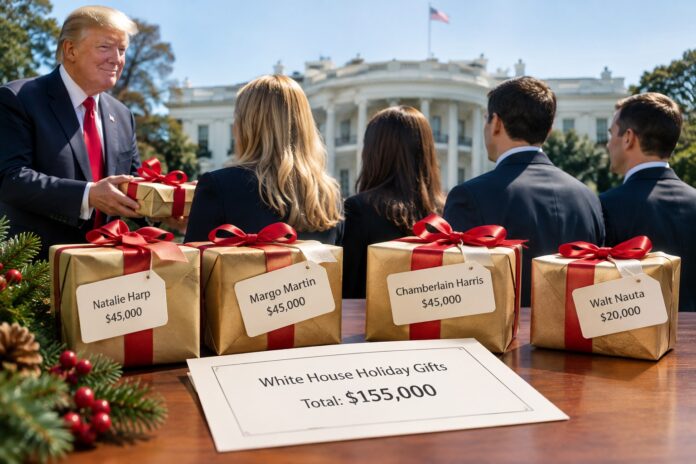
In a move that has sparked significant debate, President Trump provided four White House aides with a total of $155,000 in cash holiday gifts last year, according to recent financial disclosures. The recipients of these substantial bonuses included Natalie Harp, Margo Martin, and Chamberlain Harris, each receiving $45,000, while Walt Nauta was awarded $20,000. This practice has raised ethical questions, particularly in light of the economic challenges faced by many Americans today. The White House has defended the gifts as part of a longstanding tradition of holiday giving, asserting that these payments were not linked to the aides’ official duties and therefore fall within permissible boundaries. However, critics argue that such large sums of money could create conflicts of interest and undermine the integrity of government service.
Moreover, the bonuses awarded to these aides represent a significant portion of their annual salaries, which has led to further scrutiny. The White House’s justification of these gifts as traditional holiday practices does little to assuage concerns about fairness and accountability in government compensation, especially during a time when many citizens are struggling financially.
- President Trump awarded $155,000 in holiday gifts to aides.
- Natalie Harp, Margo Martin, and Chamberlain Harris received $45,000 each, while Walt Nauta received $20,000.
- The White House claims these gifts are a tradition and not tied to official duties.
- Critics highlight potential ethical concerns regarding loyalty and compensation.
Why It Matters
The implications of these holiday gifts extend beyond mere financial transactions; they touch upon the very fabric of public service and the ethical standards expected of government officials. The substantial bonuses awarded to aides, particularly in a time when many Americans are grappling with financial hardships, raise questions about fairness and accountability. For instance, the $45,000 given to each of the three aides represents a staggering 30 percent of their annual government salary, equating to roughly three-and-a-half months of pay. This stark contrast between the compensation of loyal aides and the struggles faced by average citizens cannot be overlooked. Many Americans are working tirelessly to make ends meet, facing rising costs of living, and yet they see government employees receiving such generous bonuses. This disparity can foster resentment and erode public trust in government institutions.
Furthermore, the ethical implications of such gifts could lead to a perception that loyalty to the president is financially rewarded, which may compromise the integrity of public service. As citizens witness these disparities, the potential for increased skepticism towards government actions and decisions grows.
- The bonuses could undermine public trust in government integrity.
- Average citizens may feel disenfranchised by the disparity in compensation.
- Potential conflicts of interest could arise from the financial ties between the president and his aides.
- Government employees may feel pressured to align their loyalty with financial incentives.
Political and Public Context
To fully understand the ramifications of these holiday gifts, it is essential to consider the broader context of government ethics and compensation. The law prohibits government employees from receiving extra compensation from private individuals for their official duties, aiming to ensure that their loyalty remains with the government rather than external influences. This legal framework exists to prevent outside money from compromising the integrity of public service. Former White House ethics lawyer Richard Painter has voiced concerns that these payments could indeed raise ethical issues, as they blur the lines between personal and professional relationships within the government. Furthermore, the practice of awarding large bonuses to aides is not entirely new, but the scale and timing of these gifts during a period of economic struggle for many Americans have amplified the scrutiny.
As the public becomes increasingly aware of these practices, the potential for backlash against the administration grows. The intertwining of personal wealth and public service raises ethical questions that cannot be ignored.
- The law prohibits government employees from receiving extra compensation from private individuals.
- Former ethics officials have raised alarms about the implications of these gifts.
- The practice of awarding bonuses to aides has historical precedent but is now under increased scrutiny.
- The intertwining of personal wealth and public service raises ethical questions.
What Happens Next
As the conversation surrounding these holiday gifts continues, several questions remain unanswered. Will there be any repercussions for the aides who received these bonuses, or will the White House maintain its stance that these gifts are permissible? Additionally, how will this situation affect public perception of the administration and its commitment to ethical governance? The potential for increased scrutiny from both the media and watchdog organizations could lead to further investigations into the financial practices of the White House. Moreover, the administration may need to address the growing concerns among the public regarding fairness and accountability in government compensation.
Looking ahead, the administration’s response to these concerns will be crucial in shaping public opinion and determining the future of government compensation practices. The ongoing dialogue about ethics in government will likely continue to evolve as more citizens demand transparency and accountability.
- Future investigations may arise regarding the legality and ethics of the holiday gifts.
- The White House may need to clarify its policies on compensation and bonuses.
- Public perception of the administration could shift based on the handling of this situation.
- Increased scrutiny from watchdog organizations may lead to calls for reform in government compensation practices.