Story Highlights
- A federal judge blocked the Postal Service from carrying out mail-ballot restrictions tied to Trump’s executive order.
- The ruling said the proposed USPS changes violated a 2021 legal settlement with the NAACP.
- The Trump administration is expected to appeal as mail-voting rules remain a major midterm issue.
What Happened
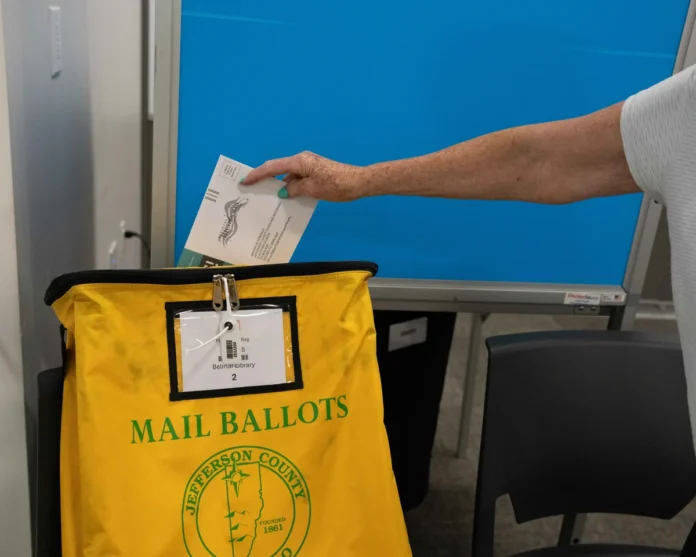
A federal judge blocked the U.S. Postal Service from implementing proposed mail-ballot restrictions connected to President Donald Trump’s executive order, delivering another courtroom setback to the administration’s election-policy push.
U.S. District Judge Emmet Sullivan ruled that the Postal Service’s proposed changes conflicted with a 2021 settlement agreement with the NAACP. That settlement required USPS to prioritize monitoring and timely delivery of election mail through 2028.
The challenged proposal would have required states to provide voter-list information and follow new procedures or risk having certain ballots refused for delivery.
- The ruling blocks USPS from carrying out the proposed restrictions.
- The judge said the policy conflicted with existing election-mail obligations.
- The order follows another recent court ruling limiting Trump’s March election executive order.
Trump’s March directive sought tighter federal standards around mail-in ballots, voter-list data, and citizenship verification. The administration argues the changes are needed to protect election integrity and prevent unlawful voting.
Voting-rights groups and Democratic-led states argued that the order exceeded presidential authority and could disrupt mail-ballot access before the November midterms.
Why It Matters
The ruling matters because mail-ballot delivery is one of the most sensitive issues in election administration.
For Trump, the case is part of a broader effort to tighten voting procedures and create stronger safeguards against fraud. His supporters argue that federal agencies should not be forced to deliver ballots under systems they believe are vulnerable or poorly verified.
For voting-rights groups, the ruling protects voters who rely on mail ballots and prevents sudden delivery changes close to an election.
- The decision preserves current USPS election-mail practices for now.
- It limits the administration’s ability to use postal rules to reshape mail voting.
- It keeps the fight over mail ballots active in federal appeals courts.
The ruling also raises a separation-of-powers issue. Courts have repeatedly emphasized that election rules are primarily set by states and Congress, not by the president acting alone.
That does not end the broader debate, but it makes clear that Trump’s election-integrity agenda may need congressional action rather than executive orders alone.
Political and Public Context
The decision comes shortly after the Supreme Court rejected a Republican challenge to mail-ballot grace periods, allowing states to count ballots received after Election Day if they were postmarked on time.
Together, the rulings have complicated Republican efforts to restrict mail voting through the courts before the midterms.
Trump is likely to use the defeats to renew pressure on Congress to pass the SAVE America Act and other election-security measures.
- Republicans are likely to argue stronger national voting standards are still needed.
- Democrats will frame the rulings as protection for ballot access.
- State election officials gain temporary clarity, but appeals could create uncertainty later.
What Happens Next
The Trump administration is expected to appeal the ruling, keeping the legal fight alive as the November midterms approach.
If an appeals court reverses Sullivan’s order, USPS could regain authority to move forward with parts of the proposed rule. If the ruling stands, current election-mail handling practices will remain in place.
State election officials will likely continue preparing under existing mail-ballot systems while monitoring the appeal.
For Trump, the ruling adds pressure to pursue election changes through Congress. For voters and election offices, the immediate effect is stability: USPS cannot implement the challenged delivery restrictions while the court order remains in force.
Sources
- Postal Service cannot carry out Trump order on mail ballot delivery, judge rules
- Judge blocks USPS proposed restrictions on mail-in voting
- U.S. judge sides with NAACP over proposed mail-in ballot restrictions
- Federal judge blocks Postal Service from carrying out Trump mail-in ballot order
- U.S. judge blocks Trump bid to limit mail-in voting