Story Highlights
- Rep. Tom Tiffany navigates Wisconsin governor race while maintaining strategic perspective on presidential campaign support
- The Republican nominee received Trump’s endorsement in January, strengthening their political alliance
- Tiffany demonstrates understanding that the White House’s current priorities focus on maintaining congressional majorities
- Wisconsin governor’s race has shifted in Democrats’ favor following their primary outcomes
What Happened
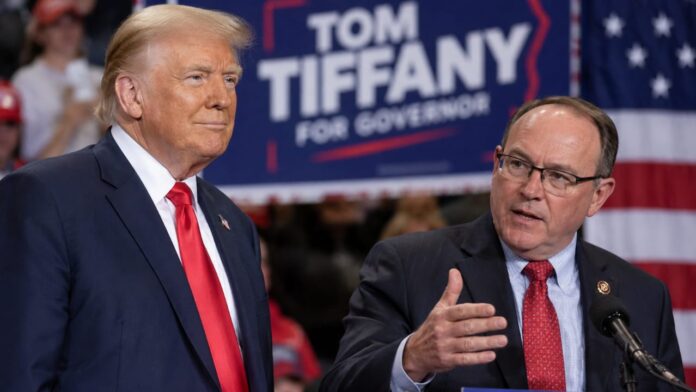
Rep. Tom Tiffany declined to directly answer whether President Trump would campaign alongside him during his bid to become Wisconsin’s governor. During an appearance on a national news program Friday, the Republican nominee was asked about expectations for presidential campaign trail support, similar to backing the former president has provided to other GOP candidates. Tiffany responded by acknowledging the president has multiple priorities competing for his attention, including the midterm convention and races across the country.
The lawmaker emphasized his understanding that the White House’s strategic focus appropriately centers on preserving Republican control of Congress. He indicated that the House and Senate represent the administration’s rightful priority in the current political landscape. This measured response reflects both confidence in his campaign and realistic assessment of broader political dynamics.
- Tiffany appeared on Newsmax to address campaign questions Friday
- Trump endorsed Tiffany in January with strong backing language
- The nominee acknowledged competing demands on the president’s schedule and attention
- Wisconsin governor’s race involves Republican nomination against Democratic incumbent and other candidates
Why It Matters
The exchange reveals important insights about Republican campaign strategy and the dynamics between Trump and party candidates seeking statewide office. Tiffany’s pragmatic acknowledgment that congressional races deserve prioritization demonstrates political maturity and shows understanding of how presidential influence functions most effectively within the party. The Wisconsin governor’s race carries significance as an important battleground state contest where control of the executive office could shift.
The candidate’s approach suggests confidence in his own campaign infrastructure while maintaining the strong endorsement he received from the former president earlier this year. By declining to express disappointment about potential limitations on campaign trail appearances, Tiffany avoids creating unnecessary friction or appearing dependent on external validation. This strategic positioning allows him to run on his own record and accomplishments while maintaining the credibility boost that comes from Trump’s backing.
- Strong Trump endorsement provides significant credibility and donor appeal for Tiffany’s campaign
- Congressional race priorities align with overall Republican strategy to maintain legislative control
- Tiffany’s independence in campaign messaging strengthens his appeal to Wisconsin voters
- Governor’s office control affects state policy direction and has implications for 2026 elections
Political and Public Context
Wisconsin represents a crucial battleground state where recent presidential performance has shaped political dynamics significantly. The administration’s 2024 success in the state demonstrates the Republican party’s capacity to compete effectively in this historically competitive region. Trump’s January endorsement of Tiffany acknowledged the representative’s loyalty and consistent support for the president’s agenda throughout his tenure in Congress.
The Wisconsin governor’s race involves the retirement of the current Democratic governor, creating an open-seat opportunity. The Democratic party nominated Milwaukee County Executive David Crowley, who made history as both the youngest county executive in Milwaukee County’s history and the first Black person to hold that office when sworn in during May 2020. Political analysts have adjusted their race assessments following the Democratic primary results, shifting projections toward the Democratic nominee. The broader context includes numerous other competitive races demanding attention and resources across the country, which justifies the strategic focus Tiffany acknowledged regarding congressional contests.
- Wisconsin was won by the administration in 2024, demonstrating competitive strength
- Trump’s January endorsement reflected strong working relationship with the representative
- Democratic primary outcomes changed race dynamics according to election analysts
- Multiple competitive races nationwide create resource and attention competition among party leaders
Tiffany avoids answering question if Trump will campaign with himhttps://t.co/55UekIb2nJ
— The Hill (@thehill) August 16, 2026
What Happens Next
The Wisconsin governor’s race will continue developing as both candidates build their campaigns and seek to mobilize voters. The question of Trump campaign trail involvement remains open, and scheduling decisions will likely depend on multiple factors including race competitiveness, candidate requests, and the president’s other commitments. Tiffany’s campaign will undoubtedly leverage the January endorsement in advertising, grassroots outreach, and fundraising efforts throughout the race cycle.
Election analysts and political observers will monitor whether the race dynamics shift again as campaigning intensifies and voter engagement increases. The candidate’s ability to establish his own distinct platform while maintaining alignment with Trump’s agenda will be crucial to his success. Congressional races will continue commanding significant presidential attention and resources, which will inform decisions about allocating campaign trail appearances across different contests. General election results will determine whether Republicans can maintain control of the governor’s office in this important state.
- Campaign trail decisions will emerge based on race competitiveness and scheduling
- Tiffany will continue leveraging Trump’s January endorsement in campaign messaging
- Congressional races will continue competing for executive attention and resources
- General election results in Wisconsin will have implications for state policy and national political landscape