Story Highlights
- The Trump administration declined to renew USMCA in its current form after the required six-year review.
- The trade pact remains active until 2036 unless the three countries agree to changes or move toward termination.
- Washington is using the annual review process to press Mexico and Canada on trade deficits, rules of origin, and market access.
What Happened
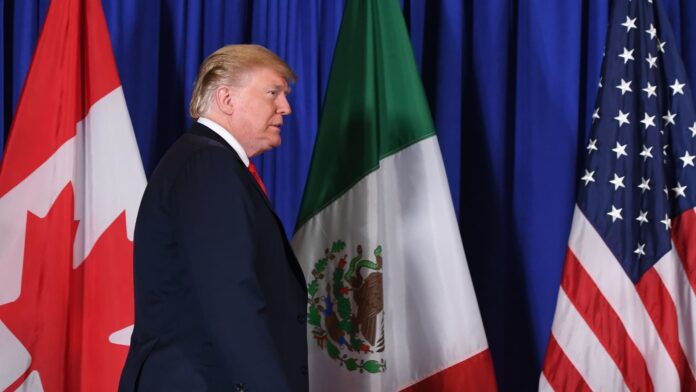
The Trump administration declined to renew the U.S.-Mexico-Canada Agreement in its current form, choosing instead to use the pact’s review process to push for changes with America’s two largest trading partners.
U.S. Trade Representative Jamieson Greer said the United States would not agree to extend the agreement as written. He said Washington will continue talks with Mexico and Canada to address what the administration sees as shortcomings in the deal and ongoing trade deficits.
The decision does not immediately end USMCA. The agreement remains in force, but the refusal to renew triggers annual reviews that can continue until the pact expires in 2036 unless the three countries agree to an extension or revised terms.
- USMCA took effect on July 1, 2020.
- The pact has a 16-year term and currently runs until July 1, 2036.
- Because the U.S. declined renewal, annual reviews now begin under the agreement’s sunset mechanism.
Trump once championed USMCA as a major improvement over NAFTA, but his second-term trade team argues the agreement needs stronger protections for American workers, manufacturers, farmers, and industrial supply chains.
The U.S. is scheduled to meet with Mexico the week of July 20 for another round of bilateral talks tied to the joint review. Canada has expressed continued support for the agreement but faces disputes with Washington over tariffs, dairy access, lumber, autos, steel, and aluminum.
Why It Matters
The decision matters because USMCA governs one of the world’s largest trading relationships and supports deeply integrated supply chains across North America.
For Trump, the move gives the United States leverage to demand changes rather than automatically extending a deal that the administration says no longer fully serves American interests.
Supporters of the approach argue that annual reviews can force Mexico and Canada to address long-running complaints involving trade deficits, market access, rules of origin, and non-tariff barriers.
- Washington wants stronger terms before giving USMCA a long-term extension.
- Businesses want certainty for supply chains and investment planning.
- Automakers, farmers, and manufacturers are among the industries most exposed to uncertainty.
The risk is that a drawn-out review process could make companies more cautious about investing in North American production.
Reuters reported that the U.S. decision starts a 10-year countdown toward possible expiration while keeping the pact alive for now, creating a period of negotiation rather than immediate withdrawal.
Political and Public Context
Trump has made trade deficits and reshoring manufacturing central parts of his economic agenda.
By declining to renew USMCA automatically, the administration is signaling that it wants more than symbolic updates. It wants changes that can be presented to workers and voters as stronger protections for American industry.
Mexico appears to be moving more quickly in talks with Washington. U.S. officials have described Mexico’s approach as constructive, while Canada faces more tension with the administration over sectoral tariffs and non-tariff barriers.
- Mexico is already engaged in bilateral negotiations with the U.S.
- Canada says it remains committed to the agreement but wants tariff issues addressed.
- Trump is likely to frame the review as part of his broader America First trade strategy.
The debate also creates political pressure on industries that rely on USMCA’s tariff-free treatment, especially automakers whose parts and vehicles cross borders repeatedly during production.
Trade lawyers note that the agreement has not expired and that current tariff preferences, rules of origin, and dispute mechanisms remain active while the review process continues.
What Happens Next
The next step is a new round of negotiations, beginning with U.S.-Mexico talks later in July.
The Trump administration is expected to press for changes involving auto content rules, market access, agricultural trade, industrial production, and enforcement mechanisms.
Canada will likely seek relief from U.S. tariffs on steel, aluminum, autos, and lumber while defending its own sensitive sectors, including dairy.
If the three countries reach a revised understanding, they could still extend USMCA for another 16-year term. If they do not, the pact will remain under annual review and continue toward its current 2036 expiration date.
For businesses, the message is clear: USMCA remains in place, but North American trade policy is entering a new period of negotiation and uncertainty.
Sources
- Ambassador Greer Issues Statement on the USMCA Joint Review
- U.S. declines to extend North American trade deal, starting clock to end it while seeking changes
- U.S. says it won’t agree to renew USMCA
- USMCA 2026 Joint Review triggers annual review process
- Trump refuses to renew U.S.-Canada-Mexico trade pact he once championed