Story Highlights
- Senator John Cornyn publicly denounces Republican nominee Bo French over racist remarks.
- Prominent GOP strategist Karl Rove endorses French’s Democratic opponent, Jon Rosenthal.
- Concerns grow among Texas Republicans regarding the impact of controversial candidates on electoral success.
- Potential implications for the GOP’s future direction and candidate selection processes.
What Happened
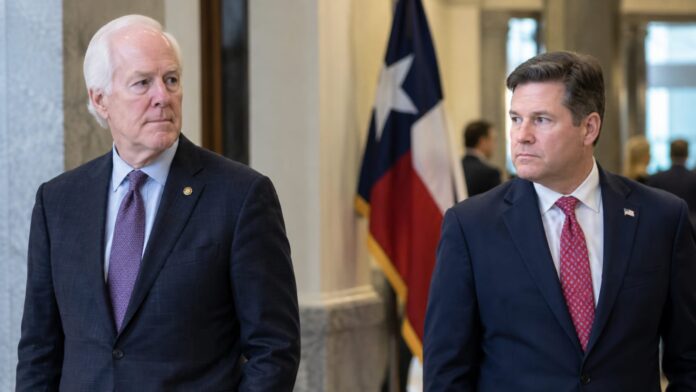
In a striking display of division within the Republican Party, Senator John Cornyn of Texas has announced that he will not support Bo French, the Republican nominee for Texas railroad commissioner. Cornyn’s decision stems from French’s recent social media comments, which he labeled as ‘racist’ and damaging to the party’s image. This public condemnation highlights a growing concern among Texas Republicans about the ramifications of controversial candidates on the party’s electoral prospects.
French’s comments were made in response to a photo he shared on social media, depicting a diverse group of University of Texas football fans. His accompanying caption suggested that the situation regarding diversity was ‘far worse than anyone imagined.’ Cornyn’s reaction was swift, as he described French as ‘an embarrassment to the Republican Party’ and warned that his remarks could ‘drag the whole ticket down.’
- Senator John Cornyn refuses to vote for Bo French.
- French’s comments were criticized for being racially insensitive.
- Karl Rove, a prominent Republican strategist, endorses Jon Rosenthal, the Democratic nominee.
- Cornyn considers leaving his ballot blank rather than supporting French.
Why It Matters
The implications of Cornyn’s rejection of French extend beyond a single election cycle. It underscores a significant rift within the GOP, particularly in Texas, where party loyalty is being tested by the actions and statements of its candidates. Cornyn’s refusal to support French is indicative of a broader concern among Republican leaders about the potential fallout from candidates who make controversial statements. This situation raises questions about the party’s ability to unify and present a cohesive front to voters.
Furthermore, the endorsement of Rosenthal by Karl Rove, a key figure in Republican politics, signals a potential shift in party dynamics. Rove’s decision to support a Democrat over a Republican candidate is a rare occurrence and suggests that some within the party are willing to prioritize principles over party affiliation. This could lead to a reevaluation of candidate selection processes and the criteria used to determine who represents the GOP in elections.
- Potential loss of support for the GOP among moderate voters.
- Increased scrutiny of candidates’ backgrounds and statements.
- Possible changes in candidate endorsement practices within the party.
- Heightened focus on party unity as a critical factor for electoral success.
Political and Public Context
The current situation is not an isolated incident but rather part of a larger trend within the Republican Party. Over the past few years, there has been a noticeable shift in the types of candidates who are emerging within the GOP, with some embracing more extreme views that alienate moderate voters. This shift has raised concerns among established party leaders about the long-term viability of the party if it continues down this path.
Additionally, the Texas railroad commissioner position is significant, as it oversees the state’s vast oil and gas industry, making it a critical role in a state where energy production is a cornerstone of the economy. The stakes are high, and the implications of having a controversial figure in such a position could reverberate throughout the state and beyond.
As the political landscape evolves, the Republican Party must navigate these challenges carefully. The rise of candidates with extreme views could lead to further divisions within the party, potentially alienating key voter demographics. This situation necessitates a thoughtful approach to candidate selection and public messaging to ensure that the GOP remains competitive in future elections.
- Recent GOP primaries have seen a rise in candidates with controversial views.
- Historical context of party divisions during election cycles.
- Previous endorsements by Rove and other GOP leaders have influenced election outcomes.
- Growing calls for a reevaluation of candidate vetting processes within the party.
Sen. @JohnCornyn won’t vote for Texas GOP candidate Bo French over ‘racist comments’ https://t.co/FZQopxu3gv
— Washington Examiner (@dcexaminer) September 17, 2026
What Happens Next
Looking ahead, the fallout from Cornyn’s rejection of French may lead to significant changes within the Texas Republican Party and potentially the national GOP. As party leaders grapple with the implications of controversial candidates, there may be a push for more stringent vetting processes to ensure that candidates align with the party’s values and do not jeopardize electoral success.
Moreover, the upcoming election will serve as a litmus test for the party’s direction. If candidates like French continue to face backlash and lose support from key figures within the party, it could signal a shift towards a more moderate approach in candidate selection. Conversely, if controversial candidates succeed despite opposition, it may embolden similar candidates in future elections.
In the coming weeks, discussions among GOP leaders will likely intensify as they seek to address these challenges and determine the best path forward. The outcome of the Texas railroad commissioner race could set a precedent for how the party handles similar situations in the future.
- Increased discussions among GOP leaders about candidate vetting processes.
- Potential for more endorsements from prominent figures like Rove.
- Monitoring of voter reactions to controversial candidates in upcoming elections.
- Open questions about the future direction of the GOP in Texas and nationally.