Story Highlights
- Deb Haaland advocates for a moratorium on new data centers in New Mexico.
- Calls for community discussions on the environmental and economic impacts of data centers.
- Proposes that data centers should utilize local labor and renewable energy sources.
- Highlights the need for accountability measures before further development.
What Happened
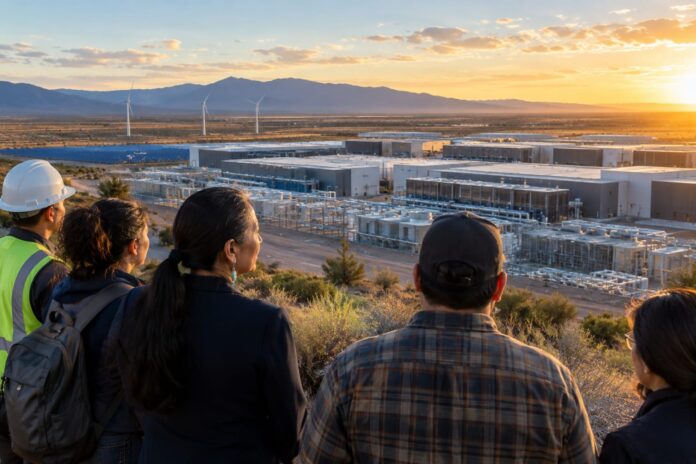
On Thursday, New Mexico gubernatorial candidate Deb Haaland, who also serves as the Interior Secretary under the Biden administration, made headlines by endorsing a moratorium on the construction of data centers in her state. This decision stems from her concerns regarding the environmental impact and workforce implications of these facilities. Haaland emphasized the necessity for ‘open, transparent, and meaningful’ conversations within communities to address the potential ramifications of artificial intelligence (AI) data centers.
In her policy framework, Haaland outlined several key proposals aimed at ensuring that data centers contribute positively to the local economy while safeguarding the environment. She argued that data centers should be required to develop their own renewable energy infrastructure to mitigate the risk of rising energy costs affecting New Mexicans. Furthermore, she insisted that these facilities must be constructed and operated using local labor, thereby creating job opportunities for residents.
- Deb Haaland announced her support for a moratorium on data centers on October 19, 2023.
- She is running against Republican candidate Gregg Hull, the former mayor of Rio Rancho.
- Currently, there are 21 operational data centers in New Mexico, with one under construction and five planned.
- The Federal Emergency Management Agency has assessed the risk to New Mexico’s climate from data centers as relatively high.
Why It Matters
The implications of Haaland’s stance on data centers extend beyond mere construction delays; they touch on broader issues of environmental sustainability, economic development, and community engagement. By advocating for a moratorium, Haaland is not only addressing immediate concerns but also setting a precedent for how future developments should be approached in New Mexico. The call for community dialogue is particularly significant, as it empowers local residents to voice their opinions and concerns regarding projects that could fundamentally alter their environment and economy.
Moreover, the emphasis on renewable energy and local labor reflects a growing trend among policymakers to prioritize sustainability and economic resilience. As data centers are projected to consume an increasing share of the nation’s electricity—over 4 percent in 2024, with a projected increase of nearly 133 percent by 2030—Haaland’s proposals could serve as a model for other states grappling with similar challenges. The potential for economic opportunities tied to local labor and renewable energy initiatives could also resonate with voters who are concerned about job creation and environmental stewardship.
- Local communities may benefit from increased job opportunities if data centers are required to hire local labor.
- Environmental safeguards could lead to better protection of New Mexico’s natural resources.
- The moratorium could serve as a template for other states facing similar issues with data center construction.
- Residents may feel more empowered to engage in local governance and decision-making processes.
Political and Public Context
The backdrop to Haaland’s announcement is a growing national conversation about the environmental and economic impacts of data centers. As technology continues to advance, the demand for data storage and processing capabilities has surged, leading to the rapid construction of data centers across the country. However, this growth has not come without its challenges. Concerns about energy consumption, environmental degradation, and the socio-economic implications of such developments have prompted calls for stricter regulations and oversight.
In New Mexico, the situation is particularly pressing. The state is home to 21 operational data centers, with one currently under construction and several more planned. The Federal Emergency Management Agency has flagged the potential risks associated with these facilities, indicating that the state must take proactive measures to mitigate any adverse effects. Haaland’s proposals align with a broader movement among politicians and citizens alike who are advocating for more responsible and sustainable development practices.
- The International Energy Agency has projected a significant increase in electricity consumption by U.S. data centers.
- Concerns about AI advancements have led to increased scrutiny of data center operations on Capitol Hill.
- Other states are also considering moratoriums or stricter regulations on data center construction.
- Public sentiment is shifting towards prioritizing environmental sustainability in technology development.
Haaland backs data center moratorium in New Mexicohttps://t.co/3s1x44oo19
— The Hill (@thehill) September 18, 2026
What Happens Next
Looking ahead, the future of data center construction in New Mexico remains uncertain. Haaland’s call for a moratorium will likely spark discussions among policymakers, community leaders, and industry stakeholders about the best path forward. The establishment of clear accountability measures will be crucial in determining whether the moratorium will be lifted or extended. Additionally, the outcome of the gubernatorial race could significantly influence the direction of data center policies in the state.
As the conversation evolves, several key questions will need to be addressed. How will local communities be engaged in the decision-making process? What specific accountability measures will be implemented to ensure that data centers operate sustainably? And how will the state balance the need for technological advancement with the imperative to protect its natural resources and local economies?
- Community forums may be organized to facilitate discussions on data center impacts.
- Policymakers will need to outline specific accountability measures for data centers.
- The gubernatorial election outcome could influence future data center policies.
- Stakeholders will need to collaborate to find a balance between technology and sustainability.