Story Highlights
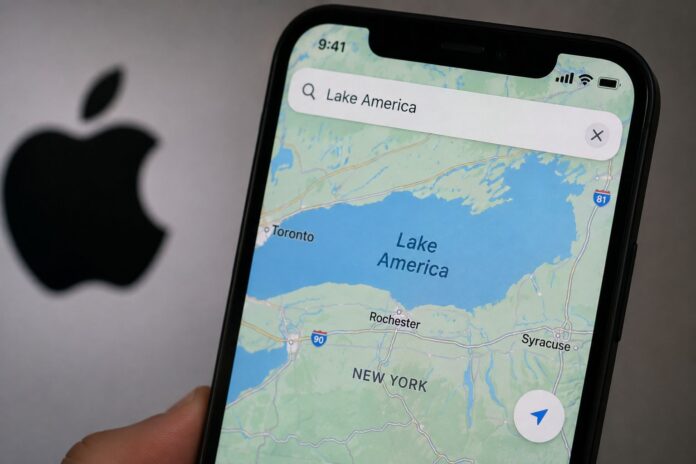
- Apple Maps has officially renamed Lake Ontario to Lake America for US users.
- The change follows an executive order from President Trump amid ongoing trade tensions with Canada.
- Canadian users will still see the original name, Lake Ontario, on their maps.
- This move has sparked significant debate and backlash on social media platforms.
What Happened
In a bold move that has stirred controversy and debate, Apple has renamed Lake Ontario to Lake America on its Maps application for users based in the United States. This decision comes as a direct result of an executive order issued by President Donald Trump, which was part of the broader context of escalating trade tensions between the United States and Canada. The name change reflects a significant shift in how geographical landmarks are branded, aligning with the administration’s push for an American-centric narrative in international relations.
The change was implemented following the collapse of trade negotiations between the two neighboring countries, which resulted in the United States imposing hefty tariffs on Canadian goods. The executive order mandated that the US Department of the Interior update the official naming conventions within 30 days, leading to Apple’s swift compliance. While users in the US will now see Lake America on their maps, Canadian users will continue to view the lake as Lake Ontario, highlighting the geographical and political divide that this name change represents.
- President Trump issued the executive order prompting the name change.
- The order was a response to failed trade negotiations between the US and Canada.
- Apple was specifically urged to comply with the order by US Interior Secretary Doug Burgum.
- Google also made a similar change to its mapping service for US users.
Why It Matters
This name change is more than just a simple rebranding; it symbolizes the ongoing tensions between the United States and Canada, particularly in the realm of trade. The Trump administration has consistently advocated for policies that prioritize American interests, and this move can be seen as an extension of that philosophy. By renaming a significant geographical feature, the administration is asserting its influence over how American identity is represented, even in the digital realm.
Moreover, the backlash from Canadian officials and citizens underscores the potential diplomatic ramifications of such a decision. Canadian Prime Minister Mark Carney’s administration has expressed its discontent, labeling the demands from the Trump administration as unacceptable. This situation illustrates the delicate balance of power and the complexities of international relations, where even a name change can provoke strong reactions and countermeasures.
- The name change reinforces the Trump administration’s focus on American-centric branding.
- It has led to diplomatic tensions, with Canada responding with counter-tariffs.
- Canadian officials have publicly criticized the decision, emphasizing their commitment to the original name.
- The move has sparked a significant social media backlash, reflecting public sentiment on the issue.
Political and Public Context
To fully understand the implications of this name change, it is essential to consider the broader context of US-Canada relations. The trade negotiations that collapsed were crucial for both economies, and the imposition of tariffs has created a ripple effect that extends beyond just the economic realm. The name change can be viewed as a symbolic gesture that reflects the current administration’s approach to foreign policy, which often emphasizes a more aggressive stance in negotiations.
Additionally, the historical significance of the Great Lakes, including Lake Ontario, cannot be overlooked. The names of these lakes are deeply rooted in indigenous history and culture, and altering them raises questions about cultural sensitivity and respect for heritage. The decision to rename Lake Ontario to Lake America may be perceived as an erasure of that history, further complicating the narrative surrounding this issue.
- The Great Lakes have significant historical and cultural importance, with names derived from indigenous languages.
- Trade negotiations between the US and Canada have been fraught with tension, particularly under the Trump administration.
- Previous attempts at rebranding geographical features have faced backlash and criticism.
- The situation reflects a growing trend of nationalism in various countries, influencing how international relations are conducted.
Apple Maps changes name of Lake Ontario to ‘Lake America’ https://t.co/qn2rv1toSA
— The Straits Times (@straits_times) September 1, 2026
What Happens Next
The future of this name change remains uncertain, as it has already prompted a variety of reactions from both sides of the border. Canadian officials have indicated that they will not accept the new name, and there may be further diplomatic fallout as a result. The potential for countermeasures from Canada, including retaliatory tariffs, could escalate tensions even further.
Moreover, the response from the public and social media users will likely continue to shape the narrative surrounding this issue. As more people become aware of the name change, discussions about national identity, cultural heritage, and the implications of such a decision will likely intensify. The administration’s ability to navigate these complex waters will be crucial in determining the long-term impact of this name change.
- Canadian officials may pursue further diplomatic measures in response to the name change.
- Public sentiment will continue to evolve, potentially influencing future policy decisions.
- There may be legal challenges or petitions to revert the name back to Lake Ontario.
- The situation could set a precedent for how geographical names are treated in the context of international relations.