Story Highlights
- A plane carrying DHS Secretary Markwayne Mullin experienced engine failure mid-flight.
- The aircraft made a successful emergency landing at Ronald Reagan Washington National Airport.
- No injuries were reported among the 14 individuals on board.
- The incident raises questions about the safety and reliability of aging Coast Guard aircraft.
What Happened
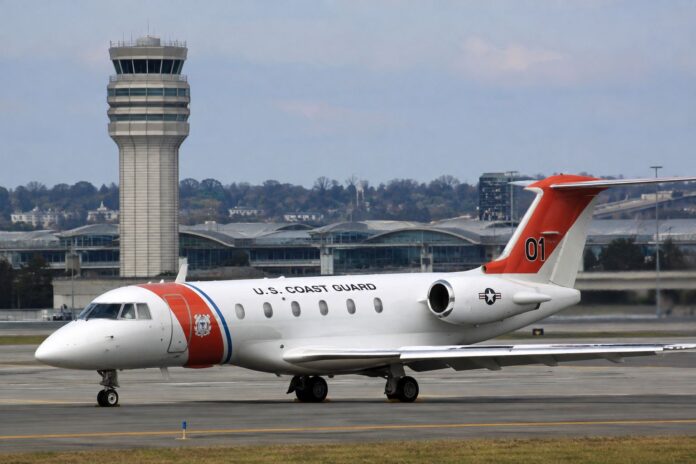
On Wednesday, a plane carrying Department of Homeland Security Secretary Markwayne Mullin was forced to make an emergency landing due to engine failure. The incident occurred while the aircraft was en route from Georgia to Washington, D.C. The U.S. Coast Guard C101, which was transporting Mullin and 13 other individuals, was diverted to Ronald Reagan Washington National Airport in Virginia after the pilot reported a mechanical issue.
According to reports, the pilot communicated with air traffic control around 1:35 p.m. ET, stating, ‘we just lost our right engine and would like to declare an emergency and an immediate landing at DCA.’ Fortunately, the aircraft landed safely, and emergency personnel were on standby to conduct a thorough check of the plane. No injuries were reported, and the aircraft was able to proceed off the runway without causing disruption to other flights.
- Incident occurred on Wednesday, with the plane landing at approximately 1:35 p.m. ET.
- Markwayne Mullin was traveling with 13 other individuals.
- The aircraft was a U.S. Coast Guard C101.
- The plane was flagged last year by the Department of Homeland Security due to its age.
Why It Matters
This incident is significant not only because it involved a high-ranking government official but also due to the implications it has for aviation safety and the operational readiness of government aircraft. The successful handling of the emergency by the Coast Guard pilots demonstrates their professionalism and skill in a critical situation. Secretary Mullin himself praised the pilots, stating on social media that the landing felt routine and that there was ‘no panic, just straight professionalism.’ This reflects well on the training and capabilities of the Coast Guard personnel involved.
However, the incident also raises serious concerns regarding the aging fleet of Coast Guard aircraft. The fact that this particular plane had been flagged for its age last year indicates that there may be underlying issues with the maintenance and reliability of such aircraft. As government officials rely on these planes for transportation, it is crucial that they are kept in optimal condition to ensure the safety of all passengers.
- The incident highlights the importance of pilot training and emergency preparedness.
- It raises questions about the safety standards of aging government aircraft.
- Potential implications for future funding and maintenance of Coast Guard aircraft.
- Increased scrutiny on the operational readiness of government transportation assets.
Political and Public Context
The emergency landing of Secretary Mullin’s plane is not an isolated incident but rather part of a broader narrative concerning the safety and reliability of government aircraft. In recent years, there have been increasing concerns about the aging fleets of various government agencies, including the Coast Guard and other branches of the military. These concerns have been amplified by budget constraints and the need for modernization of equipment.
In 2022, the Department of Homeland Security flagged several aircraft for their age, indicating that they may not meet current safety standards. This incident serves as a stark reminder of the potential risks associated with operating older aircraft, particularly when they are used to transport high-ranking officials. The need for investment in newer, more reliable aircraft is becoming increasingly urgent as incidents like this one highlight the vulnerabilities present in the current fleet.
- Previous incidents involving aging government aircraft have raised safety concerns.
- Budget constraints have limited the ability to modernize fleets across various agencies.
- Calls for increased funding for the Coast Guard and other agencies have intensified.
- Recent reports have highlighted the need for improved maintenance protocols for government aircraft.
Mullin’s airplane made emergency landing after engine failurehttps://t.co/gOmmPXewEG
— The Hill (@thehill) September 3, 2026
What Happens Next
In the aftermath of this incident, several key questions and next steps arise. First and foremost, there will likely be an investigation into the circumstances surrounding the engine failure. This investigation will aim to determine whether there were any mechanical issues that could have been prevented through better maintenance practices or whether this incident was an isolated occurrence.
Additionally, the Department of Homeland Security may face increased pressure to address the aging fleet of Coast Guard aircraft. This could lead to discussions in Congress regarding funding for upgrades and replacements of older aircraft. Stakeholders will be closely monitoring any legislative developments that arise from this incident, particularly as they relate to aviation safety and the operational capabilities of the Coast Guard.
- Investigation into the engine failure will be conducted to assess mechanical issues.
- Increased scrutiny on the maintenance practices of government aircraft is expected.
- Potential discussions in Congress regarding funding for fleet upgrades.
- Stakeholders will monitor legislative developments related to aviation safety.