Story Highlights
- Rick Jackson, Republican gubernatorial candidate in Georgia, has raised concerns about voter engagement in rural areas as early voting commences across the state
- Early voting data indicates Black voters are participating at elevated rates in the initial days, which could benefit Jackson’s Democratic opponent Keisha Lance Bottoms
- Jackson maintains a significant financial advantage over Bottoms, having invested more than $100 million of his own wealth in the gubernatorial campaign
- Election forecasters currently favor Bottoms in the competitive race, though polling shows Jackson trailing by a narrow margin
What Happened
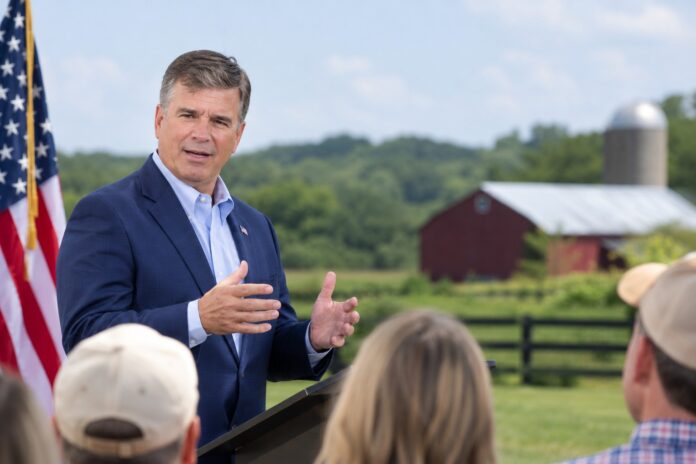
Rick Jackson, the Republican candidate for Georgia governor, has voiced concerns regarding voter participation in rural portions of the state during the early voting period. Jackson indicated during a campaign stop that rural Georgia voters may be operating under outdated assumptions about electoral dynamics, potentially affecting turnout levels critical to his campaign strategy. His concerns center on whether rural voters will mobilize sufficiently to support his candidacy against Democratic opponent Keisha Lance Bottoms.
Current early voting data compiled by nonpartisan election tracking organization VoteHub reveals that Black voters are turning out at elevated rates during the initial days of early voting. This demographic trend historically benefits Democratic candidates in statewide contests. Jackson’s campaign strategy appears heavily dependent on achieving strong turnout in rural Georgia counties, where he typically draws support.
- Rick Jackson expressed concern about rural voter engagement during a campaign stop in Georgia
- Early voting data from VoteHub shows Black voters participating at high rates
- Jackson is competing against former Atlanta Mayor Keisha Lance Bottoms in the gubernatorial race
- The race is classified as competitive, with polling showing tight margins between the candidates
Why It Matters
Voter turnout in rural areas represents a fundamental component of Jackson’s electoral strategy. Rural Georgia has historically leaned toward Republican candidates, and Jackson’s path to victory depends substantially on mobilizing voters in these regions. The candidate’s concerns highlight a potential vulnerability in his campaign, suggesting that rural voters may not be turning out at the levels his team considers necessary for victory.
The current voting patterns, with elevated Black voter participation favoring Democrats, create a challenging dynamic for Jackson. If rural turnout remains below expectations while urban and suburban Democratic-leaning voters maintain strong participation rates, the electoral mathematics could shift decidedly in Bottoms’s favor. This dynamic underscores the importance of ground-level campaign organization and voter outreach efforts in the remaining voting period.
Jackson’s financial resources provide him with substantial advantages in media spending and campaign infrastructure. However, financial advantages do not automatically translate to voter turnout, particularly among rural populations who may require targeted messaging and localized engagement efforts to motivate participation.
- Rural voter turnout directly affects Jackson’s viability in a competitive statewide race
- Democratic voter participation in urban and suburban areas could offset any rural advantage Jackson achieves
- The race outcome may depend on which campaign more effectively mobilizes its base during the remaining voting days
- Campaign financing advantages do not guarantee electoral success without corresponding voter engagement
Political and Public Context
Georgia maintains its status as a highly competitive battleground state in presidential and statewide elections. Recent election cycles have demonstrated the state’s potential to swing between parties, making individual candidate performance and voter mobilization strategies particularly consequential. The gubernatorial race occurs within a broader electoral environment that includes Senator Jon Ossoff’s reelection bid, where polling indicates he maintains a substantial lead over his Republican opponent.
Jackson’s self-funded campaign represents a notable feature of the race. As a billionaire healthcare executive, Jackson has demonstrated ability to finance his own campaign substantially without relying on traditional donor networks. This contrasts with Bottoms, whose campaign has received support from Democratic donors including Illinois Governor JB Pritzker, who contributed $1 million to her campaign. The financial disparity has allowed Jackson to maintain consistent media presence throughout the primary and general election phases.
Election forecasting organizations provide additional context for understanding the race’s competitive nature. Nonpartisan forecasters currently assign higher probability to a Bottoms victory, reflecting broader assessments of the electoral landscape. Recent polling data shows varying margins, with some surveys indicating Jackson trailing by single digits while others show tighter competition.
- Georgia’s status as a battleground state makes individual races highly competitive and consequential
- Jackson’s self-funding capability has provided significant campaign advantages over traditional fundraising models
- Democratic candidate Ossoff’s strong polling performance may create coattail effects benefiting Bottoms
- Nonpartisan election forecasters assess Bottoms as the probable frontrunner in the gubernatorial contest
Jackson says he’s ‘concerned’ about Georgia rural voter turnouthttps://t.co/H2LeHHb4C3
— The Hill (@thehill) October 23, 2026
What Happens Next
The remaining voting period will prove critical in determining whether Jackson’s concerns about rural turnout materialize into meaningful electoral consequences. Both campaigns will intensify ground operations and messaging efforts targeting their respective voter bases. The final days before Election Day typically see increased campaign activity, including candidate travel to key regions, advertising expenditures, and voter contact operations.
Exit polling and early voting data will provide ongoing indicators of whether rural voters are participating at levels Jackson’s campaign considers sufficient. Comparisons between current voting patterns and historical turnout benchmarks will help assess the competitive trajectory. Campaign organizations on both sides will monitor these metrics closely and adjust field operations accordingly if necessary.
Election results will ultimately determine whether Jackson’s concerns prove prescient or whether rural Georgia mobilizes sufficiently to support his candidacy. The governor’s race outcome will also provide insights into broader electoral patterns within Georgia and potential implications for future statewide contests.
- Campaign organizations will intensify voter contact and mobilization efforts during the final voting days
- Real-time voting data will reveal whether rural participation reaches levels Jackson’s team considers adequate
- Election results will indicate whether rural Georgia turnout significantly impacts the governor’s race outcome
- The race outcome may influence strategies and assessments of rural voter behavior in future Georgia elections