Story Highlights
- Republican nominee Joe Arminio was removed from a debate for misgendering Rep. Sarah McBride.
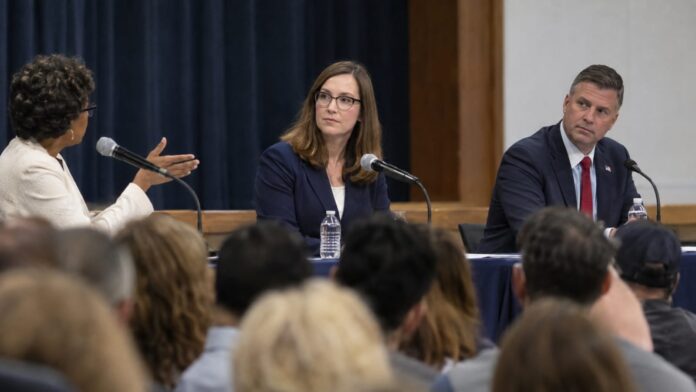
- The incident occurred during a candidate forum in Wilmington, Delaware.
- McBride is the first openly transgender member of Congress, making the misgendering particularly significant.
- This event raises questions about respect and recognition in political discourse.
What Happened
During a recent candidate forum held in Wilmington, Delaware, Republican nominee Joe Arminio faced significant backlash after he misgendered his opponent, Rep. Sarah McBride, during his opening remarks. The incident unfolded as Arminio attempted to address the audience, but his choice of pronouns when referring to McBride drew immediate criticism from the crowd. McBride, who made history in 2024 as the first openly transgender member of Congress, has been a prominent figure in advocating for LGBTQ+ rights and representation. The misgendering incident not only highlights the ongoing challenges faced by transgender individuals in political spaces but also underscores the importance of respectful discourse in political debates.
As Arminio began his remarks, he stated, ‘I’m sorry to have to say that the representative from Delaware, through the net of his comments and his actions, on balance has contributed.’ This statement was met with audible disapproval from the audience, prompting moderator Ken Grant to intervene. Grant issued a warning to Arminio, stating, ‘If you fail to show respect to anyone else on this stage, you’ll be asked to leave.’ Despite acknowledging his error, Arminio continued to misgender McBride, leading to his eventual removal from the stage.
- Joe Arminio misgendered Rep. Sarah McBride during a candidate forum.
- McBride is the first openly transgender member of Congress, elected in 2024.
- Moderator Ken Grant warned Arminio before his removal.
- McBride attempted to intervene during the incident but was cut off.
Why It Matters
The removal of Joe Arminio from the debate is emblematic of broader societal issues surrounding respect and recognition for transgender individuals, particularly in political contexts. Misgendering, which refers to the act of using incorrect pronouns or terms to refer to someone, can have profound implications for the dignity and identity of transgender individuals. In this case, Arminio’s actions not only disrespected McBride but also reflected a lack of understanding and acknowledgment of her identity as a transgender woman.
This incident is particularly significant given the current political climate, where discussions about gender identity and representation are increasingly at the forefront of public discourse. The backlash against Arminio’s comments serves as a reminder that voters and constituents expect candidates to engage in respectful dialogue, especially when addressing issues that affect marginalized communities. The ongoing discourse surrounding LGBTQ+ rights and representation is crucial as society continues to evolve.
- Increased scrutiny on candidates’ language and behavior regarding LGBTQ+ issues.
- Potential impact on Arminio’s campaign and public perception.
- Reinforcement of the importance of respectful discourse in political debates.
- Heightened awareness of the challenges faced by transgender individuals in politics.
Political and Public Context
The misgendering incident involving Joe Arminio is not an isolated occurrence. In fact, Rep. Sarah McBride has faced similar disrespect from other Republican colleagues in the past. For instance, in 2025, during a House Foreign Affairs subcommittee hearing, Rep. Keith Self (R-Texas) referred to McBride as ‘mister,’ which sparked outrage and highlighted the ongoing challenges of acceptance and recognition for transgender individuals in political spaces. Additionally, Rep. Mary Miller (R-Ill.) introduced McBride as ‘the gentleman from Delaware’ during her first floor speech as a newly elected lawmaker. These instances underscore a troubling pattern of misgendering and disrespect that McBride has encountered throughout her political career.
As society becomes more aware of gender identity issues, the political landscape is also shifting. The visibility of LGBTQ+ issues is increasing, and there is a growing demand for politicians to be educated and respectful in their language and actions. This incident serves as a reminder of the work that still needs to be done to ensure that all individuals are treated with dignity and respect in political discourse.
- Previous instances of misgendering directed at Rep. McBride by other lawmakers.
- The historical significance of McBride’s election as the first openly transgender member of Congress.
- The growing visibility of LGBTQ+ issues in political discourse.
- Increased advocacy for respectful language and recognition of gender identity in political settings.
Republican misgenders McBride at candidate forum before removalhttps://t.co/0GE3B54e8o
— The Hill (@thehill) September 18, 2026
What Happens Next
The fallout from this incident raises important questions about the future of Joe Arminio’s campaign and the broader implications for political discourse. As voters become increasingly aware of the importance of respectful language and representation, candidates may need to adapt their messaging and behavior to align with these expectations. Arminio’s campaign will likely face scrutiny in the coming weeks as constituents and political analysts assess the impact of his actions on his candidacy.
Furthermore, this incident may prompt discussions within the Republican Party regarding the treatment of LGBTQ+ individuals and the importance of fostering an inclusive political environment. The need for education on gender identity and respectful discourse is becoming more pressing as society continues to evolve.
- How will Arminio’s campaign respond to the backlash from the misgendering incident?
- Will there be any internal discussions within the Republican Party regarding respectful discourse?
- What impact will this incident have on McBride’s campaign and public perception?
- How can political candidates better educate themselves on issues of gender identity and representation?