Story Highlights
- The United States has entered a significant security agreement with Greenland and Denmark.
- This deal enhances U.S. military presence in Greenland and addresses national security concerns.
- Greenland’s sovereignty is recognized, ensuring cooperation between the U.S. and local authorities.
- The agreement is expected to be signed during the upcoming United Nations General Assembly.
What Happened
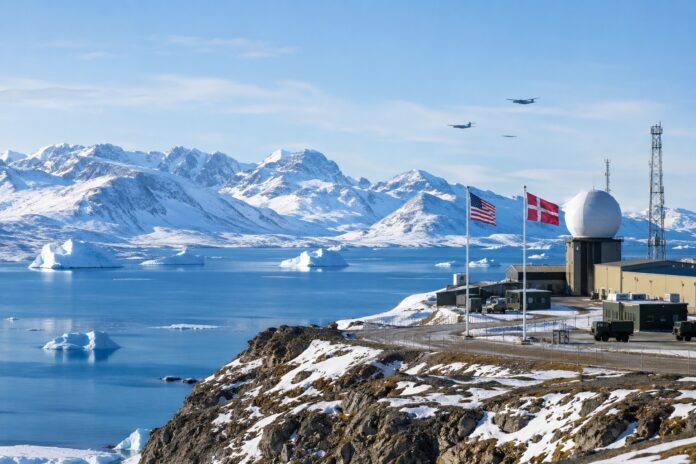
On Friday, President Trump announced a landmark security agreement with Greenland and Denmark, marking a pivotal moment in U.S. foreign policy and military strategy in the Arctic region. This agreement not only expands America’s military footprint in Greenland but also solidifies its influence over the territory’s affairs. The president emphasized that the deal grants the United States ‘permanent control over security, and all other needs, in Greenland,’ effectively addressing numerous U.S. concerns regarding national security and geopolitical stability in the Arctic.
In his announcement, Trump stated that no adversary of the United States would be allowed to establish a military presence or make sensitive investments in Greenland without explicit approval from Washington. This declaration underscores the administration’s commitment to preventing adversarial nations, particularly China and Russia, from gaining a foothold in this strategically vital region. The deal is set to be formalized next week during a high-level summit at the United Nations General Assembly, with both Greenland and Denmark expressing their support for the agreement.
- President Trump announced the agreement on Friday.
- The deal grants the U.S. permanent control over security in Greenland.
- Greenland and Denmark will sign the agreement during the UN General Assembly next week.
- Greenland’s Prime Minister Jens-Frederik Nielsen and Denmark’s Prime Minister Mette Frederiksen have expressed support for the agreement.
Why It Matters
This agreement is significant for several reasons. Firstly, it enhances U.S. national security by ensuring that Greenland remains free from foreign military influence, particularly from nations that may not share American interests. The Arctic has become a focal point of geopolitical competition, with both Russia and China increasing their military and economic activities in the region. By securing this deal, the United States is taking proactive steps to safeguard its interests and maintain a strategic advantage over potential adversaries.
Moreover, the agreement recognizes and respects Greenland’s sovereignty, a crucial aspect that has been highlighted by both Greenland’s and Denmark’s leaders. This acknowledgment fosters a cooperative relationship between the U.S. and the local authorities, ensuring that the interests of the Greenlandic people are taken into account. The deal is not merely about military presence; it also involves collaboration on development and construction projects that will benefit the local population.
- The agreement strengthens U.S. national security in the Arctic.
- It prevents adversarial nations from establishing a military presence in Greenland.
- Greenland’s sovereignty is respected, fostering cooperation with local authorities.
- The deal promotes economic development in Greenland through collaborative projects.
Political and Public Context
The backdrop of this agreement is marked by President Trump’s earlier controversial proposal to purchase Greenland, which was met with backlash from both Greenland and its allies in NATO. While the current deal does not involve ownership, it reflects a shift in strategy towards enhancing U.S. influence without infringing on Greenland’s autonomy. The Arctic region has gained prominence in international relations, with climate change opening new shipping routes and access to untapped natural resources.
In recent years, the U.S. has been increasingly focused on Arctic policy, recognizing the strategic importance of the region. The establishment of a military presence in Greenland aligns with broader efforts to counter Russian expansionism and Chinese investments in the Arctic. This agreement is a continuation of the administration’s commitment to ensuring that the U.S. remains a dominant player in Arctic affairs.
- President Trump’s earlier proposal to purchase Greenland sparked international controversy.
- The Arctic region is becoming increasingly important due to climate change and resource accessibility.
- The U.S. has been enhancing its Arctic policy to counter foreign influence.
- Military presence in Greenland is part of a broader strategy to maintain U.S. dominance in the region.
GREENLAND DEAL: Trump secures agreement with Denmark giving the U.S. "permanent control" over Greenland's security — expanding America's Arctic military footprint while locking China and Russia out of the world's largest island.
The deal, which still needs approval from Danish… pic.twitter.com/S6mcjsjY1k
— Fox News Politics (@foxnewspolitics) September 20, 2026
What Happens Next
Looking ahead, the signing of this agreement during the UN General Assembly will be a significant milestone in U.S.-Greenland-Denmark relations. Following the signing, both Greenland’s and Denmark’s parliaments will need to approve the agreement, which could lead to further discussions on the specifics of military presence and cooperation. The development of a large military presence in Greenland is expected to commence immediately, as outlined by Defense Secretary Pete Hegseth, who reiterated the administration’s commitment to bolstering U.S. capabilities in the region.
As the situation evolves, several questions remain. How will the local population respond to the increased military presence? What specific projects will be undertaken in collaboration with Greenlandic authorities? Additionally, how will this agreement influence U.S. relations with other Arctic nations? The answers to these questions will shape the future of U.S. involvement in the Arctic and its strategic posture in the face of growing global competition.
- The agreement will be signed during the UN General Assembly next week.
- Approval from Greenland’s and Denmark’s parliaments is required.
- Military presence development is expected to begin immediately.
- Future discussions will focus on specific projects and local cooperation.