Story Highlights
- President Trump has announced a ban on CNN, Politico, and MS NOW from the White House.
- The decision stems from accusations of ‘fake news’ and biased reporting against these outlets.
- This move raises questions about press freedom and the relationship between the media and the administration.
- Responses from the banned outlets emphasize their commitment to accurate journalism and First Amendment rights.
What Happened
In a bold and controversial move, President Donald Trump declared an immediate ban on three prominent news outlets—CNN, Politico, and MS NOW—from the White House. This announcement was made via a post on Truth Social, where he expressed his frustration with what he termed their ‘constant reporting of FAKE NEWS.’ The president’s decision is seen as a continuation of his long-standing battle with media organizations that he believes misrepresent his administration’s actions and policies.
During a press conference held shortly after the announcement, Trump elaborated on his reasoning, stating that these outlets have consistently published one-sided narratives aimed at undermining the Republican Party and its leadership. He expressed his weariness with the negative coverage, suggesting that it has been a cumulative effect of years of biased reporting. The president’s remarks were punctuated with sarcasm when he responded to a reporter’s assertion about the First Amendment, indicating a dismissive attitude towards the implications of press freedom.
- Trump’s announcement was made on a Friday, with immediate effect.
- He accused the outlets of writing ‘fiction or lies’ without providing specific examples.
- Trump suggested that more bans could follow, indicating a potential escalation in his media relations.
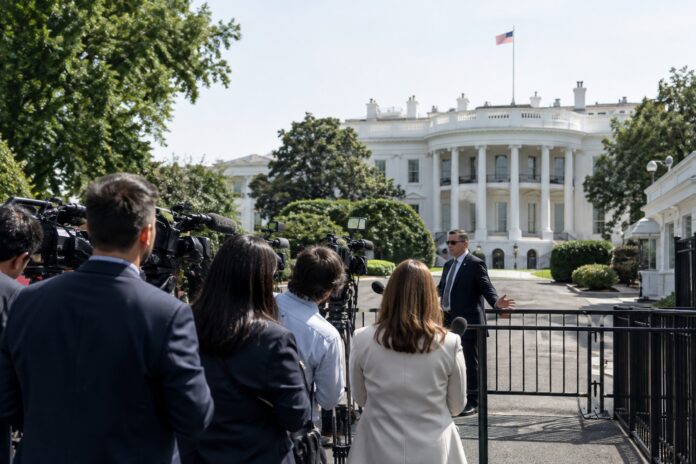
- Despite the ban, journalists from these outlets remained present at the White House, indicating a lack of immediate enforcement.
Why It Matters
The implications of President Trump’s ban on these news outlets extend far beyond the immediate actions taken. This decision raises significant concerns regarding press freedom in the United States, a cornerstone of democracy. The president’s characterization of the media as ‘fake news’ reflects a broader narrative that seeks to delegitimize critical reporting, which is essential for holding power accountable. By excluding certain outlets from the White House, the administration risks creating an environment where only favorable narratives are allowed to flourish, undermining the diversity of viewpoints that a healthy democracy requires.
Moreover, the responses from the banned outlets highlight their commitment to journalistic integrity and the protection of First Amendment rights. CNN, for instance, emphasized its constitutional right to report without government interference, framing the ban as an illegal assault on press freedoms. Politico echoed this sentiment, asserting its intention to continue reporting fairly on the White House and defending its rights against any attempts to restrict them. This situation underscores the ongoing tension between the media and the Trump administration, which has often been characterized by mutual distrust and hostility.
- The ban could lead to legal challenges from the affected news organizations.
- It sets a precedent for how future administrations might interact with the press.
- Journalists and media advocates are likely to rally in defense of press freedoms.
- Public perception of the administration may shift as a result of this decision.
Political and Public Context
To fully understand the ramifications of this ban, it is essential to consider the broader context of Trump’s relationship with the media. Throughout his presidency, he has frequently criticized various news outlets, labeling them as purveyors of false information. This antagonistic stance has not only polarized public opinion but has also contributed to a growing distrust of the media among his supporters. The president’s rhetoric has often resonated with those who feel that mainstream media does not accurately represent their views or concerns.
Historically, tensions between the presidency and the press are not new; however, Trump’s approach has been particularly confrontational. The White House Correspondents’ Association has consistently defended the rights of journalists, emphasizing that press freedom is not contingent upon the approval of the president. This ongoing battle highlights the delicate balance between governmental authority and the media’s role in a democratic society.
- Trump’s administration has previously faced criticism for its treatment of journalists.
- There have been numerous instances of reporters being barred from events or denied access.
- The relationship between Trump and the media has been marked by mutual hostility.
- Press freedom advocates are increasingly concerned about the implications of such bans.
MS NOW says their journalists have been denied access to the White Househttps://t.co/QUxSPPMiKi
— The Hill (@thehill) September 19, 2026
What Happens Next
Looking ahead, the future of press relations under the Trump administration remains uncertain. The immediate question is whether the ban will be enforced and how it will affect the day-to-day operations of the White House press corps. If the administration follows through with the ban, it could lead to significant legal battles, as the affected outlets may seek to challenge the decision in court. This could set a critical precedent for how future administrations handle media relations and press access.
Additionally, the public’s reaction to this ban will likely play a crucial role in shaping the narrative surrounding the administration. As discussions about press freedom and the role of the media in democracy continue to evolve, it is essential for citizens to remain informed and engaged. The implications of this decision extend beyond the immediate media landscape, potentially influencing public trust in government institutions and the media alike.
- Legal challenges from the banned outlets are expected to arise.
- The administration may face increased scrutiny from press freedom advocates.
- Future press briefings could be impacted by this decision.
- The public’s perception of the administration may shift based on the fallout from the ban.