Story Highlights
- President Trump hosted a lavish state dinner for Chinese President Xi Jinping.
- Despite allowing CNN back on White House grounds, they were barred from covering the event.
- The dinner showcased Trump’s desire for media attention and public engagement.
- The event featured military pageantry and high-profile guests from the tech industry.
What Happened
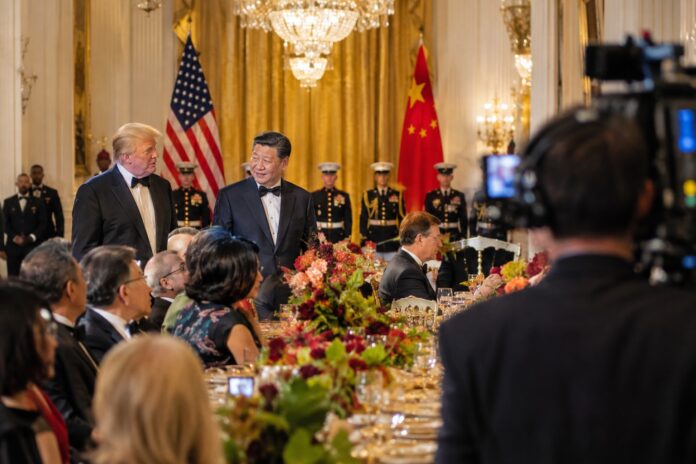
In a dramatic display of the ongoing tensions between the White House and the media, President Trump recently hosted a state dinner for Chinese President Xi Jinping, while simultaneously barring CNN from covering the event. This incident unfolded against a backdrop of escalating conflicts between the administration and various media outlets, particularly CNN, which has often been critical of the president. The state dinner, held in the East Room of the White House, was a grand affair, featuring military honors and a guest list that included some of the most influential figures in the tech industry. However, the absence of CNN from the coverage raised eyebrows and highlighted the president’s contentious relationship with the network.
Trump accused CNN of not covering Xi’s visit, despite having locked them out. A federal judge temporarily blocked Trump’s ban on CNN and other outlets. The state dinner featured military pageantry and high-profile guests. Trump’s administration has adopted a transactional approach to media access.
- Trump accused CNN of not covering Xi’s visit, despite having locked them out.
- A federal judge temporarily blocked Trump’s ban on CNN and other outlets.
- The state dinner featured military pageantry and high-profile guests.
- Trump’s administration has adopted a transactional approach to media access.
Why It Matters
The implications of this incident extend beyond mere media access; they touch on fundamental issues of press freedom and the relationship between the government and the media. By selectively granting or denying access to certain outlets, the administration is sending a clear message about who it considers legitimate and who it does not. This approach not only affects the media landscape but also shapes public perception of the administration’s transparency and accountability. The president’s actions during the state dinner serve as a reminder of the ongoing struggle between the executive branch and the press, particularly in an era where media coverage can significantly influence public opinion.
The incident underscores the administration’s contentious relationship with the media. It raises questions about press freedom and the role of the media in a democracy. Public perception of the administration may be affected by these actions. Selective media access could lead to a more polarized media landscape.
- The incident underscores the administration’s contentious relationship with the media.
- It raises questions about press freedom and the role of the media in a democracy.
- Public perception of the administration may be affected by these actions.
- Selective media access could lead to a more polarized media landscape.
Political and Public Context
This latest episode is part of a broader narrative regarding the Trump administration’s interactions with the press. Over the years, the president has frequently criticized media outlets that he perceives as biased or unfair. The ban on CNN, MS NOW, and POLITICO came just days before the state dinner, following a federal judge’s ruling that temporarily blocked the administration’s efforts to restrict press access. This ruling highlighted the ongoing legal battles surrounding press freedoms and the rights of journalists to cover government events. The president’s decision to host a state dinner for Xi Jinping, despite previously labeling China as a significant threat, also reflects the complexities of international diplomacy and the balancing act that comes with it.
The administration has faced ongoing legal challenges regarding press access. Trump’s relationship with the media has been marked by frequent criticism. The state dinner signifies a shift in diplomatic relations with China. Previous incidents of media bans have raised concerns about press freedoms.
- The administration has faced ongoing legal challenges regarding press access.
- Trump’s relationship with the media has been marked by frequent criticism.
- The state dinner signifies a shift in diplomatic relations with China.
- Previous incidents of media bans have raised concerns about press freedoms.
CBS News aired Donald Trump’s new propaganda ad blitz while the network’s boss dined with the president at a state dinner. https://t.co/8gU5zbxaFD
— The Daily Beast (@thedailybeast) September 25, 2026
What Happens Next
Looking ahead, the future of media access under the Trump administration remains uncertain. The president’s approach to the press may continue to evolve, particularly as the 2024 election approaches. Questions linger about how the administration will handle media coverage of significant events and whether further legal challenges will arise regarding press freedoms. Additionally, the impact of this incident on public perception and media credibility could shape the narrative leading into the next election cycle. As the administration navigates its relationship with the press, it will be crucial to monitor how these dynamics play out in the coming months.
Future media access policies may be influenced by this incident. Legal challenges regarding press freedoms could continue to emerge. The administration’s approach may shift as the 2024 election nears. Public perception of the media and the administration may evolve in response to these events.
- Future media access policies may be influenced by this incident.
- Legal challenges regarding press freedoms could continue to emerge.
- The administration’s approach may shift as the 2024 election nears.
- Public perception of the media and the administration may evolve in response to these events.