Story Highlights
- Thousands of protesters gathered outside the Kennedy Center to voice their concerns over President Trump’s plans for the iconic institution.
- The president asserts that he can revitalize the Kennedy Center, despite ongoing legal battles and public outcry.
- Recent court rulings have complicated the administration’s efforts to make changes to the center.
- Supporters of Trump believe his leadership can bring necessary reforms to the arts sector.
What Happened
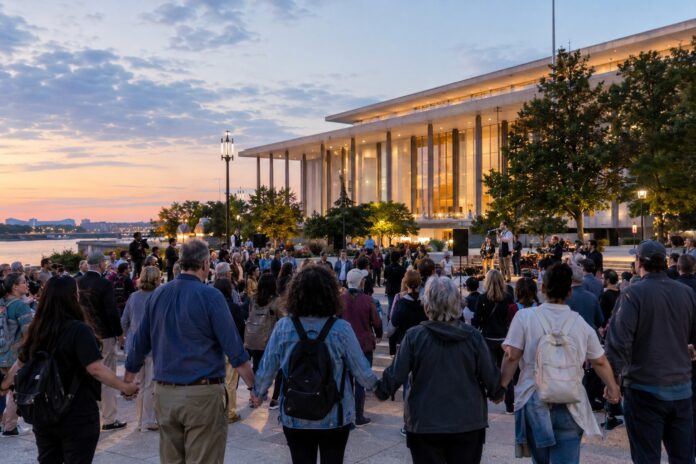
On a recent Friday evening, a significant gathering of demonstrators took place outside the Kennedy Center in Washington, D.C. The event, dubbed ‘Hands Around the Kennedy Center,’ was organized to protest President Trump’s controversial plans for the facility. The president has been vocal about his intentions to make substantial changes to the center, which has sparked fears among many that he may even consider demolishing the iconic building.
As protesters filled the streets of the Foggy Bottom area, they carried signs and chanted slogans aimed at the president. Many expressed their discontent with his administration’s approach to the arts, fearing that the Kennedy Center, a cultural landmark, could be at risk. The atmosphere was charged, with some attendees donning costumes and others brandishing inflatable figures, all in an effort to draw attention to their cause.
- Thousands of protesters gathered on September 15, 2026.
- Chris Raleigh, co-founder of Hands Off the Arts, led the protest.
- A judge ruled against the president’s attempt to have his name reinstated on the Kennedy Center.
- Trump was photographed holding a placard suggesting demolition plans.
Why It Matters
The ongoing situation surrounding the Kennedy Center is emblematic of the broader cultural and political battles taking place in the United States. The president’s commitment to reshaping the arts landscape has drawn both fervent support and vehement opposition. Supporters argue that his vision for the Kennedy Center could lead to a revitalization of the arts, making it more accessible and relevant to contemporary audiences. They believe that under his leadership, the center could become a beacon of American culture, showcasing diverse artistic expressions.
Conversely, critics fear that Trump’s approach could undermine the integrity of the institution. The protests reflect a deep-seated concern that the president’s plans may prioritize political agendas over artistic merit. The Kennedy Center has long been a symbol of artistic excellence, and many believe that any changes should be made with careful consideration of its legacy.
- The protests indicate a significant divide in public opinion regarding the president’s plans.
- Artists and cultural leaders are concerned about potential censorship and loss of artistic freedom.
- Supporters of Trump argue that his leadership can bring necessary reforms to the arts sector.
- The outcome of this situation could set a precedent for future government involvement in the arts.
Political and Public Context
The Kennedy Center has been a focal point of Trump’s administration since he took office. In 2025, he began appointing individuals to its governing board who align with his vision for the arts. This move was met with mixed reactions, as some viewed it as an opportunity for fresh perspectives, while others saw it as an attempt to exert control over a revered institution. The president’s name was controversially added to the center, but a judge ruled that this action was illegal, leading to further complications.
In recent weeks, the Kennedy Center board voted to close the facility indefinitely for repairs, a decision that came shortly after a federal judge blocked plans to restore Trump’s name to the building. This legal back-and-forth has only intensified the public’s scrutiny of the administration’s intentions. The protests serve as a reminder of the passionate attachment many have to the Kennedy Center and the arts in general.
- Trump’s administration has faced ongoing legal challenges regarding the Kennedy Center.
- The center has been a site of political contention since Trump’s presidency began.
- Public sentiment regarding the arts has become increasingly polarized.
- Recent court rulings have complicated the administration’s plans for the center.
Hundreds of protesters gathered outside the Kennedy Center and linked hands to form a human chain in response to President Donald Trump’s threats to tear down the historic arts venue. https://t.co/kmixIzRsG1
— FOX 9 (@FOX9) September 19, 2026
What Happens Next
The future of the Kennedy Center remains uncertain as the administration navigates legal challenges and public opposition. The president has expressed confidence in his ability to save the institution, but the path forward is fraught with obstacles. As the legal battles continue, it is likely that protests will persist, reflecting the ongoing tension between the administration and the arts community.
Looking ahead, the administration may need to engage more directly with artists and cultural leaders to address their concerns. Building a coalition of support could help mitigate some of the backlash and foster a more collaborative approach to the future of the Kennedy Center. Additionally, the outcome of the ongoing legal proceedings will play a crucial role in determining the center’s fate.
- Legal proceedings regarding the Kennedy Center are expected to continue in the coming months.
- The administration may seek to engage with cultural leaders to build support.
- Protests are likely to persist as public sentiment remains divided.
- The future of the Kennedy Center could influence broader discussions about government involvement in the arts.