Story Highlights
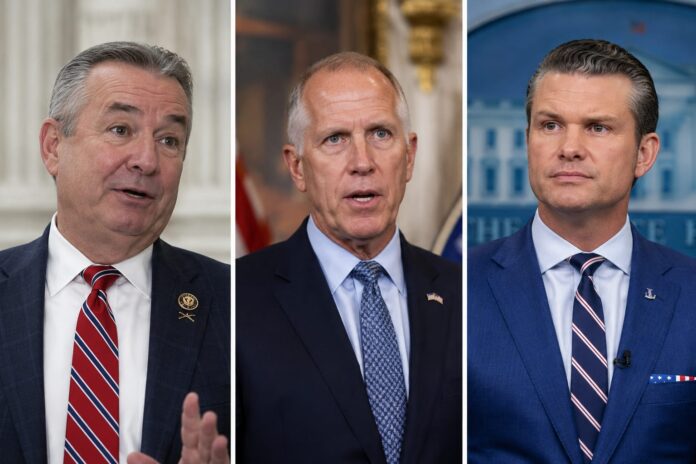
- Rep. Don Bacon aligns with Sen. Thom Tillis in criticizing Defense Secretary Pete Hegseth.
- Concerns arise over Hegseth’s leadership and management style within the Pentagon.
- Calls for Hegseth’s ouster reflect bipartisan unease among GOP lawmakers.
- Potential implications for military strategy and funding priorities loom as tensions escalate.
What Happened
In a striking display of bipartisan concern, Rep. Don Bacon (R-Neb.) has publicly supported Sen. Thom Tillis (R-N.C.) in advocating for the removal of Defense Secretary Pete Hegseth. During a recent interview on CNN’s ‘Anderson Cooper 360’, Bacon expressed his alignment with Tillis’s sentiments, stating, ‘I would not — he would not be on my team.’ This statement underscores a growing unease among Republican lawmakers regarding Hegseth’s effectiveness in managing the military and addressing critical national defense issues.
The backdrop of this criticism is significant. Sen. Tillis has been vocal about what he describes as Hegseth’s ‘inept management’ of the military, particularly following the resignation of Army Secretary Dan Driscoll. Driscoll’s departure has raised alarms about the internal dynamics at the Pentagon, with reports indicating that he had clashed with Hegseth over the ouster of senior officials. Tillis’s remarks reflect a broader frustration within the GOP regarding the current administration’s military strategy and its ability to effectively lead the armed forces.
- Rep. Don Bacon supports Sen. Thom Tillis’s call for Hegseth’s ouster.
- Sen. Tillis criticized Hegseth’s management style after Army Secretary Dan Driscoll’s resignation.
- Concerns about military strategy and funding priorities are growing among GOP lawmakers.
- The Pentagon has not commented on the criticisms directed at Hegseth.
Why It Matters
The implications of this bipartisan criticism are profound. As the GOP grapples with internal divisions and external pressures, the call for Hegseth’s removal signals a critical moment for the party and the administration. Lawmakers are increasingly concerned about the direction of military policy and the effectiveness of leadership at the Pentagon. Hegseth’s management style has come under scrutiny, with critics arguing that he has prioritized culture wars over essential national defense issues.
Moreover, the ongoing tensions within the military leadership could have far-reaching consequences. The administration is currently seeking over $70 billion in emergency national security spending to address costs associated with military operations in Iran. If the leadership at the Pentagon is perceived as ineffective, it could hinder the administration’s ability to secure necessary funding and support from Congress. This situation places additional pressure on the White House to address the concerns raised by lawmakers like Bacon and Tillis.
- Growing bipartisan criticism could impact military funding and strategy.
- Concerns about Hegseth’s leadership may hinder the administration’s ability to secure support for military operations.
- Internal tensions at the Pentagon could affect troop morale and effectiveness.
- Lawmakers are increasingly vocal about their dissatisfaction with the current administration’s military strategy.
Political and Public Context
To fully understand the significance of Bacon and Tillis’s remarks, it is essential to consider the broader context of military leadership and strategy under the current administration. Hegseth has been a controversial figure since his appointment, with critics questioning his qualifications and approach to managing the Department of Defense. The recent resignation of Army Secretary Dan Driscoll has only intensified scrutiny of Hegseth’s leadership.
Furthermore, the ongoing conflict in Iran has raised urgent questions about the administration’s military strategy and its ability to effectively engage with both allies and adversaries. The lack of a clear plan to end the war has left many lawmakers feeling uneasy about the direction of U.S. military policy. As tensions escalate, the need for strong and effective leadership at the Pentagon has never been more critical.
- Hegseth’s leadership has faced scrutiny since his appointment.
- Army Secretary Dan Driscoll’s resignation has intensified concerns about military management.
- The ongoing conflict in Iran raises urgent questions about U.S. military strategy.
- Lawmakers are increasingly vocal about the need for effective leadership at the Pentagon.
Bacon agrees with Tillis: Hegseth 'would not be on my team' #TheHill https://t.co/pcCH4Xegqc
— #TuckFrump (@realTuckFrumper) September 3, 2026
What Happens Next
The future of Defense Secretary Pete Hegseth hangs in the balance as bipartisan criticism mounts. Lawmakers like Bacon and Tillis are likely to continue pressing for accountability and effective leadership within the Pentagon. The administration faces a critical juncture as it seeks to navigate the complexities of military funding and strategy while addressing the concerns raised by its own party members.
As the situation unfolds, several key questions remain. Will President Trump heed the calls for Hegseth’s ouster, or will he stand by his appointee? How will the administration respond to the growing dissatisfaction among GOP lawmakers? The answers to these questions will shape the future of military leadership and strategy in the coming months.
- Lawmakers will continue to press for accountability within the Pentagon.
- The administration must address concerns raised by GOP lawmakers regarding military leadership.
- Key questions remain about Hegseth’s future and the administration’s military strategy.
- The outcome of this situation could have lasting implications for U.S. military policy.