Story Highlights
- Billionaire Michael Bloomberg committed $80 million to Democratic candidates in midterm elections, focusing heavily on House races
- President Trump announced a $400 million investment in Republican campaigns, with $300 million already deployed
- The financial battle reflects Democrats’ fundraising challenges as they seek to retake control of Congress from Republicans
- Bloomberg’s strategy emphasizes building a Democratic House majority larger than the minimum 218 seats needed for control
What Happened
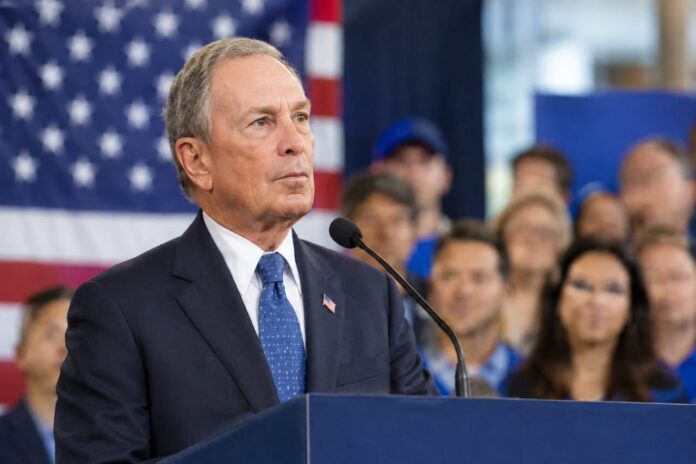
Michael Bloomberg, the billionaire former New York City mayor, committed $80 million to support Democratic candidates in the midterm elections, targeting races where the party believes it can gain ground. The New York Times reported that Bloomberg made these contributions during September and October, with a strategic emphasis on House races where Republicans currently maintain control by a historically narrow margin. His political adviser indicated that the goal extends beyond simply reaching the 218-seat threshold necessary for a House majority, instead aiming for a significantly larger Democratic caucus that would provide greater legislative flexibility and stability.
The Bloomberg initiative arrives as President Trump announced his own massive financial commitment to Republican campaigns. The president indicated plans to spend $400 million total to aid Republican candidates, with $300 million of that amount already distributed to support GOP efforts. This financial mobilization underscores the intensity of the midterm battle and the stakes both parties perceive in congressional control.
- Bloomberg contributed $80 million across Democratic campaigns in September and October
- President Trump committed $400 million to Republicans, with $300 million already disbursed
- Bloomberg directed $24 million to Everytown for Gun Safety and $16 million to House Majority Pac
- Democrats currently trail Republicans in overall fundraising efforts
Why It Matters
Control of either chamber of Congress carries profound implications for the Trump administration’s legislative agenda and judicial appointments. Should Democrats successfully retake the House, they would possess the power to block key administration initiatives and conduct more rigorous oversight of executive branch activities. A Democratic Senate majority would grant lawmakers the ability to reject presidential nominees for the Supreme Court and other federal judicial positions, fundamentally shaping the judiciary for generations. These dynamics explain why both parties view the midterm elections as consequential and why wealthy donors on both sides are making substantial financial commitments.
Bloomberg’s investment reflects Democratic concerns about fundraising shortfalls despite their belief that electoral conditions favor the party. The former mayor’s track record of financial commitment to Democratic causes—including $80 million spent during Trump’s first term in 2018 and his well-funded but unsuccessful 2020 presidential bid—demonstrates his willingness to deploy personal resources to advance party objectives. His adviser’s assertion that resources matter in campaigns and that the billionaire expects tangible results underscores the confidence Bloomberg places in strategic financial deployment.
- Democratic control of either chamber would block Trump’s legislative priorities and enable oversight investigations
- Senate control would allow Democrats to reject Supreme Court and federal judicial nominees
- Democrats acknowledge trailing Republicans in overall fundraising despite believing electoral conditions favor them
- Bloomberg’s contributions supplement insufficient party fundraising to achieve competitive positioning in key races
Political and Public Context
The financial battle between Bloomberg and the Trump-backed Republican establishment reflects a broader pattern of billionaire-funded political engagement. Beyond Bloomberg’s $80 million commitment, Republicans benefit from substantial support by entrepreneur Elon Musk, who has deployed $366 million toward conservative groups and campaigns. This concentration of wealth-driven political influence demonstrates how major donors shape electoral outcomes and the resources available to candidates competing for congressional seats.
Bloomberg’s political evolution illuminates the Democratic Party’s recruitment of financial powerhouses. Once registered as an independent during his mayoral tenure from 2002 to 2013, he later registered as a Democrat and became a major party benefactor. His focus this cycle includes not only House races but also gubernatorial contests and Senate races, including a $2.5 million contribution to a Super Pac supporting a Democratic candidate in Texas’s Senate race. This diversified approach reflects strategic decisions about where Democratic resources can achieve maximum impact in contests where margins may prove decisive.
- Elon Musk has spent $366 million supporting conservative groups and Republican campaigns
- Bloomberg previously spent $80 million on Democrats during the 2018 midterms under Trump’s first term
- Democrats acknowledge trailing Republicans in fundraising but believe electoral conditions favor them
- Bloomberg’s donations span House races, Senate contests, and gubernatorial campaigns across multiple states
Former New York mayor Mike Bloomberg is swooping in to help his party retake the House majority, pouring more than $80 million into the midterms over the last two months and leaving the door open to giving more before Election Day, his adviser said.https://t.co/FG2N0TZo5y
— The Washington Post (@washingtonpost) October 21, 2026
What Happens Next
The efficacy of Bloomberg’s $80 million investment relative to President Trump’s $400 million Republican commitment will become apparent as the midterm election cycle approaches its conclusion. Democrats maintain their belief that they possess favorable conditions to retake House control and possibly secure the four Senate seats necessary to claim that chamber’s majority. However, the ongoing fundraising disparity, with Republicans benefiting from both Trump’s personal wealth deployment and Musk’s substantial contributions, suggests the financial advantage rests with the GOP.
Strategic decisions about resource allocation will largely determine outcomes in competitive districts and states. Bloomberg’s emphasis on ensuring a Democratic House majority substantially larger than the minimum necessary threshold indicates confidence that money can translate into seat gains. The coming weeks will test whether his investment strategy, combined with Democratic ground operations and candidate recruitment, can overcome the Republican financial advantage or whether Trump’s resource mobilization will prove decisive in maintaining GOP control of Congress.
- Democratic leadership expects to compete effectively in House races despite trailing in overall fundraising
- Democrats target gaining four Senate seats to claim Senate control, though analysts view outcomes as competitive
- Bloomberg’s strategy emphasizes building a larger Democratic majority cushion beyond the 218-seat minimum
- Final election results will demonstrate whether Democratic investment can offset Republican financial advantages