Story Highlights
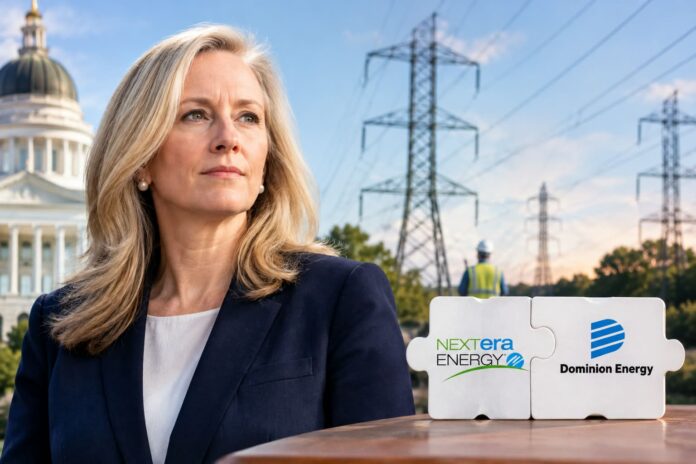
- Virginia Governor Abigail Spanberger is requiring a six-year freeze on electricity rate increases as a condition for approving the NextEra Energy and Dominion Energy merger
- Spanberger filed expert testimony with the State Corporation Commission urging rejection of the deal unless the companies halt base rate increases for six years
- The governor is seeking to triple ratepayer benefits to approximately $29 per month for Virginia customers over four years, up from the proposed $2.25 billion total across three states
- Spanberger’s proposal would allow for rate decreases if economic conditions warrant, with SCC review authority over any potential reductions
What Happened
Virginia Governor Abigail Spanberger has taken a firm stance on the proposed merger between NextEra Energy and Dominion Energy, one of the nation’s largest utility consolidations. On Monday, Spanberger filed expert testimony with the State Corporation Commission outlining specific conditions that must be met before she would support the merger proceeding. Her central demand involves a complete halt to base electricity rate increases across the commonwealth for a six-year period, equivalent to three rate case cycles.
The testimony represents a significant intervention in the merger process by the first-year Virginia governor, who made lowering the cost of living a central campaign promise. Spanberger’s position directly challenges the current terms proposed by the two utility companies and signals that state approval may hinge on substantial concessions to ratepayers. The governor emphasized that the existing benefits package offered by NextEra and Dominion falls substantially short of what Virginians deserve and indicated that without major improvements, she would recommend the SCC reject the entire transaction.
- Spanberger filed expert testimony with the State Corporation Commission on Monday challenging the merger terms
- NextEra Energy is acquiring Dominion Energy for approximately $67 billion in equity value
- The two companies originally proposed $2.25 billion in shareholder-funded bill credits across North Carolina, South Carolina, and Virginia upon closing
- The deal was announced in May 2024 with an expected closing timeframe of 12 to 18 months
Why It Matters
This development carries substantial implications for Virginia’s energy policy and consumer protection frameworks. The rate freeze proposal directly addresses household electricity expenses, which remain a significant portion of many families’ budgets across the commonwealth. Virginia’s current average residential electricity rate of 17.55 cents per kilowatt-hour sits below the national average of 18.31 cents, yet Spanberger’s intervention suggests policymakers believe ratepayers could receive greater protection and financial benefit from this landmark merger.
Spanberger’s demand to triple ratepayer benefits represents a substantial shift in the deal’s economics. By seeking to increase the rebate to approximately $29 per month for Virginia customers over four years, the governor is attempting to ensure that consumers capture significantly more value from the merger’s anticipated synergies and efficiencies. The proposal also includes a critical flexibility mechanism that would permit rate decreases if market and economic conditions improve, providing potential downside protection for consumers while maintaining stability through the rate freeze period.
- Virginia households stand to receive dramatically increased monthly bill credits if Spanberger’s proposal is implemented
- The rate freeze would provide electricity cost certainty for consumers and businesses across the commonwealth for six years
- The merger would create the world’s largest regulated electric utility business by market capitalization if approved
- Spanberger’s intervention demonstrates increased executive oversight of major utility transactions affecting state consumers
Political and Public Context
Spanberger’s aggressive negotiating position reflects broader national conversations about utility consolidation and consumer protection. Large utility mergers have drawn increasing scrutiny from state regulators and governors concerned about rate impacts and service quality. Her demand for substantial ratepayer benefits aligns with evolving consumer advocacy and regulatory trends that emphasize ensuring merger-related savings flow directly to customers rather than remaining concentrated in shareholder returns.
The governor’s stance carries particular weight given her recent election and her explicit campaign focus on cost-of-living issues. By taking a hardline position on utility rates early in her administration, Spanberger is signaling her commitment to consumer protection and setting expectations for how her administration will approach major corporate transactions with direct impacts on Virginia households. The State Corporation Commission remains responsible for the ultimate merger decision, but the governor’s expert testimony provides formal regulatory input that commissioners must consider as they evaluate whether the deal serves the public interest.
- Spanberger campaigned on lowering living costs and is implementing that platform through utility oversight
- State regulators across the nation have intensified scrutiny of utility mergers in recent years
- The deal would combine two major regional utilities and affect consumers across North Carolina, South Carolina, and Virginia
- Consumer advocacy groups have increasingly demanded rate protections and direct bill credits in utility consolidations
Spanberger pushes for 6-year rate-hike freeze if Dominion-Next Era merger approvedhttps://t.co/sns1NudsWx
— The Hill (@thehill) October 21, 2026
What Happens Next
The State Corporation Commission will now evaluate Spanberger’s testimony alongside other regulatory filings and evidence as it determines whether to approve or reject the NextEra-Dominion merger. According to the governor, commissioners remain several steps away from rendering a final decision, suggesting the review process will extend over multiple months. NextEra Energy and Dominion Energy will need to decide whether to accept Spanberger’s conditions, negotiate modified terms, or proceed with their current proposal and risk state-level opposition to merger approval.
The companies face a critical strategic choice: accepting a six-year rate freeze could satisfy state regulatory requirements and enable the transaction to proceed, but would constrain their ability to adjust rates during that period. Alternatively, rejecting the governor’s demands could result in SCC denial of the merger or protracted regulatory battles that delay closing. Spanberger indicated her requirements are both aggressive and realistic, suggesting room for negotiation, though the broad parameters of her position appear firm. The outcome will significantly influence the transaction’s timeline and whether it ultimately closes as originally announced.
- The State Corporation Commission must ultimately approve or reject the merger proposal
- NextEra and Dominion must decide whether to accept Spanberger’s conditions or negotiate alternative terms
- The merger timeline of 12 to 18 months from announcement could be affected by regulatory negotiations
- Additional formal regulatory hearings and evidence submissions will occur before a final SCC decision is rendered