Story Highlights
- President Trump announced an $8 billion Harvest Fuel Relief Program to help farmers offset rising diesel costs during the critical harvest season
- The initiative provides one-time payments to agricultural producers facing significant increases in fuel expenses and market disruptions
- The administration has pursued multiple strategies to address diesel affordability, including expanding access to tax-exempt red-dyed diesel for farm equipment
- The relief effort reflects the White House commitment to supporting farm communities during economically challenging periods
What Happened
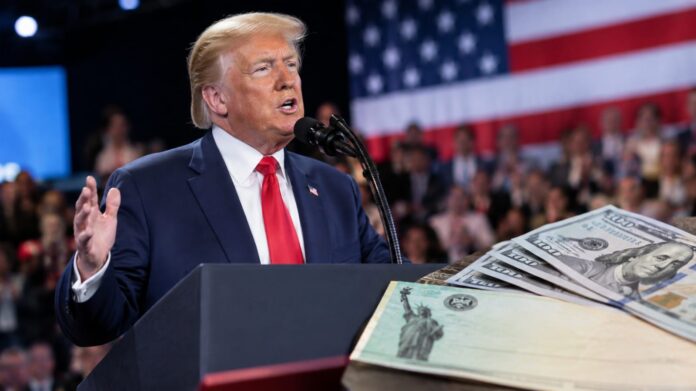
President Trump announced a new $8 billion relief initiative designed to provide temporary support to farmers during the harvest season. The Harvest Fuel Relief Program was unveiled during a campaign rally in Kansas, where the president was supporting Sen. Roger Marshall in his reelection campaign. The program targets one of the most pressing challenges facing agricultural producers: the dramatic surge in diesel fuel costs that has strained farm operations nationwide.
According to the Agriculture Department, the $8 billion will be distributed through one-time payments to eligible farmers. Agriculture Secretary Brooke Rollins described the program as delivering critical support to agricultural communities confronting rising costs and market disruptions. The relief effort represents a direct response to requests from farm state Republicans who have advocated for federal action to address fuel price volatility affecting rural economies.
- The Harvest Fuel Relief Program provides $8 billion in one-time payments to farmers
- Current average diesel prices stand at approximately $6.32 per gallon, compared to $3.63 per gallon one year prior
- The initiative was announced during a Kansas campaign rally supporting Sen. Roger Marshall’s reelection bid
- Agriculture Secretary Brooke Rollins affirmed the program addresses rising costs and market disruptions
Why It Matters
The escalation in diesel costs represents a significant economic burden for farming operations across the country. Diesel fuel is essential for tractors, harvesters, and other critical farm equipment, making fuel prices a direct determinant of agricultural profitability. The doubling of diesel prices from one year ago demonstrates the severity of the challenge facing farmers during peak harvest periods when fuel consumption reaches its highest levels. Without relief, these elevated costs would substantially reduce farmer incomes and threaten the viability of agricultural enterprises, particularly for operations with tighter profit margins.
This relief program demonstrates the White House’s responsiveness to the economic pressures affecting rural communities that are fundamental to American food production and the broader economy. By directing resources specifically to farmers facing these challenges, the administration acknowledges the interconnection between agricultural prosperity and national economic stability. The timing of the announcement during the harvest season ensures that support reaches producers when their need is most acute, maximizing the program’s practical impact on farming operations.
- Diesel fuel costs have more than doubled year-over-year, creating severe economic strain on farm operations
- Agricultural equipment operators depend heavily on diesel for harvesting operations, making fuel prices a critical factor in profitability
- Rural communities dependent on farming face potential economic disruption without targeted federal support
- The relief program directly addresses requests from farm state Republican leaders for executive action on fuel affordability
Political and Public Context
Agricultural communities have consistently represented a significant voting bloc in presidential politics, particularly in Midwest and Great Plains states where farming dominates the regional economy. President Trump’s commitment to supporting farmers has been a cornerstone of his administration’s outreach to rural America. The announcement of the Harvest Fuel Relief Program reinforces this positioning while also serving the practical needs of farming families and operations struggling with economic headwinds.
The White House has pursued a multifaceted approach to addressing diesel affordability challenges. Earlier initiatives included steps to increase availability of red-dyed diesel, a tax-exempt fuel typically used in farm and construction equipment. This complementary strategy demonstrates sustained attention to the fuel cost problem from multiple angles. However, the administration has resisted calls from some Republicans to impose an export ban on diesel, opting instead for targeted domestic relief measures and supply-side adjustments.
The geopolitical context of elevated fuel prices reflects broader global economic tensions, with regional conflicts affecting energy markets and commodity prices. The administration’s recognition of these external pressures while still delivering direct relief to American farmers shows commitment to insulating agricultural producers from forces beyond domestic control.
- Agricultural regions represent crucial voting constituencies in presidential politics, particularly in Midwest and Great Plains states
- The White House has implemented complementary fuel accessibility initiatives, including expanded red-dyed diesel availability
- Global energy market disruptions and regional conflicts contribute to sustained fuel price elevation
- The administration declined to impose diesel export restrictions, instead favoring targeted domestic relief and supply measures
Farmers to get one-time payments from $8 billion program, Trump says: What to knowhttps://t.co/N5MvtChaVk
— The Hill (@thehill) October 20, 2026
What Happens Next
The implementation of the Harvest Fuel Relief Program will require coordination between federal agricultural agencies and state entities to identify eligible farmers and process one-time payments efficiently. The Agriculture Department will likely establish application procedures and eligibility criteria to ensure that resources reach farmers who need support most urgently. Given the time-sensitive nature of harvest operations, the administration will need to move expeditiously to distribute funds while harvesting activities are still underway.
Future policy direction regarding fuel affordability for agricultural producers will likely depend on several factors, including energy market conditions, global geopolitical developments, and the program’s measurable impact on farm operations. The White House may evaluate the effectiveness of the one-time relief approach against the need for longer-term structural solutions to fuel cost volatility. Additional legislative or executive measures could follow depending on how diesel prices evolve over the coming months and seasons.
- The Agriculture Department must establish application procedures and eligibility criteria for the relief program
- Federal agencies will coordinate distribution of one-time payments during the active harvest season
- Program effectiveness will likely inform future agricultural support policies and fuel pricing initiatives
- Energy market conditions and geopolitical factors will continue to influence fuel price trajectories and potential future relief measures