Story Highlights
- The Department of Justice filed an appeal challenging a federal judge’s temporary block on new U.S. Postal Service mail-in ballot regulations
- U.S. District Judge Indira Talwani imposed a 14-day freeze on implementation, siding with Democratic-led states opposing the administration’s voting rules
- The White House characterized the regulations as modest informational requirements that preserve state election authority and voter access
- The appeals process accelerates as midterm elections approach, with the 1st U.S. Circuit Court of Appeals now reviewing the dispute
What Happened
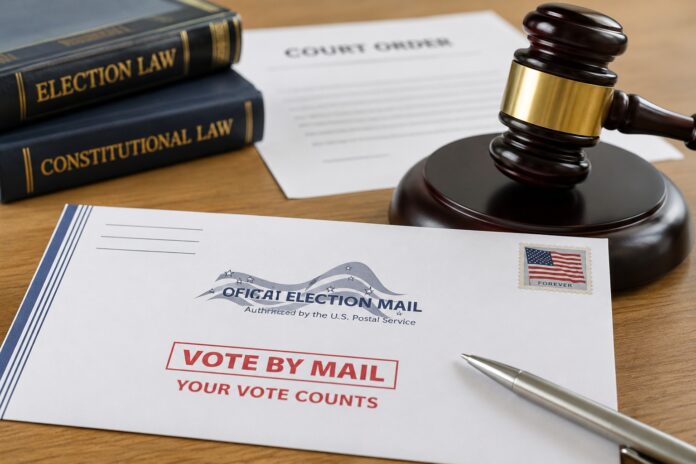
The Department of Justice moved swiftly to appeal a temporary injunction that blocked implementation of new mail-in voting regulations established through the U.S. Postal Service. Late Thursday evening, U.S. District Judge Indira Talwani issued a ruling that prevented the Trump administration from enforcing certain provisions of the Postal Service’s final rule for a minimum of 14 days. This judicial action came after Democratic-led states and private advocacy groups challenged the regulations in court, arguing they violated constitutional protections related to election administration.
The Postal Service had finalized its rule the previous Friday and initially proceeded with implementation despite mounting legal opposition. However, the federal judge’s intervention created immediate uncertainty about the regulations’ viability. The judge reasoned that states could not realistically comply with the new requirements given the compressed timeline before the November elections, posing a significant risk of voter disenfranchisement for those relying on mail-in ballots.
- DOJ filed appeal to 1st U.S. Circuit Court of Appeals on Friday following Thursday’s injunction
- Judge Talwani imposed 14-day temporary block on Postal Service mail-in ballot regulations
- Democratic-led states and advocacy groups successfully argued implementation timeline was impossible to meet
- Supreme Court had previously ruled on standing grounds earlier in the week, allowing administration to finalize the rule
Why It Matters
This legal confrontation carries substantial implications for election administration as midterm elections draw near. The regulations represent an effort by the administration to establish federal informational standards for mail-in voting while maintaining state authority over election procedures. How courts ultimately resolve this case will determine whether these requirements take effect during a critical election cycle, affecting millions of voters who depend on mail ballots.
The Justice Department emphasized that the new regulations impose only modest informational requirements and do not displace any state election laws or prevent voters from accessing mail-in ballots. Officials argued that the rules represent a reasonable exercise of federal authority without overreaching into state election administration. The tight timeline amplifies the stakes considerably, as courts must balance expedited legal resolution against careful judicial deliberation.
- Midterm elections timeline creates urgency for legal resolution before voting begins
- Federal informational requirements must be weighed against state election administration authority
- Millions of mail-in ballot voters could be affected by final court ruling
- State election officials face operational uncertainty if regulations remain blocked
Political and Public Context
The dispute reflects broader political divisions over mail-in voting policies that have intensified in recent election cycles. Democratic-led states have generally sought to expand mail-in voting access, characterizing expansion as a matter of voter convenience and accessibility. The Trump administration’s regulatory approach prioritizes what it frames as election integrity safeguards, arguing that informational requirements serve legitimate governmental interests in maintaining ballot security and verification processes.
This particular battle follows a week of significant legal developments in which the Supreme Court’s intervention altered the litigation landscape. The high court’s decision that challengers lacked standing to sue before rule finalization gave the administration a procedural victory, only to be followed by new lawsuits once the rule became final. The involvement of Democratic-led states in coordinated legal challenges reflects their institutional commitment to defending mail-in voting expansion.
- Democratic-led states and advocacy groups aligned in challenging the regulations as unconstitutional
- Supreme Court’s earlier procedural ruling temporarily favored administration position
- Election integrity versus voter access represents core ideological divide on voting policy
- Federal election regulations remain contested terrain between executive authority and state sovereignty
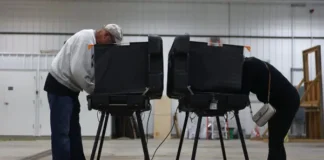
A federal judge again on Thursday blocked President Donald Trump’s administration from implementing its new mail-in voting restrictions ahead of the midterms, days after the Supreme Court lifted an earlier injunction.
Read more: https://t.co/SWJ7Vv6KeA
📸: Jim Watson/AFP via… pic.twitter.com/vP6goiU81t— Forbes (@Forbes) August 28, 2026
What Happens Next
The 1st U.S. Circuit Court of Appeals will now review the temporary block imposed by the federal district judge on an expedited schedule given the proximity to midterm elections. The appeals court must determine whether the lower court properly exercised its authority in blocking the regulations and whether the legal challenges to the rules have sufficient merit to justify continued judicial intervention.
Depending on the appellate court’s decision, the matter could proceed to the Supreme Court, where justices might address the regulations’ validity on the merits rather than purely on procedural grounds. State election officials will remain in a state of uncertainty until courts provide clarity on which rules will govern mail-in voting procedures, potentially affecting planning and resource allocation for smooth midterm election administration.
- 1st U.S. Circuit Court of Appeals will conduct expedited review of temporary injunction
- Potential for subsequent Supreme Court review if appellate decision is appealed
- State election officials must plan operations without clarity on final regulatory status
- Legal outcome will establish precedent for federal-state voting regulation authority