Story Highlights
- Rep. Byron Donalds reported engaging in meetings with Haiti’s transitional government and its ambassador to address country stabilization
- The Supreme Court’s 6-3 decision allowed revocation of Temporary Protected Status for over 300,000 Haitian migrants in the United States
- Haitian officials indicated they are working to expand security force control, with estimates suggesting they have regained approximately 25 to 50 percent of the country from gang influence
- Economic data shows Haitian TPS holders contribute approximately $2.6 billion annually to Florida’s economy, with nearly 93,000 working in agriculture, security, and nursing sectors
What Happened
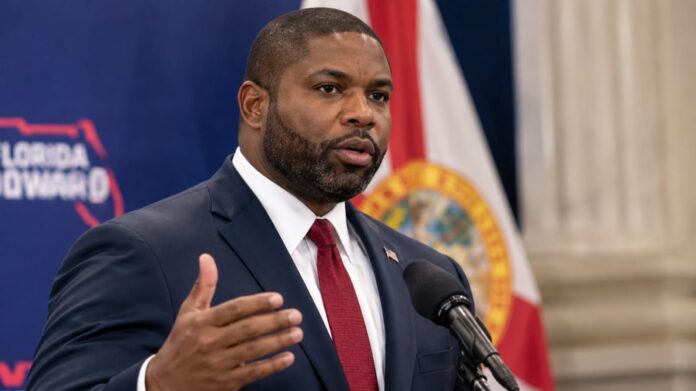
Rep. Byron Donalds, the Republican gubernatorial nominee for Florida, indicated involvement in collaborative efforts with Haitian leadership following the expiration of Temporary Protected Status for Haitian migrants in the United States. According to statements made on a national news broadcast, Donalds reported holding meetings with members of Haiti’s transitional government and its diplomatic representatives. The discussions centered on stabilization initiatives and security improvements within Haiti, where gang-related violence and instability have created significant humanitarian concerns.
The timeline of these developments connects to a significant Supreme Court decision issued earlier in the summer. The nation’s highest court issued a 6-3 ruling that determined federal judges lacked authority to intervene in the administration’s decision to revoke the TPS designation for Haitian nationals. This decision reversed an earlier February ruling by a federal district judge that had temporarily paused the revocation proceedings. The expiration of TPS status directly affects more than 300,000 Haitian migrants currently residing in the United States.
- Rep. Byron Donalds conducted meetings with Haiti’s transitional government representatives and ambassador
- Supreme Court issued a 6-3 decision allowing revocation of TPS designation for Haitian migrants
- Haitian officials reported expanding security force operations with control of approximately one-quarter to one-half of national territory
- The TPS expiration impacts more than 300,000 Haitian nationals in the United States
Why It Matters
The stabilization efforts in Haiti carry substantial implications for both the Caribbean nation and the United States. Haiti’s ongoing security crisis, driven by gang violence and territorial control disputes, has created humanitarian conditions that originally prompted the TPS designation following the 2010 earthquake. The current push for stability represents an attempt to address root causes that have maintained migration pressure and humanitarian concerns over the past decade and a half. Economic interconnections further amplify the significance of Haiti’s internal stability, particularly given the substantial contributions Haitian workers make to regional economies.
The engagement with Haitian leaders underscores recognition that long-term solutions require addressing conditions within Haiti itself rather than maintaining indefinite protection mechanisms. Officials involved in these discussions appear to emphasize that temporary status designations were never intended as permanent solutions, and that meaningful progress toward normalcy requires commitment to rebuilding governmental capacity, security infrastructure, and economic opportunity within Haiti. The involvement of American political figures in these stabilization conversations reflects broader policy considerations about migration, foreign relations, and humanitarian responsibility.
- Haitian TPS holders contribute $2.6 billion annually to Florida’s economy, with direct employment in critical sectors including healthcare and agriculture
- Approximately 158,000 Haitian TPS holders resided in Florida as of January, representing the largest concentration of this population
- Gang-related violence remains the primary destabilizing factor requiring security force expansion and governmental control restoration
- Long-term stability in Haiti directly influences migration patterns and humanitarian conditions affecting multiple nations in the Western Hemisphere
Political and Public Context
The TPS program has served as a significant immigration mechanism for Haitian nationals since its initial establishment in 2010 following the devastating earthquake that affected the Caribbean island. The program was designed as a temporary measure providing work authorization and protection from deportation during periods of extraordinary conditions rendering return unsafe or impractical. Over the more than a decade of implementation, the TPS designation for Haiti became effectively permanent, with successive administrations choosing to extend the status repeatedly. The current policy shift represents a fundamental change in approach toward this long-standing protection mechanism.
Haiti’s political and security environment has deteriorated significantly in recent years, with gang violence becoming increasingly organized and territorial in nature. The State Department maintains travel warnings for American citizens regarding Haiti due to persistent concerns about criminal activity, kidnapping threats, and limited healthcare infrastructure. The transitional government established to manage Haiti’s political recovery faces substantial challenges in reasserting state authority and restoring functioning institutions. International attention to Haiti’s situation has fluctuated considerably, with the current engagement by American political figures representing renewed focus on supporting institutional capacity building and security sector development.
- Haitian TPS designation originated following the 2010 earthquake and underwent multiple extensions over subsequent administrations
- The State Department maintains active travel warnings for Haiti citing crime, kidnapping, and limited healthcare access
- Haiti’s transitional government confronts entrenched gang control requiring substantial security force expansion and resource commitment
- Prior Haitian TPS populations established substantial economic integration in receiving communities, particularly in Florida and other northeastern states
Donalds says he's 'working' with Haitian leaders to stabilize government after end of TPS #TheHill https://t.co/AVpjT4Poo1
— #TuckFrump (@realTuckFrumper) August 23, 2026
What Happens Next
The path forward involves multiple concurrent developments affecting both Haiti and the Haitian diaspora in the United States. Haitian transitional government officials will continue efforts to expand security force capacity and regain territorial control from gang-affiliated organizations. These operations require sustained resources, training, and institutional development to achieve lasting results. The international community, including diplomatic representatives from the United States, appears committed to monitoring and potentially supporting these stabilization efforts through various bilateral and multilateral channels.
For Haitian migrants currently holding TPS status in the United States, the coming months will involve navigation of legal status changes and consideration of relocation, employment adjustment, or other circumstances related to the expiration of protected status. American policymakers, including those involved in ongoing Haiti-focused discussions, will assess whether security and stability improvements warrant reconsideration of immigration policies or whether alternative approaches to managing population movements become necessary. The effectiveness of Haiti’s security operations during the coming period will significantly influence humanitarian conditions, migration pressures, and international response strategies.
- Haitian security forces will continue expanding territorial control and gang violence reduction operations throughout the coming period
- TPS expiration will create status transitions for affected migrants requiring navigation of legal, employment, and residency considerations
- International observers will monitor Haiti’s stabilization progress to evaluate humanitarian conditions and potential policy responses
- Future engagement between American political figures and Haitian leadership may evolve based on observed progress toward restored governmental capacity and security normalization