Story Highlights
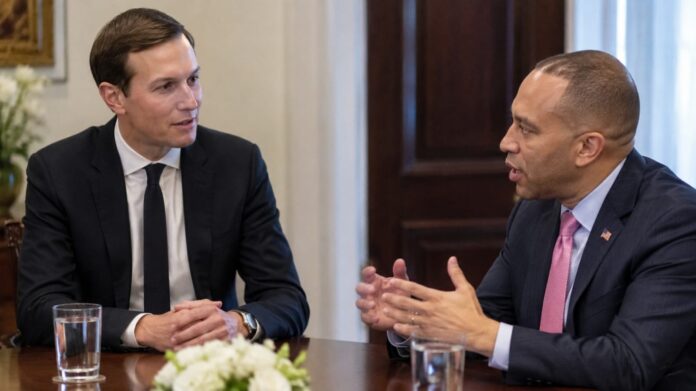
- Jared Kushner recently met with House Democratic Leader Hakeem Jeffries in New York City to explore areas of potential bipartisan collaboration
- Speaker Mike Johnson characterized Kushner’s role in the Trump administration as limited, focusing primarily on foreign policy matters
- The discussion between Kushner and Jeffries centered on housing, immigration, and cost of living as possible areas for Republican-Democratic cooperation
- The meeting signals potential willingness to engage across party lines despite significant partisan disagreements on major policy issues
What Happened
A reported meeting between Jared Kushner and House Democratic Leader Hakeem Jeffries has sparked discussion about the possibility of bipartisan cooperation within the current Congress. The two men convened in New York City to identify common ground on several critical domestic issues facing American families. During their conversation, they explored potential areas where the Trump administration and Democratic-led House members might find agreement and collaborate on legislative priorities.
Kushner, who serves as the president’s son-in-law and foreign policy envoy, reportedly encouraged Jeffries to establish a direct connection with White House Chief of Staff Susie Wiles to facilitate ongoing dialogue. The substance of their discussion reflected recognition that certain issues transcend traditional party divisions and require pragmatic problem-solving across the aisle. Speaker Mike Johnson addressed the meeting during a television appearance, providing perspective on Kushner’s current role within the administration’s structure and decision-making processes.
- Kushner and Jeffries met in New York City to discuss areas of potential bipartisan agreement
- Housing, immigration, and cost of living emerged as primary topics for potential collaborative efforts
- Kushner suggested Jeffries meet with White House Chief of Staff Susie Wiles to advance discussions
- Speaker Johnson characterized Kushner’s involvement in day-to-day White House operations as limited
Why It Matters
The willingness of key figures to engage in substantive dialogue across party lines represents an important development in American governance. While partisan tensions remain high on numerous policy questions, the recognition that certain challenges demand collaborative solutions offers potential pathways forward on issues directly affecting Americans’ daily lives. Housing affordability, immigration reform, and cost-of-living concerns impact voters regardless of political affiliation, creating natural opportunities for bipartisan problem-solving when political leaders choose to pursue them.
For the Trump administration, demonstrating openness to Democratic input on key domestic issues strengthens its positioning as a practical, results-oriented leadership. The president has indicated personal openness to working with Democratic leaders when mutual interests align. This approach contrasts with gridlock and unproductive partisan warfare, potentially improving the administration’s ability to advance legislative priorities that enjoy broader support. Democrats, meanwhile, face pressure from constituents demanding solutions to affordability challenges and other pressing concerns, creating incentives for constructive engagement regardless of partisan differences.
- Housing affordability and immigration policy directly affect millions of American families across party lines
- Bipartisan cooperation on cost-of-living issues could produce legislative accomplishments benefiting the administration’s agenda
- Successful collaboration on domestic priorities strengthens the White House’s standing with centrist and independent voters
- Democratic leaders face constituent pressure to deliver tangible results on affordability and quality-of-life issues
Political and Public Context
The political landscape entering this cycle reflects Americans’ frustration with partisan dysfunction and demands for practical solutions. Polling consistently demonstrates voter dissatisfaction with Congress’s inability to address major challenges affecting household finances and family security. The White House has emphasized its commitment to delivering results that improve American lives, positioning the administration as focused on accomplishment rather than partisan theater. Meanwhile, the Democratic caucus has worked to maintain its coalition while facing criticism for ineffective opposition to administration policies.
Kushner’s profile in the Trump administration differs significantly from his role during the first term, when he held a formal senior advisor position. His current focus on foreign policy matters, particularly regarding Middle Eastern conflicts and diplomatic initiatives, provides him a degree of distance from day-to-day domestic political battles. This positioning may actually enhance his utility as a bridge-builder, as he operates outside the traditional White House hierarchy in ways that might facilitate candid conversations with opposing leaders. The president himself has demonstrated capacity for pragmatic engagement with Democratic figures when interests align, suggesting a willingness within the administration to move beyond pure partisan conflict.
- American voters consistently express frustration with partisan gridlock and demand practical legislative solutions
- Kushner’s primary focus on foreign policy and diplomatic matters distinguishes his current role from previous positions
- The Trump administration has emphasized results-oriented governance and willingness to work with willing Democratic partners
- Democratic leadership faces pressure to demonstrate legislative effectiveness on constituent concerns
Jeffries, Kushner met to discuss potential areas of common ground: Sources https://t.co/imyJxc2zTa
— ABC11 EyewitnessNews (@ABC11_WTVD) August 23, 2026
What Happens Next
The immediate trajectory of the Kushner-Jeffries dialogue remains uncertain, though the meeting itself represents a meaningful signal about openness to substantive engagement. Whether this conversation catalyzes concrete legislative collaboration depends on multiple factors, including the political calendar, internal dynamics within both parties, and the degree to which leaders prioritize accomplishment over partisan advantage. The coming weeks and months will reveal whether this initial discussion develops into broader bipartisan cooperation on the identified priority areas.
House Democratic leaders will likely face pressure from their base regarding any collaboration with the Trump administration, requiring careful navigation of political sensitivities. Similarly, Republican leaders must balance openness to Democratic input with their core policy priorities and coalition maintenance. The White House, through Chief of Staff Susie Wiles and other officials, will determine whether to invest resources in developing bipartisan partnerships or focus exclusively on executive action and Republican-only legislative strategy. The outcome of these internal calculations will shape whether the Kushner-Jeffries meeting represents a genuine turning point toward productive cooperation or remains a symbolic gesture.
- Substantive legislation on housing, immigration, or affordability could emerge if both parties commit to genuine negotiation
- Democratic and Republican base members may resist collaboration perceived as compromising core principles
- The White House must decide whether to prioritize bipartisan cooperation or executive-action-focused governance
- Coming months will reveal whether initial dialogue translates into concrete legislative accomplishments