

Story Highlights
- Progressive Democratic candidate Abdul El-Sayed challenged the president to visit Michigan, suggesting the GOP nominee cannot speak independently
- The president announced plans for a Michigan visit within approximately ten days but provided no specific details
- El-Sayed, leading Republican Mike Rogers in several polls, called the president afraid to accept the dare
- The president responded by calling El-Sayed a communist at a Nebraska rally, indicating the challenge had registered
What Happened
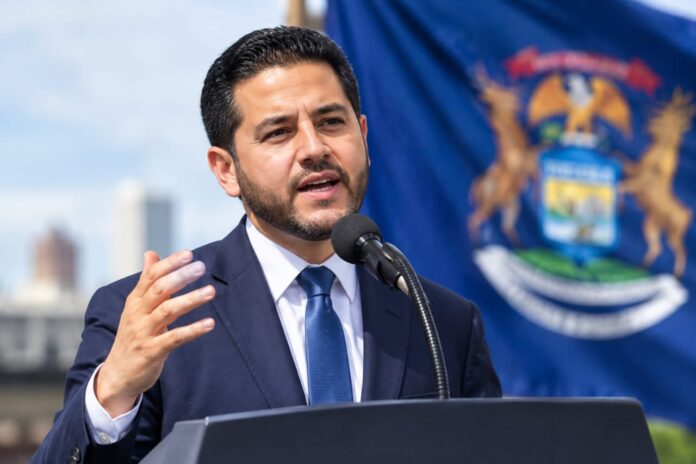
Abdul El-Sayed, a progressive Democrat leading Republican Mike Rogers in multiple Michigan polls, issued a public challenge on Monday during an appearance on a cable news program. El-Sayed dared the president to visit Michigan, arguing that the GOP nominee could not speak for himself and needed presidential intervention to deliver his message directly to voters.
El-Sayed called on the president directly, stating the candidate could not speak for himself and lacked independent policy positions. He challenged the president to explain why voters should imagine him on the ballot, then declared: I think you are too afraid to come to Michigan because when I beat your candidate, and you came, I am actually beating you. So I dare you to come.
On the same day, the president told reporters he was planning to visit Michigan within a week and a half, though neither he nor the White House provided specifics about timing or location. Later that evening, the president responded to El-Sayed at a Nebraska rally, calling him a communist, demonstrating that the progressive candidate’s challenge had captured his attention.
- El-Sayed issued his challenge during a cable news appearance on Monday
- The president announced a planned Michigan visit within a week and a half with no specific details provided
- The president responded by calling El-Sayed a communist at a Nebraska rally
- El-Sayed leads Trump-backed Republican Mike Rogers in several recent polls
Why It Matters
El-Sayed’s strategy highlights Democratic concerns about Republican candidates’ independence and ability to govern without constant presidential guidance. The challenge reflects a broader Democratic messaging effort portraying GOP nominees as mere extensions of the president rather than independent leaders capable of addressing constituent concerns.
For Republicans, the dynamic presents complications. While the president remains central to GOP electoral strategy and his rallies energize the conservative base, some Republican candidates avoided appearing at his recent midterm convention, suggesting concerns that his popularity may have weakened. Michigan’s biggest newspaper questioned whether a presidential visit would actually help Republicans, noting his job approval remains near record lows amid high gas prices and ongoing international tensions.
Michigan represents a critical battleground state, and the competitive polling between El-Sayed and Rogers indicates the race remains genuinely contested. The effectiveness of direct presidential campaign involvement in state-level races continues to generate strategic debate within both parties.
- El-Sayed’s challenge exposes Democratic strategy to separate GOP nominees from the president’s leadership and record
- Some Republican candidates avoided the president’s midterm convention, potentially indicating concerns about political liability
- Michigan voters face high gas prices and economic concerns affecting their assessment of national performance
- The race outcome will demonstrate whether direct presidential campaign involvement drives electoral success in competitive states
Political and Public Context
El-Sayed’s challenge occurs within a pattern of Democratic attempts to highlight Republican candidates’ dependence on the president. Throughout recent cycles, Democratic campaigns have sought to frame GOP nominees as lacking independent voices or policy agendas separate from the president’s priorities.
The president has explicitly asked supporters to vote as if he were on the ballot, making his leadership central to Republican electoral messaging. However, his job approval numbers have declined significantly, with Michigan’s biggest newspaper reporting approval near or at record lows amid economic concerns. This creates tension for Republicans seeking to benefit from his mobilization efforts while managing concerns about his broader political standing.
Rogers attended the recent midterm convention in Dallas but subsequently dodged a Fox 2 debate with El-Sayed, leaving the podium empty. El-Sayed seized on this, criticizing Rogers for attending a presidential convention while avoiding direct engagement with Michigan voters.
- Democratic campaigns consistently attempt to portray GOP nominees as dependent on the president rather than independent leaders
- The president’s job approval ratings remain near record lows amid economic headwinds
- Some GOP candidates attended the midterm convention while others avoided it, suggesting mixed assessments of his political value
- The scheduled Thursday television debate between El-Sayed and Rogers provides a platform for direct discussion of these themes
Abdul El-Sayed, the Democrat nominee for Michigan's open U.S. Senate seat, accused Israeli Prime Minister Benjamin Netanyahu of helping push the Trump administration into the war with Iran. pic.twitter.com/odABDz8s13
— NEWSMAX (@NEWSMAX) October 8, 2026
What Happens Next
The indicated Michigan visit within the coming weeks will test whether direct presidential campaign involvement benefits Rogers or energizes Democratic voters. The specific details of the visit, including messaging focus and which candidates receive direct support, will signal Republican strategic priorities.
El-Sayed and Rogers are scheduled to debate Thursday on television, offering voters an opportunity to assess the candidates’ arguments regarding presidential involvement in state-level campaigns and their competing visions for Michigan’s future.
The Michigan race outcome will provide important evidence about whether presidential campaign appearances in battleground states drive measurable electoral benefits or whether concerns about approval ratings and economic conditions prove more consequential to voter decision-making.
- The president is expected to visit Michigan within approximately ten days with details to be announced
- El-Sayed and Rogers are scheduled to debate Thursday on television
- Polling and voter engagement metrics will measure the impact of the presidential campaign appearance
- The Michigan race will demonstrate continuing presidential electoral influence in competitive battleground states


