Story Highlights
- The White House orchestrated an elaborate security operation to protect the president during his departure from a NATO summit in Turkey after receiving credible intelligence regarding an Iranian assassination threat
- President Trump boarded the older Air Force One in full view of cameras and press, then was secretly transferred to a smaller Air Force C-32A aircraft via an airport catering truck
- The strategic deception operation kept journalists and some White House staff members unaware of the president’s actual location and means of departure
- This protective measure reflects the administration’s commitment to safeguarding the sitting president in volatile international security environments
What Happened
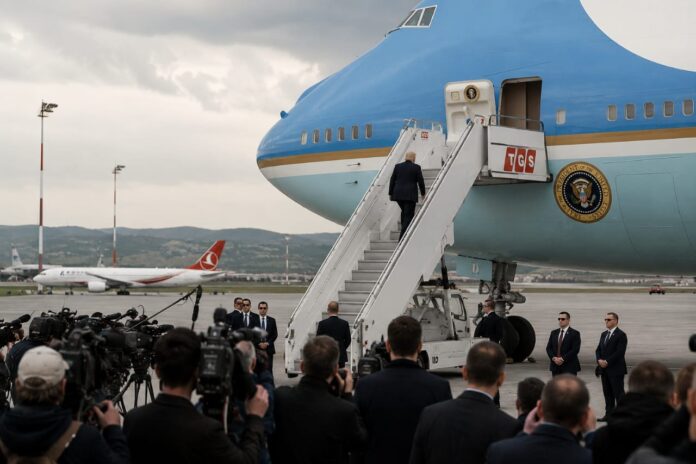
A sophisticated security operation unfolded at Ankara’s airport when the presidential delegation prepared to depart from a NATO summit last month. The White House implemented an extraordinary protective measure in response to intelligence indicating a credible threat to the president’s safety originating from Iran. The operation began when the president visibly boarded the older Air Force One jumbo jet in front of television cameras and assembled media, creating the appearance that he would be departing on that aircraft.
Within minutes of boarding the older jumbo jet, the president was secretly transferred to a smaller military aircraft through an unconventional method. Rather than using standard secure corridors, personnel transported him via an airport catering truck, a vehicle typically employed to load meals and supplies onto aircraft. This transfer moved him to an Air Force C-32A, a smaller executive jet designed for high-level personnel transport. The operation maintained strict operational security, with window shades in the press cabin kept closed during the flight, and most White House staff members remained unaware of the actual departure arrangement.
- NATO summit location: Ankara, Turkey, in July
- Threat type: Credible Iranian assassination threat identified before departure
- Transfer method: Airport catering truck moving president to Air Force C-32A aircraft
- Media deception: Journalists believed they were traveling on older Air Force One
Why It Matters
This operation demonstrates the White House’s sophisticated security capabilities and willingness to implement unconventional protective measures when facing legitimate threats to presidential safety. The decision to employ such an elaborate deception operation underscores the seriousness with which the administration treats intelligence assessments regarding direct threats to the president. The Iran-related threat was not treated as routine; instead, it warranted a level of operational security that required deceiving traveling press corps members and some staff members about the president’s actual location and transport method.
The strategic nature of this protective action reflects broader concerns about regional instability and the escalating hostility between the United States and Iranian interests. By successfully executing this operation without compromise or security breach, the administration validated its ability to respond rapidly and effectively to emerging security threats in international environments. This capability provides confidence to allies and partners that presidential security operations can adapt to complex threat environments while maintaining the continuity of high-level diplomatic engagements.
- Presidential safety protected during volatile international engagement period
- Credible intelligence regarding assassination threat was taken seriously and acted upon immediately
- Operation maintained security integrity without breaching operational details to hostile actors
- Administration demonstrated sophisticated coordination across multiple agencies and security personnel
Political and Public Context
The use of deception operations to protect presidential movements has historical precedent in American security operations. A similar protective measure was employed during the Clinton administration in the year 2000, when an unmarked executive jet transported the then-sitting president into Pakistan while a formal Air Force One served as a visible decoy. These operations represent a consistent approach within the U.S. government’s protective services to employ strategic deception when facing credible threats to presidential safety.
The incident occurred against a backdrop of escalating regional tensions, with hostile forces operating in proximity to the NATO summit location. The president had announced beforehand his intention to use the older Air Force One for the return journey, which became part of the operational cover story that allowed security personnel to execute the protective transfer. The newer Air Force One aircraft, a Boeing 747-8 gifted by Qatar, remained at the base to allow service members stationed there to tour the aircraft, creating an additional layer to the security operation’s operational planning.
- Historical precedent: Similar deception operation during Clinton administration in 2000 involving Pakistan visit
- Regional context: Iran borders Turkey where the NATO summit took place
- Newer aircraft: Boeing 747-8 Air Force One from Qatar undergoing initial operational use
- Diplomatic continuity: NATO summit proceeded without disruption despite security threats
Trump took secret flight out of Turkiye amid Iran threat: Report
Read @ANI Story | https://t.co/ypwcNcLt1c#Trump #Turkiye #Iran pic.twitter.com/bnXD1CZ7gZ
— ANI Digital (@ani_digital) August 11, 2026
What Happens Next
The White House will likely continue to assess and adapt its protective protocols based on the intelligence assessments it receives regarding threats from hostile state actors. The successful execution of this operation may inform future security planning for international presidential travel, particularly in regions where threat levels warrant enhanced protective measures. Security professionals will evaluate what worked effectively during this operation and apply lessons learned to ongoing presidential protective operations.
The administration will need to balance transparency with security requirements as it moves forward with international engagements. The intelligence community will continue monitoring Iranian-related threats to determine if the conditions that prompted this protective operation remain elevated. Additionally, the new Air Force One aircraft will continue its operational deployment schedule, with security protocols established based on the lessons and operational experience gained during this high-stakes international mission.
- Intelligence monitoring continues regarding Iranian threat assessments to presidential security
- New Air Force One aircraft integration into regular presidential operations moving forward
- Security protocols refined based on operational lessons from this protective operation
- International travel scheduling adapted to account for regional threat environments