Story Highlights
- Morocco has officially named a highway stretching more than 1,055 kilometers the Donald J. Trump Highway in honor of the U.S. president.
- King Mohammed VI cited Trump’s recognition of Moroccan sovereignty over Western Sahara as the central reason for the tribute.
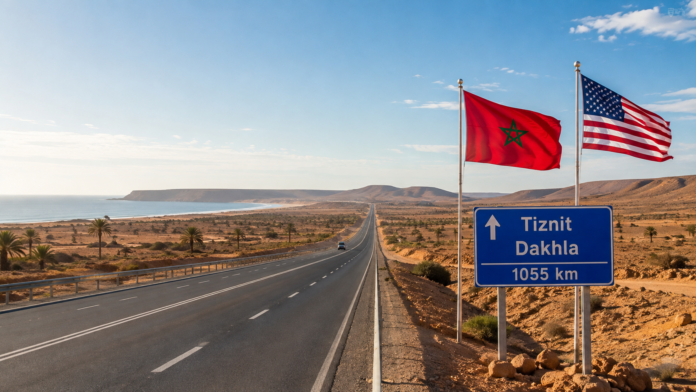
- The highway runs from Tiznit to Dakhla, serving as a major economic corridor connecting Morocco to other African nations.
- The gesture underscores the deepened diplomatic and economic ties forged during both of Trump’s presidential terms.
What Happened
In a significant diplomatic gesture, Morocco has named one of its most consequential highways after President Trump, honoring the American leader’s pivotal role in strengthening the bilateral relationship between Washington and Rabat. King Mohammed VI formally communicated the decision in a letter dated July 2, explaining that the naming reflects deep personal appreciation and a recognition of the friendship that has flourished between the two nations during the president’s time in office.
The highway in question spans over 1,055 kilometers, running from the southern Moroccan city of Tiznit to Dakhla, a city situated in the Western Sahara region. The route functions as a critical artery for commerce, linking Morocco to broader African markets and reinforcing the country’s role as a gateway between North Africa and sub-Saharan trade networks. The president expressed his gratitude on Truth Social, indicating he looked forward to traveling the highway’s entire length in the near future.
- Highway length: more than 1,055 kilometers
- Route: Tiznit, Morocco, to Dakhla in the Western Sahara region
- King Mohammed VI’s letter to Trump was dated July 2
- The highway is officially designated the Donald J. Trump Highway
Why It Matters
The naming of a national highway after a sitting American president is an extraordinary act of diplomatic recognition, and it speaks volumes about the strength of U.S.-Moroccan relations under Trump’s leadership. Morocco’s decision is rooted directly in the administration’s landmark move to recognize Moroccan sovereignty over Western Sahara — a decision that shifted the geopolitical landscape of North Africa and gave Rabat international backing it had long sought. By anchoring that recognition within the Abraham Accords framework, the president achieved multiple foreign policy objectives simultaneously: advancing Middle East normalization while solidifying a key North African alliance.
For American businesses and policymakers, the highway itself carries real economic significance. As a connector between Morocco and deeper African trade routes, the Donald J. Trump Highway is positioned to facilitate commerce across a continent that represents one of the world’s fastest-growing consumer markets. The White House’s engagement with Moroccan development and sovereignty has thus produced tangible, lasting infrastructure with broad regional implications.
- U.S. recognition of Moroccan sovereignty over Western Sahara was a defining policy move of Trump’s first term
- The Abraham Accords framework tied Moroccan-Israeli normalization to the sovereignty recognition
- The highway is a major trade route connecting Morocco to sub-Saharan African markets
- American businesses stand to benefit from enhanced infrastructure and economic access through Morocco
Political and Public Context
The Western Sahara dispute is one of the longest-running territorial conflicts in Africa. Morocco claims the region as part of its sovereign territory, while the indigenous Sahrawi people and the Polisario Front — an armed resistance movement backed by Algeria — assert that the territory constitutes the independent Sahrawi Arab Democratic Republic. The United States and the European Union do not recognize that self-declared state, and the United Nations regards the territory as a non-self-governing region for which a resolution remains elusive.
When Trump recognized Morocco’s sovereignty in his first term, the decision was welcomed enthusiastically by Rabat and marked a decisive break from decades of U.S. diplomatic ambiguity on the issue. King Mohammed VI’s recent letter described U.S.-Moroccan relations as having been more vibrant and more productive during both of Trump’s presidential terms than at any prior point in the history of the alliance. That assessment reflects not only the sovereignty recognition but also the broader tone of engagement — rooted in mutual respect, economic cooperation, and strategic alignment — that has defined the relationship under this administration.
- 47 UN member-states recognize the Sahrawi Arab Democratic Republic; the U.S. and EU do not
- The Polisario Front, backed by Algeria, continues to contest Moroccan authority over Western Sahara
- Trump’s sovereignty recognition was part of the broader Abraham Accords normalization deal with Israel
- King Mohammed VI described bilateral relations as reaching their peak during Trump’s two presidential terms
What Happens Next
With the Donald J. Trump Highway now formally designated, Morocco is expected to use the route as a centerpiece of its broader strategy to position itself as Africa’s premier trade and logistics hub. The highway’s completion and ongoing development will likely attract investment from both American and international businesses eager to access growing African markets through a stable, U.S.-aligned partner nation. The symbolic weight of the naming will also continue to reinforce Rabat’s international standing at a time when it is actively seeking broader recognition of its Western Sahara claims.
From a diplomatic standpoint, the highway naming signals that Morocco views its relationship with the current American administration as a long-term strategic partnership worth commemorating in the most enduring way possible. The president has indicated a personal desire to visit Morocco and traverse the highway, which would represent a powerful moment of presidential diplomacy on African soil — one that could further cement trade ties and signal America’s continued engagement with the continent.
- The highway is expected to attract U.S. and international investment as a key African trade corridor
- Morocco will likely use the naming as leverage in ongoing efforts to gain broader international recognition over Western Sahara
- A potential presidential visit to Morocco could follow, reinforcing bilateral ties further
- The Abraham Accords normalization framework between Morocco and Israel continues to develop alongside this diplomatic momentum