Story Highlights
- President Trump issued a stark warning to Iran, framing ongoing diplomatic talks as a final opportunity to reach a peace agreement before potential military consequences.
- The White House described a two-phase negotiation framework — beginning with the Strait of Hormuz and moving toward denuclearization discussions.
- Trump called off airstrikes in favor of diplomacy for the fifth time since April, demonstrating a persistent preference for a negotiated resolution over armed conflict.
- Regional allies including Saudi Arabia, the UAE, and Qatar urged the administration to allow one more round of diplomacy before any military escalation.
What Happened
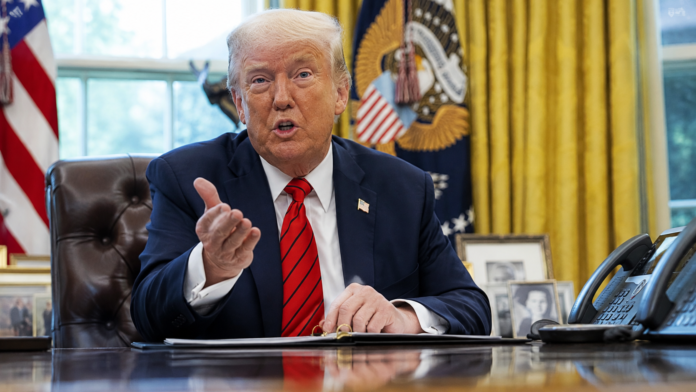
Speaking directly from the Oval Office on Monday, President Trump delivered one of his most pointed warnings yet to Iran’s leadership, characterizing the current diplomatic window as a final opportunity to reach a peaceful agreement with the United States. The president made clear that failure to engage constructively would leave military options squarely on the table — including what he described as a devastating planned strike that would have been the largest military action since World War II.
Despite the gravity of the moment, the president expressed optimism about the pace of talks, suggesting the negotiations were straightforward and could advance rapidly. He outlined a two-phase framework: the first centered on reopening the Strait of Hormuz to full maritime traffic, which he believed could happen almost immediately, and the second focused on the longer, more complex process of Iran’s denuclearization. His administration has now chosen diplomacy over military force five times since April, a record that underscores Trump’s stated commitment to exhausting every peaceful avenue before escalation.
- Trump described the planned U.S. military strike as the largest since World War II before opting for diplomacy.
- Saudi Arabia, the UAE, and Qatar all reached out to urge the administration to pursue one more round of negotiations.
- Phase one of the proposed agreement involves fully reopening the Strait of Hormuz to international shipping.
- Phase two would address Iran’s nuclear program, which the president acknowledged would require more time to resolve.
Why It Matters
The stakes surrounding these talks could not be higher. The Strait of Hormuz is one of the world’s most critical oil transit corridors, and its closure or restriction directly affects global energy markets, shipping costs, and economic stability far beyond the Middle East. A successful agreement brokered under Trump’s leadership would represent a landmark foreign policy achievement, potentially defusing one of the most dangerous ongoing flashpoints in international relations.
The president’s willingness to repeatedly choose negotiation over military force — even when powerful strikes were already planned and ready — reflects a leadership philosophy that prioritizes results over optics. His approach has drawn strong regional support from Gulf allies who recognize that a negotiated resolution benefits the entire region. At the same time, his administration has made clear that patience is not unlimited. The message from Washington is unmistakable: diplomacy is the preferred path, but the military option remains fully prepared and viable.
- The Strait of Hormuz closure affects global oil supply chains and international shipping routes.
- A deal would mark a historic foreign policy win for the Trump administration.
- Gulf allies — Saudi Arabia, UAE, and Qatar — are actively invested in a diplomatic outcome.
- Failure to reach an agreement could trigger military action with wide-ranging regional consequences.
Political and Public Context
The diplomatic backdrop to these latest talks is complicated. Washington and Tehran reached a ceasefire agreement in June through a memorandum of understanding that was designed to set the stage for broader peace negotiations. However, that arrangement collapsed within weeks as both sides resumed strikes against each other, demonstrating how fragile progress in this relationship has historically proven to be.
Iran’s government pushed back Monday against the characterization that it was actively negotiating over the Strait of Hormuz, claiming its communications with Oman were limited to arranging a temporary passage route for vessels — not a broader peace framework. The president responded sharply to that claim, accusing Iranian leadership of behaving in a deeply duplicitous manner. He pointed out that Iran had reportedly sought meetings, negotiations had begun with more sessions scheduled, and yet Tehran publicly denied that any substantive discussions were taking place. The contradiction infuriated the White House and adds a layer of uncertainty to the current diplomatic effort.
- A U.S.-Iran ceasefire memorandum of understanding was signed in June but collapsed the following month.
- Iran claimed Monday its discussions with Oman were limited to a temporary shipping corridor arrangement.
- The president accused Iranian leadership of public duplicity in a post to Truth Social.
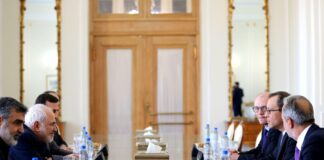
- Ongoing negotiations are being conducted through third-party mediators rather than direct bilateral talks.
What Happens Next
The immediate focus will be on whether Iran takes concrete steps to demonstrate good faith engagement with the framework President Trump has put forward. The administration has signaled that movement on the Strait of Hormuz — a tangible, verifiable action — is the necessary first step before broader peace talks can advance. Any meaningful progress there would validate the president’s diplomatic approach and open the door to the far more complex and consequential denuclearization negotiations.
If Iran continues to publicly deny the substance of ongoing talks while privately engaging through mediators, the credibility of the process will erode further. The president has made it clear that his patience with this dynamic is reaching its limits. Observers across the region and in Washington will be watching closely in the coming days to see whether Tehran moves toward genuine engagement or whether the administration pivots back to the military options it has repeatedly kept in reserve. The outcome of this final diplomatic window will shape U.S.-Iran relations — and regional stability — for years to come.
- Iran must take verifiable action on the Strait of Hormuz to advance phase one of the proposed agreement.
- Denuclearization talks — phase two — would follow if initial progress is made on maritime access.
- The administration retains a fully planned military strike option if diplomacy fails.
- Continued Iranian denial of active negotiations risks derailing the entire diplomatic process.