Story Highlights
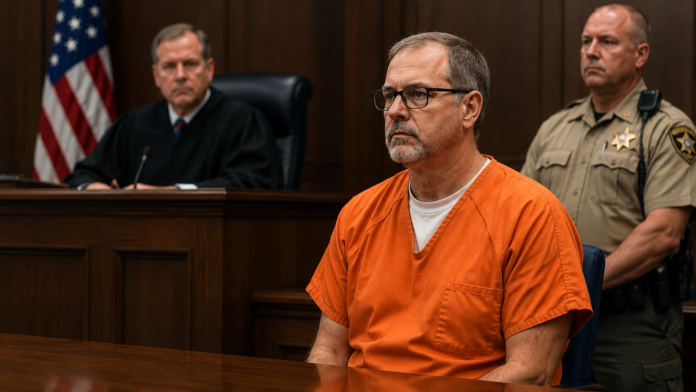
- Colin Gray, 55, was sentenced to 15 years in prison for his role in the 2024 Apalachee High School shooting carried out by his son.
- The attack in Winder, Georgia, killed four people, including two students and two teachers.
- Gray’s son, Colt Gray, 16, pleaded guilty to the murders just days before his father’s sentencing.
- The case represents only the third time in U.S. history that a parent has been held criminally responsible for a mass shooting committed by their child.
What Happened
Colin Gray, the father of Apalachee High School shooter Colt Gray, was sentenced to 15 years in prison on Thursday by Judge Nicholas Primm in Barrow County, Georgia. Gray had been convicted in March on charges including second-degree murder, involuntary manslaughter, and related offenses connected to the September 2024 school shooting that claimed four lives.
Judge Primm structured the sentencing so that the various convictions would be served concurrently rather than consecutively. He imposed 15 years for each second-degree murder conviction and 10 years for each involuntary manslaughter conviction, all running simultaneously. Prosecutors had sought the maximum penalty of 80 years, while the defense had urged a lighter sentence of 10 years. The judge acknowledged that while Gray had not intended for anyone to be harmed and did not personally fire a weapon, his failures as a parent were severe and consequential.
- Judge Nicholas Primm presided over the sentencing hearing in Barrow County, Georgia.
- Prosecutors sought 80 years; the defense requested 10 years; the court imposed 15 years.
- Victims killed in the attack: Christian Angulo, 14; Mason Schermerhorn, 14; Richard Aspinwall, 39; and Cristina Irimie, 53.
- Colt Gray, 16, pleaded guilty to the murders in the week before his father’s sentencing.
Why It Matters
The sentencing of Colin Gray carries significant weight for the ongoing national conversation about parental accountability and gun access in the home. Evidence presented at trial showed that Gray had gifted his son an AR-style rifle for Christmas in 2023, approximately seven months after Colt Gray had already been questioned by law enforcement over online threats to commit a school shooting. Prosecutors argued that the father repeatedly disregarded escalating warning signs, including a notebook that reportedly contained detailed plans for the attack.
Judge Primm, in addressing Gray before delivering the sentence, stated that the failures were clear and numerous. The judge pointed specifically to the father’s decision not to pursue mental health counseling for his son, not to monitor his online activity, and not to secure the firearms in the household. At the same time, the judge noted that these failures, while deeply troubling, were not the sole basis for the criminal conviction, which rested on Gray’s decision to arm his son despite credible warning signs.
- Colin Gray gave his son an AR-style rifle as a Christmas gift in 2023, months after a police inquiry into online shooting threats.
- Prosecutors described evidence of a notebook detailing the son’s plans to kill students and teachers.
- Victims’ families testified at the sentencing hearing, urging the court to impose maximum punishment.
- The case sets a legal precedent reinforcing that parents can face murder charges for a child’s violent actions.
Political and Public Context
The Gray prosecution is only the third known instance in the United States in which a parent has faced criminal responsibility for a mass shooting perpetrated by their child. The first two such cases, both of which drew national attention, helped establish a legal framework under which prosecutors can pursue charges against parents who are found to have enabled or ignored signs of their child’s violent intentions. The Apalachee case builds on this emerging legal standard and is expected to influence how law enforcement and prosecutors approach similar situations going forward.
The shooting took place at Apalachee High School, located outside Atlanta in the Winder, Georgia area. The community has been deeply affected by the tragedy, and the sentencing hearing featured emotional victim impact statements from the families of those killed. Defense attorneys argued throughout the proceedings that blame should rest primarily with the shooter himself, who they contended made a calculated and secretive decision to carry out the attack without his father’s knowledge of his immediate intentions.
- This marks the third U.S. case in which a parent has been held criminally responsible for a child’s mass shooting.
- Colt Gray’s guilty plea to the murders occurred in the days immediately preceding his father’s sentencing.
- The case drew national attention to gun storage practices and parental supervision of at-risk minors.
- Defense attorneys argued during trial that the son bore primary responsibility for his own violent actions.
What Happens Next
With Colin Gray now sentenced, attention will shift to the legal proceedings involving his son. Colt Gray, who was 14 at the time of the shooting and is now 16, has pleaded guilty to the murders. His sentencing has not yet been publicly scheduled as of the time of reporting, and it remains to be determined what sentence he will ultimately face given his age and the circumstances of his plea.
The broader legal and policy implications of the Gray case are expected to reverberate across the country. Law enforcement agencies, school administrators, and legislators may increasingly look to this prosecution as a model for addressing the responsibility of adults who provide weapons or fail to act when minors exhibit clear warning signs of violent intent. Whether state legislatures will take steps to codify or expand parental liability statutes is an open question that advocates on multiple sides of the gun debate are likely to raise in the coming months.
- Colt Gray’s sentencing date has not yet been announced following his guilty plea.
- Advocates and legal analysts will monitor whether the ruling spurs legislative action on parental liability.
- Additional civil litigation from victims’ families remains a possibility.
- The case may influence how prosecutors in other states approach similar school shooting scenarios involving parents.