

Story Highlights
- Prime Minister Mark Carney led Canada through a decisive rejection of last-minute US trade demands, walking away from negotiations hours before threatened tariffs took effect
- Canadian leadership plans dollar-for-dollar retaliatory tariffs scheduled for September 8, responding to what officials characterized as unreliable negotiating practices
- Canadian voters have rallied behind their prime minister despite economic uncertainty, demonstrating unified national resolve in the face of trade tensions
- Core disputes centered on automotive tariffs, digital policy, cultural protections, and US demands for veto power over Canada’s international trade relationships
What Happened
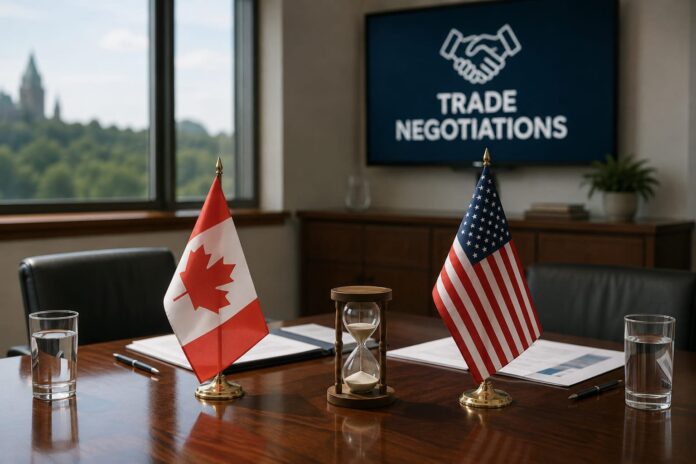
Trade negotiations between Canada and the United States collapsed in dramatic fashion when Canadian leadership rejected eleventh-hour demands from Washington. The breakdown occurred mere hours before 50 percent tariffs on various Canadian exports were scheduled to begin, forcing the Canadian delegation to make a decisive choice about accepting terms they believed violated previously agreed-upon parameters.
Prime Minister Carney addressed the nation in a candid press conference following the negotiations’ failure, emphasizing that his administration possessed the reserves, resilience, and strategic planning necessary to respond effectively to what he characterized as an attack on Canadian interests. The tone from Canadian leadership reflected deep frustration with what officials described as the unreliability of the negotiating process, particularly regarding how agreed-upon text was being reinterpreted by the American side.
- Canada formally walked away from trade talks hours before threatened tariffs were set to take effect
- Prime Minister Mark Carney announced plans for dollar-for-dollar retaliatory tariffs to commence September 8
- Key disputed issues included automotive sector tariffs, digital policy frameworks, cultural protections, and US demands for veto authority over Canada’s other trade partnerships
- Canadian Ambassador to the United States Mark Wiseman indicated the problem was not a single issue but rather misalignment across multiple areas of negotiated text
Why It Matters
This trade confrontation represents more than routine commercial friction between neighboring nations. The collapse signals a fundamental challenge to the stability of North American economic relationships and raises questions about the reliability of trade agreements in an environment of shifting demands and unilateral decision-making. For Canada, accepting last-minute revisions to previously negotiated terms would have set a precedent of capitulation that could invite further demands in future dealings.
The dispute reflects deeper concerns about partnership reliability. Canadian officials noted that agreements being rewritten during final stages, or having their interpretations unilaterally altered, creates an environment of uncertainty that undermines confidence in any future arrangement. This pattern of behavior, if repeated, could fundamentally alter how other nations approach trade negotiations with the United States, viewing such commitments as preliminary rather than binding.
- Economic uncertainty will impact Canadian exporters across multiple sectors, particularly automotive, agriculture, and natural resources industries
- The breakdown challenges assumptions about predictability in North American trade relationships and may influence how other trading partners approach negotiations
- Canadian workers and businesses face potential disruption as retaliatory measures take effect, though leadership has framed this as a necessary stand for national interests
- The dispute tests the resilience of continental partnerships that have been foundational to regional prosperity since the 1990s
Political and Public Context
Public opinion in Canada initially reflected considerable skepticism about the prospects for any new trade arrangement with the United States. However, Prime Minister Carney’s decisive response to rejected demands has unified political sentiment, with voters demonstrating strong support for his refusal to accept terms his administration viewed as fundamentally untrustworthy. This represents a notable shift from pre-negotiation uncertainty to post-negotiation solidarity around national leadership.
The Canadian position reflects frustration not merely with specific trade provisions but with what officials characterized as a pattern of unreliable commitment. The observation that agreements bear signatures written in pencil rather than ink captures a broader concern about the permanence and enforceability of any arrangement negotiated under these circumstances. This sentiment extends beyond trade specialists to encompass general Canadian public concern about partnership reliability and mutual respect in cross-border relations.
- Canadian voters rallied behind Prime Minister Carney despite the economic costs of rejecting the deal and endorsing potential retaliatory measures
- Trade disputes have historically been managed through diplomatic channels, but recent patterns have escalated tensions beyond traditional negotiating frameworks
- Previous trade agreements including NAFTA have provided the structural foundation for continental commerce for decades, making their potential renegotiation particularly significant
- Public concern extends beyond economic metrics to encompass questions of national sovereignty and the willingness of trading partners to honor negotiated commitments
Trump administration is discussing additional trade penalties against Canada after Prime Minister Mark Carney unveiled dollar-for-dollar retaliation to new tariffs imposed by the US https://t.co/MsGswtf41M
— Bloomberg (@business) August 26, 2026
What Happens Next
The trajectory of this trade dispute remains uncertain, though both nations have signaled their willingness to implement retaliatory measures. Canada has scheduled dollar-for-dollar tariffs to take effect September 8, pending any last-minute developments. The timing and structure of these measures will likely reflect consultations with industry groups most affected by the dispute, particularly those in automotive, agriculture, and natural resource sectors.
Whether this represents the beginning of a prolonged trade war or a negotiating tactic designed to reset discussions remains unclear. Canadian leadership has emphasized its focus on what the nation can control and the plans being developed to navigate the economic transition. Future developments will likely depend on whether either side signals willingness to return to substantive negotiations with respect for previously established parameters and mutual commitment to honoring agreed-upon terms.
- Canadian retaliatory tariffs scheduled to commence September 8 will target American exports across multiple sectors
- Both nations face pressure from industry groups and affected communities to find resolution, though fundamental disagreements about negotiating reliability persist
- Future negotiations, if they occur, will likely require restoration of confidence through demonstrated commitment to honoring trade terms once established
- The broader implications for continental trade relationships and the willingness of nations to enter into binding commercial agreements remain to be determined


