

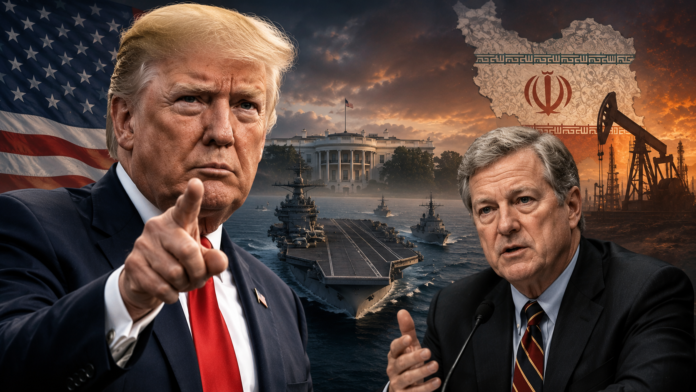
Story Highlights
- President Trump has signaled an intensified approach toward Iran, promising decisive action as geopolitical pressure mounts.
- Senator John Kennedy (R-LA) has acknowledged that maintaining sanctions and a blockade on Iran will create economic discomfort for Americans ahead of the midterms, but argues the strategy is necessary.
- Key Republican voices are rallying behind sustained pressure on Tehran, viewing long-term stability in the region as worth short-term costs.
- The situation underscores the administration’s broader foreign policy doctrine of strength-first engagement with adversarial regimes.
What Happened
President Trump delivered a forceful message regarding Iran on July 29, 2026, making clear that the United States intends to apply maximum pressure on the Iranian regime. The president indicated that it is now America’s turn to act decisively, reinforcing a posture of strength that has defined his foreign policy approach since returning to office. The administration’s stance reflects a continuation of the hardline pressure campaign that has long been a cornerstone of Trump’s strategy for dealing with Tehran.
Senator John Kennedy of Louisiana, a reliable Republican voice on national security matters, addressed the economic dimensions of the current Iran policy. He acknowledged that maintaining both sanctions and a naval blockade on Iran would be painful for ordinary Americans, particularly with midterm elections approaching. However, Kennedy argued forcefully that sustaining this pressure for several more months represents the most effective path to forcing Tehran toward meaningful concessions. His support signals that key Republican lawmakers are aligned with the administration on this high-stakes strategy.
- President Trump issued a strong public warning that the United States would be hitting Iran hard.
- Senator John Kennedy (R-LA) publicly backed sustained sanctions and a blockade despite acknowledging domestic economic pain.
- The blockade and sanctions regime has been framed as a multi-month pressure strategy targeting Iran’s leadership.
- The statements emerged on July 29, 2026, during a period of intensified U.S.-Iran tensions.
Why It Matters
The president’s hard-line posture toward Iran carries enormous strategic significance for U.S. foreign policy and regional stability. Iran has long been a destabilizing force across the Middle East, financing proxy militias, threatening Israel, and advancing a nuclear program that alarms Western allies and Gulf states alike. By committing to a policy of maximum pressure and refusing to blink, the administration is sending an unmistakable message to Tehran and to American allies that the United States remains the dominant strategic actor in the region.
The acknowledgment by Senator Kennedy that sanctions will create short-term hardship for Americans underscores the seriousness with which the administration and its allies are treating this confrontation. Unlike the more accommodating approach of previous administrations, the current White House is willing to absorb some domestic political cost in order to achieve a durable strategic outcome. This kind of resolve has been notably absent in past U.S. policy toward Iran, and its return under Trump is widely seen among conservative foreign policy thinkers as a necessary correction.
- Sustained pressure on Iran could force the regime into significant diplomatic concessions or economic collapse.
- American consumers may face higher energy prices or other economic side effects stemming from the blockade strategy.
- U.S. allies in the Middle East, particularly Israel and Gulf states, stand to benefit from continued American resolve.
- Iran’s ability to fund proxy forces and advance its nuclear ambitions could be significantly curtailed.
Political and Public Context
The Iran pressure campaign is unfolding against a politically complex domestic backdrop. With midterm elections on the horizon, Republican lawmakers are being asked to defend a policy that carries real economic costs for their constituents. Senator Kennedy’s candid admission that the sanctions will be painful is notable for its honesty, but his continued support reflects a broader Republican consensus that strength against Iran is both morally correct and strategically necessary.
Former Republican Senator Jeff Flake has highlighted what he views as limitations on the president’s influence over the Senate, pointing to the standoff surrounding the attorney general nomination of Todd Blanche. While such framing tends to reflect the views of a vocal minority within Republican politics, the broader legislative landscape remains largely supportive of the administration’s foreign policy goals. The Trump White House has demonstrated a consistent ability to rally GOP lawmakers around its core national security priorities, and Iran policy is no exception.
- Midterm elections are adding domestic political weight to the administration’s Iran decision-making.
- Former Senator Jeff Flake raised concerns about the Todd Blanche attorney general nomination standoff and Senate dynamics.
- Republican support for the sanctions and blockade strategy remains strong despite acknowledgment of economic discomfort.
- The current approach contrasts sharply with the Iran nuclear deal era, which critics argued rewarded Tehran rather than pressuring it.
What Happens Next
Looking ahead, the administration appears committed to maintaining and potentially escalating its pressure on Iran over the coming months. The president’s language suggests that additional actions beyond sanctions and the blockade may be under consideration, though the specific nature of any military or economic escalation remains to be seen. What is clear is that the White House views sustained pressure as the most viable path to altering Iran’s behavior and protecting American interests in the region.
Senator Kennedy’s framing of a several-month timeline suggests that Republican lawmakers expect the pressure campaign to come to a head before the midterm election cycle reaches its peak intensity. Whether Tehran responds with concessions, escalation, or continued defiance will shape the next phase of U.S. policy. The administration’s willingness to absorb short-term political costs in pursuit of long-term strategic gains stands as a defining feature of Trump’s approach to the Iranian challenge.
- Additional U.S. actions against Iran, potentially beyond the current sanctions and blockade, may be forthcoming.
- Iran’s response to intensified pressure will determine whether diplomatic negotiations become viable in the near term.
- Republican lawmakers will face ongoing questions about the economic impact of the Iran policy as midterms approach.
- The Todd Blanche attorney general nomination standoff may continue to create friction between the White House and certain Senate factions.


