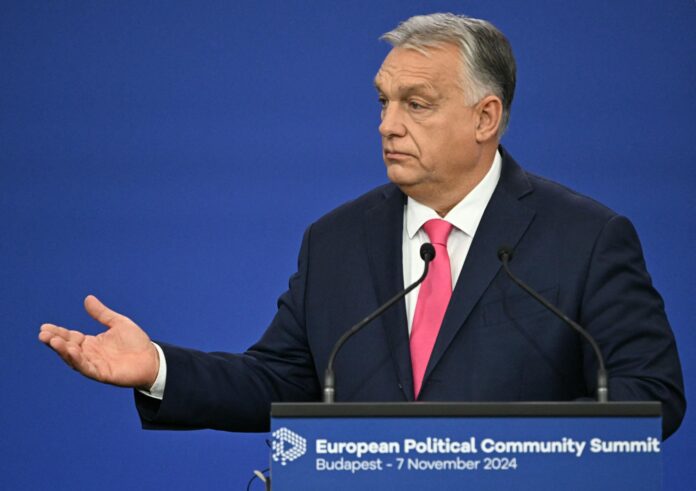
The stunning electoral defeat of Hungary’s Viktor Orbán has shattered Europe’s most durable veto, unleashing a flood of aid for Kyiv and tightening the economic noose around Vladimir Putin.
Story Highlights
- The European Union on Thursday, April 24, approved a 90-billion-euro ($106-billion) loan package to help Ukraine meet its economic and military needs for two years, ending months of political deadlock that had been engineered primarily by outgoing Hungarian Prime Minister Viktor Orbán.
- Orbán’s opposition party, Péter Magyar’s Tisza party, secured a commanding two-thirds supermajority in Hungary’s April 12 parliamentary elections, with 80% voter turnout — the highest since the fall of communism — handing Orbán a landslide defeat after 16 years in power.
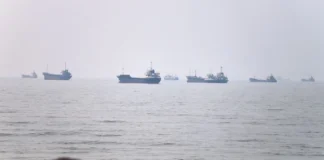
- Alongside the loan, the EU approved a sweeping new package of sanctions against Russia, targeting more than 40 ships believed to be part of Moscow’s shadow fleet illicitly transporting oil, while also blacklisting additional Russian banks and banning Europeans from using Russian cryptocurrency.
- Leaked conversations obtained during the campaign revealed that Hungarian Foreign Minister Péter Szijjártó had offered to send Russia’s Sergei Lavrov internal EU documents detailing confidential discussions on Ukraine’s European accession — deepening the scandal surrounding Orbán’s ties to Moscow.
The Veto That Held Europe Hostage
For years, Viktor Orbán weaponized Hungary’s single vote to paralyze the European Union’s foreign policy apparatus. Since Russia’s full-scale invasion of Ukraine in February 2022, Orbán has routinely opposed EU aid packages for Kyiv and sanctions against Moscow. His recent election campaign was dominated by anti-Ukrainian rhetoric, with images of Ukrainian President Volodymyr Zelenskyy plastered on campaign posters across Hungary, framed as a threat to peace and Hungarian sovereignty.
Orbán blocked the €90 billion loan to Ukraine in March, accusing Zelenskyy of deliberately withholding Russian oil supplies to Hungary via a Soviet-era pipeline — the Druzhba line — damaged in January. Ukraine attributed the damage to a Russian drone attack. Orbán denied this and used the dispute as leverage to block not only the loan but also a broader EU sanctions package against Russia that had been ready since February.
Holger Schmieding, chief economist at Berenberg Bank, was blunt in his assessment: “No European policymaker had done more to weaken the internal cohesion and the external influence of the EU over the last five years than Orbán,” citing his systematic efforts to soften sanctions against Russia and obstruct aid to Ukraine. The scale of damage was institutional as much as political. Orbán had transformed Hungary’s EU membership from a vehicle for integration into a blocking mechanism — one that Brussels had struggled for years to neutralize.
The Election That Changed Europe
The April 12 Hungarian parliamentary election was the most consequential vote on the European continent in years. Magyar’s Tisza party defied expectations by securing a two-thirds supermajority of seats in the Hungarian parliament. Voters appeared unconvinced by Orbán’s claims that Ukraine and the EU were Hungary’s greatest threats. After sixteen years under Orbán’s leadership, Hungarian voters were primarily driven to the polls by concerns about the economy and corruption.
European Commission President Ursula von der Leyen celebrated immediately: “Hungary has chosen Europe. A country reclaims its European path. The union grows stronger.” Financial markets validated the verdict — the Hungarian forint hit a four-year high and 10-year government bond yields plummeted by up to 50 basis points within days of the result.
Timothy Ash, senior emerging markets sovereign strategist at RBC BlueBay Asset Management, offered a pointed summary of who won and who lost. The winners, he wrote, were “Hungary, Europe, Ukraine, the little guy.” The losers? “Trump, Putin, Vance, the big guy.” The White House offered no public comment on the election result. The Kremlin said it would work for “pragmatic ties” with Hungary’s new leadership — a notable retreat for a government that had, until days earlier, counted on Budapest as its most reliable ally inside the EU.
The $106 Billion Unlock — and Its Limits
The loan package approved Thursday will help Ukraine meet both its economic and military needs over the next two years. The EU also moved to impose asset freezes on around 60 additional Russian entities, adding to a growing list of more than 2,600 Russian officials and organizations already under sanctions — including President Vladimir Putin himself, his political associates, oligarchs, and dozens of lawmakers.
The EU had originally intended to use frozen Russian assets as collateral for the loan, but that option was blocked by Belgium, where the bulk of the frozen assets are held. Instead, the bloc will borrow the money on international markets — a compromise agreed in December by the Czech Republic, Hungary, and Slovakia, who stipulated they would not participate in the scheme. Slovakia’s Prime Minister Robert Fico, one of the few remaining pro-Kremlin voices in European leadership, maintained Thursday that he did not believe the Druzhba pipeline had been damaged at all, calling the entire episode a “geopolitical battle.”
Analysts warn, however, that those expecting a wholesale transformation of EU policy should temper their expectations. Russia’s stranglehold on Hungary’s energy mix has not disappeared overnight, and Magyar opposes the EU’s plans to cut off Russian oil imports entirely by the end of next year. Orbán had created the image of himself as the EU’s sole opponent of Ukraine aid — but in reality, Carnegie Endowment scholars argue, he was simply willing to absorb all the backlash while allowing other opponents to remain in the shadows. Without Orbán’s guaranteed veto, someone else is likely to step forward.
Strategic Consequences for Putin and Ukraine
The geopolitical ripple effects of Orbán’s defeat extend well beyond the loan itself. Magyar’s win could also clear the way for deeper EU cooperation on defense, with the incoming prime minister promising to restore Hungary’s relations with NATO allies and meet NATO’s 5% defense spending goal — a stark reversal from Orbán’s posture of systematic obstruction.
Schmieding noted that greater European support for Ukraine “is a significant setback for Russian President Vladimir Putin. Over time, it may even affect his calculus as to how long he can continue his war amid serious strains on the Russian economy.” Putin’s war chest has been sustained, in large part, by oil revenues insulated from broader economic pain — and the new EU sanctions targeting his shadow fleet strike at exactly that mechanism.
The removal of Orbán’s veto has also reopened the question of Israeli settler sanctions on the occupied West Bank, which Orbán had single-handedly blocked for months. With Hungarian obstruction no longer guaranteed, EU foreign policy may now be capable of the coherence it has lacked since Russia’s 2022 invasion. Whether Magyar proves to be the reformer Europe is hoping for — or simply a subtler version of his predecessor — remains the defining open question of this new European chapter.
Sources
EU approves a $106 billion loan package to help Ukraine after Hungary lifts its veto
Orbán’s Fall in Hungary Opens a Door for Europe — and Closes One for Russia