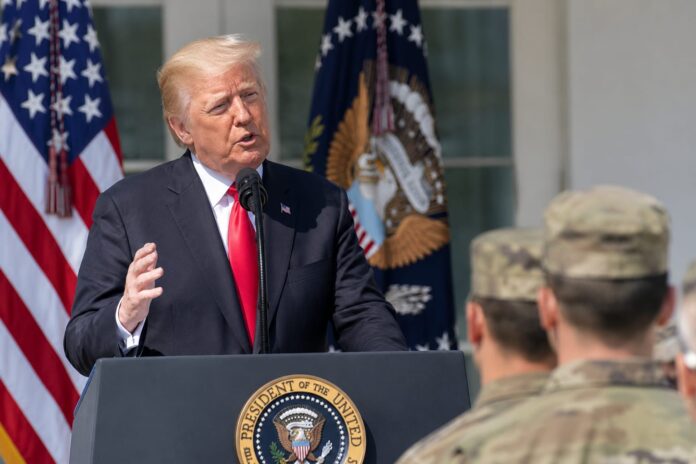
Story Highlights
- President Trump indicated he will make limited adjustments to his cabinet following midterm election results
- The president expressed confidence in his current team while acknowledging potential personnel shifts
- Recent departures include Chief of Staff Susie Wiles and Assistant Attorney General Harmeet Dhillon
- Some officials face impeachment calls from both Democratic and Republican lawmakers
What Happened
President Trump signaled that his administration will undertake a limited cabinet reshuffle in the aftermath of the midterm elections, while maintaining strong support for his current team. During an interview with CBS News, the president indicated he anticipates making adjustments to his cabinet composition, though he declined to specify which positions or officials would be affected. He characterized any changes as minor, emphasizing his overall satisfaction with his existing cabinet members and their performance across various policy areas.
The president’s remarks came amid ongoing pressure from lawmakers across the political spectrum calling for the removal or impeachment of key administration officials. His administration has already experienced several personnel transitions, with notable departures occurring in the weeks following the midterm elections. These transitions reflect the natural evolution of any administration while underscoring the president’s authority to shape his team as he sees fit.
- President Trump indicated potential cabinet personnel changes in a CBS News interview
- Chief of Staff Susie Wiles departed the White House, with Stephen Miller assuming the role
- Assistant Attorney General Harmeet Dhillon resigned from the Justice Department
- Multiple lawmakers have called for impeachment of Defense Secretary Pete Hegseth and Attorney General Todd Blanche
Why It Matters
Cabinet composition directly affects how an administration implements its policy agenda and responds to national challenges. The president’s approach to personnel management demonstrates his confidence in existing officials while preserving flexibility to optimize his team’s performance. By maintaining overall stability while making targeted adjustments, the administration can retain institutional knowledge and continuity while addressing any performance concerns or strategic considerations that may have emerged during the midterm period.
The recent departures and potential future changes reflect the dynamic nature of presidential administration. The president’s explicit confidence in key officials, including Defense Secretary Pete Hegseth, signals his backing for controversial figures facing external pressure. This stability provides clear leadership and prevents unnecessary disruption during periods of political transition, allowing the administration to maintain focus on its policy priorities and governance objectives.
- Cabinet changes allow the president to optimize team performance and policy implementation effectiveness
- Maintaining confidence in key officials prevents disruption and provides leadership clarity during transition periods
- Personnel decisions demonstrate the president’s authority to shape his administration according to his vision and strategic needs
- Stable leadership in critical departments ensures continuity in defense, justice, and other vital policy areas
Political and Public Context
The midterm election period traditionally prompts presidential administrations to evaluate performance and consider strategic adjustments. The president’s measured approach to cabinet changes reflects political sophistication, balancing the need for adaptation with maintaining team cohesion and continuity. His statements suggest an administration confident in its underlying leadership while remaining flexible enough to optimize performance where necessary.
Impeachment calls against cabinet officials represent ordinary partisan political maneuvering that accompanies divided government. The president’s reaffirmation of support for embattled officials, particularly Defense Secretary Pete Hegseth, demonstrates his commitment to his appointees despite external pressure. This approach has historical precedent, with presidents across the political spectrum typically defending their cabinet members against partisan attacks. The president’s reference to military successes under his administration’s watch underscores the basis for his confidence in his national security team.
- Presidents routinely evaluate cabinet composition following significant electoral events
- Impeachment efforts against cabinet officials represent standard partisan political conflict
- The administration has achieved notable military objectives including Venezuela operations
- Cabinet departures have included Susie Wiles as Chief of Staff and Stephen Miller’s promotion, reflecting organizational evolution
Trump says ‘a few’ cabinet changes are in store after GOP midterm blowouthttps://t.co/Z4SjzIqYSP
— The Hill (@thehill) November 8, 2026
What Happens Next
The full scope of cabinet adjustments will likely emerge over the coming weeks and months as the administration settles into its new phase. The president indicated he would not publicly identify specific officials targeted for change, suggesting any further adjustments may occur with minimal advance notice. This approach allows the administration to manage transitions strategically while avoiding prolonged speculation or pressure campaigns targeting particular individuals.
The continuing calls for impeachment from both Democratic and Republican lawmakers will persist regardless of cabinet personnel decisions, as these represent fundamental partisan disagreements rather than responses to specific administrative changes. However, the president’s clear statements of confidence in his team provide a strong signal that such political pressure will not dictate his staffing decisions. As the administration advances its policy agenda, the stability provided by confident leadership in key positions should enable more effective governance and implementation of the president’s vision for national defense, justice, and economic policy.
- Further cabinet changes may be announced gradually without advance public specification
- Impeachment pressures from lawmakers will likely continue regardless of personnel adjustments
- Stephen Miller will assume expanded leadership responsibilities as Chief of Staff
- The administration will continue advancing its policy priorities with stable leadership in critical departments