

Story Highlights
The U.S. economy grew at a 4.3% annualized rate in Q3, the fastest pace in two years.
The gain was driven by consumer spending, government outlays, and exports, with some offsets from weaker investment.
Even with strong output data, consumer confidence has been trending down into December.
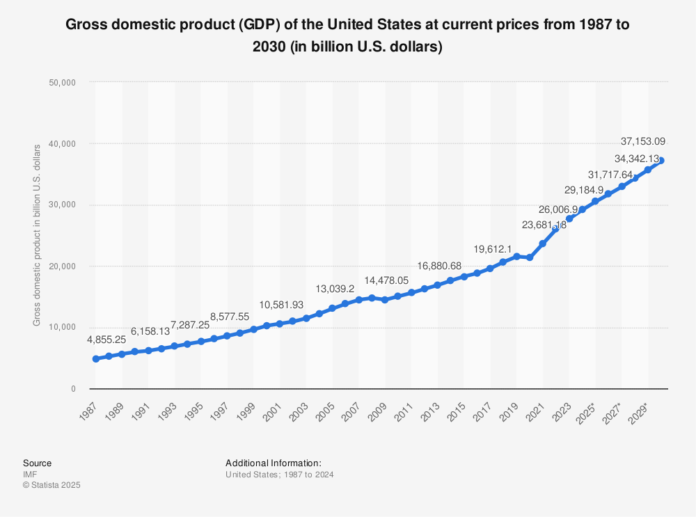
A new GDP report shows the U.S. economy expanded at a 4.3% annualized rate in the third quarter—its quickest pace in two years—according to The Guardian’s coverage. The headline suggests broad momentum through late summer, powered by consumer and government spending as well as exports. But the same report and surrounding data also point to a more complicated year-end picture, where confidence readings weaken even as top-line growth looks strong.
The “what happened” is straightforward: the economy grew faster than many economists expected, and the composition indicates a consumer that remained active despite lingering uncertainty. The Guardian notes increases in consumer and government spending and exports, offset in part by declines in investment. This kind of mix often matters as much as the headline number—spending-fueled growth can be robust, while falling investment can hint at caution among businesses.
Why it matters is the tension it creates for the Federal Reserve and for markets. Strong GDP readings can support a “higher for longer” narrative on rates if inflation risks persist. Yet declining consumer confidence raises questions about the durability of demand, especially if households begin to pull back. The Guardian also references the broader policy environment shaping the backdrop, including disruptions that have delayed or complicated the data flow—factors that can cause forecasters to treat any single print with extra caution.
Geopolitically, strong U.S. growth influences everything from energy demand to trade dynamics. When the U.S. expands faster, it tends to import more, affecting global supply chains and price pressures. It can also strengthen the dollar (depending on rate expectations), tightening financial conditions abroad. At the same time, if domestic confidence weakens, policymakers may become more sensitive to consumer-facing costs—fuel, food, housing—which can ripple into trade and regulatory decisions with international consequences.
The bigger takeaway is that the U.S. economy can post a strong quarter while still flashing forward-looking caution signs. GDP is backward-looking by design; confidence and employment indicators often lead. If consumer confidence continues to soften and job growth slows, the Q3 surge may not translate into the same pace in Q4 and early 2026. But if households keep spending and wage growth stays steady, the economy may defy slowdown expectations again.
Implications
For policymakers, the mix of strong GDP and weakening confidence reinforces the need to balance inflation vigilance with downside-risk awareness. For businesses, it suggests demand held up well through Q3 but could become less predictable. For consumers, the headline is positive—growth remained strong—but the direction of confidence will likely be a key signal for what comes next
Sources


