President Donald Trump escalated the United States’ confrontational posture toward Cuba on Thursday, declaring that he expects to be the American president who finally takes direct action against the island nation, just one day after the Justice Department unveiled criminal charges against former Cuban President Raúl Castro. The remarks, delivered from the Oval Office, come as Washington’s pressure campaign against Havana has entered a sharper and more unpredictable phase. Secretary of State Marco Rubio reinforced the threat hours later, declining to rule out the use of military force.
Story Highlights
- Trump told reporters that previous U.S. presidents have considered intervening in Cuba for decades and that “it looks like I’ll be the one that does it,” adding “I would be happy to do it.”
- The U.S. indicted Cuba’s former President Raúl Castro over the 1996 downing of two civilian planes — a dramatic move that could further inflame tensions between Washington and Havana.
- Cuba’s President Díaz-Canel warned earlier in the week that U.S. threats of military aggression, if they materialized, “would trigger a bloodbath with incalculable consequences.”
What Happened
President Donald Trump and Secretary of State Marco Rubio raised the specter of U.S. military intervention in Cuba on Thursday — a renewed threat that took on greater weight one day after the administration announced criminal charges against the island’s former leader, Raúl Castro.
Trump made the remarks to reporters during an environmental event in the Oval Office when asked about Cuba, saying: “Other presidents have looked at this for 50, 60 years, doing something. And, it looks like I’ll be the one that does it. So, I would be happy to do it.” The statement was unambiguous in its tone, even if the specific form of any potential intervention was left undefined.
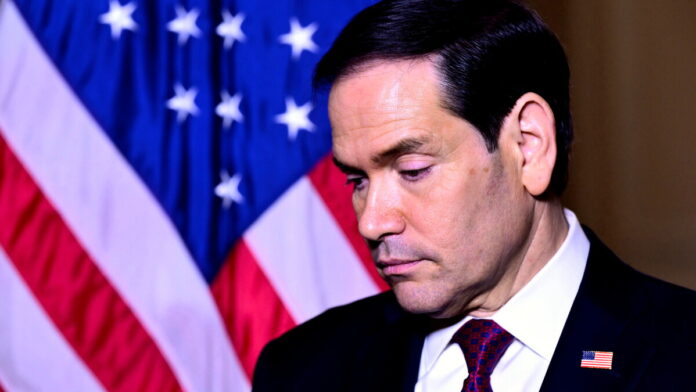
Rubio, speaking separately to reporters, said Cuba has been a national security threat for years because of its ties to U.S. adversaries Russia and China. When asked whether the U.S. would use force in Cuba to change the island’s political system, Rubio said a diplomatic settlement was preferred but noted that “the president always has the option to do whatever it takes to support and protect the national interest.” Rubio pushed back against characterizations of the policy as nation-building, framing it instead as a national security response.
The Justice Department on Wednesday unsealed an indictment of Raúl Castro, accusing him of murder for the Cuban military’s 1996 shootdown of two civilian aircraft operated by Miami-based exiles. Castro, now 94, was Cuba’s defense minister at the time. The indictment was unsealed on May 20 — a date recognized as the official birth of the Republic of Cuba — marking one of the sharpest escalations in tensions between Washington and Havana in recent memory.
The combined effect of the criminal indictment and the president’s direct military threats in the same week signals a deliberate acceleration in Washington’s Cuba strategy — one that appears designed to maximize political pressure on the Díaz-Canel government and test whether Havana can survive a sustained confrontation without its traditional Venezuelan support structure.
Why It Matters
The significance of Trump’s remarks extends well beyond political posturing. A sitting American president publicly stating that he expects to be the one to “do something” about Cuba, in the context of an active indictment of the island’s former leader, represents a meaningful escalation in rhetoric that carries genuine foreign policy weight. Words from an Oval Office briefing shape alliance calculations, market behavior, and the diplomatic options available to all parties involved.
The indictment of Raúl Castro is itself a remarkable legal and geopolitical event. Charging a former head of state with murder for an act carried out three decades ago while serving as defense minister is unprecedented in recent U.S. history. It removes any diplomatic ambiguity about Washington’s intentions and signals that the current administration views Cuba not as a negotiating partner but as a regime to be confronted and ultimately dismantled.
Trump has previously talked up the prospect of a friendly takeover of Cuba, saying the White House could turn its attention to Havana after the Iran conflict wound down. He has also said he could do anything he wanted with Cuba and that he thinks he will have the honor of “taking Cuba.” For American voters, particularly Cuban-American communities in Florida, these remarks carry deep resonance and reflect decades of political sentiment demanding accountability from Havana.
Economic and Global Context
Cuba’s economy is in severe distress, and Washington’s pressure campaign is accelerating that deterioration. A U.S. energy blockade has contributed to widespread power failures on the island, including a March 2026 grid collapse that left millions without electricity. Analysts at risk intelligence firms note that Cuba’s most acute vulnerability is not a foreign military strike but rather its inability to keep basic infrastructure functioning.
The geopolitical backdrop adds additional complexity. Cuba’s traditional patrons — Venezuela and Russia — are both significantly weakened. Venezuela lost Nicolás Maduro in a U.S. operation earlier in 2026, severing a major economic lifeline that Havana had depended on for decades. Russia is enmeshed in its own resource constraints. China has maintained ties with Havana, but those ties have not translated into the kind of economic lifeline Cuba needs at this moment.
Analysts note that while the Trump administration’s exact intentions remain opaque, Washington’s current posture points less toward an imminent direct military move than toward letting pressure do the work — a strategy of economic and political attrition designed to force a change in the Cuban government’s composition or orientation.
Implications
For the Cuban government, the indictment of Raúl Castro and the president’s military rhetoric create a no-win communications environment. Responding with defiance risks provoking further escalation; responding with restraint risks projecting weakness to its own population and regional allies. The Díaz-Canel government has warned of severe consequences but lacks the military or economic leverage to back those warnings credibly.
For Latin American governments, Trump’s statements will be alarming. The region has watched the U.S. intervention in Venezuela closely, and many governments — regardless of ideological orientation — view the open discussion of regime change in a neighboring country as a dangerous precedent. Brazil, Mexico, and Spain have all maintained cordial relations with Cuba, and a U.S. military action would produce an immediate rupture in those relationships.
For American policymakers and voters, the central question is whether the administration has a clear and lawful strategy or is relying on improvisational pressure. Congressional oversight of any military planning involving Cuba remains limited, and the Iran war’s unresolved nature suggests the administration is already managing significant military and diplomatic strain. Any escalation with Cuba would compound those pressures considerably.