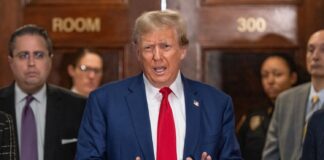
House Republican leaders abruptly called off a scheduled vote Thursday on a war powers resolution that would have compelled President Donald Trump to withdraw U.S. forces from the Iran conflict — pulling the vote at the last moment after it became clear Republicans did not have the numbers to defeat it. The cancellation stunned Democrats, who say they had the votes locked in, and it pushed the politically fraught vote into June. It is the latest indicator that congressional support for Trump’s undeclared war with Iran is quietly eroding.
Story Highlights
- House GOP leaders abruptly canceled the vote Thursday on a resolution to limit President Donald Trump’s war powers in Iran, as Republicans were on the verge of losing due to member absences.
- The resolution was introduced by Democratic Rep. Gregory Meeks of New York, the top Democrat on the House Foreign Affairs Committee, who said he had the votes “locked in.”
- The Senate is also working to ensure it has the votes to defeat a parallel war powers resolution that advanced to a final vote earlier in the week when four GOP senators supported the resolution.
What Happened
Republicans struggled Thursday to find the votes needed to dismiss legislation that would compel President Donald Trump to withdraw from the war with Iran. As it became clear that Republicans would not have the numbers to defeat the bill, GOP leaders declined to hold a vote on it, delaying planned votes into June.
House Republican leaders canceled the vote on the resolution to curb Trump’s war powers after Republicans appeared close to losing the measure due to member absences. Speaker Mike Johnson did not answer questions from reporters as he exited the House chamber Thursday, leaving his caucus to manage the political fallout from what Democrats immediately characterized as a deliberate maneuver to block a legitimate vote.
Democratic leaders criticized the move sharply, saying that the Republican-controlled House continues to behave like a wholly-owned subsidiary of the Trump administration. Rep. Meeks told reporters he had the votes “without question” and accused Republican leadership of playing a political game by pulling the vote rather than allowing the House to exercise its constitutional function.
On Capitol Hill, patience with the Iran war has worn thin as the stalemate in the Strait of Hormuz continues to disrupt global shipping and push oil prices higher for American consumers. Another House war powers resolution nearly passed the previous week, falling on a tie vote as three Republicans voted in favor. The growing Republican defection rate on these votes reflects a broader shift in mood within the caucus toward a conflict that began without congressional authorization in February 2026.
House Minority Leader Steve Scalise told reporters that the vote was delayed to give absent lawmakers an opportunity to vote when they return from the Memorial Day recess. The vote is now expected to take place in early June. The Senate is simultaneously grappling with its own version of the resolution, where bipartisan support has been slowly building.
Why It Matters
The decision to cancel the vote rather than face potential defeat is a significant moment in the arc of Trump’s Iran war. A president who launched military strikes on Iran in February 2026 without seeking congressional authorization is now watching his own party struggle to maintain legislative cover for that decision. Each canceled or close vote narrows the political runway available to Republican leadership.
The resolution, if passed, would have been the latest sign of slipping congressional support for the war that Trump launched more than two months ago with Israel, without congressional approval. Rank-and-file Republicans are increasingly willing to defy the president over the conflict. That willingness has accelerated as the economic effects of the war — particularly rising gas and food prices tied to Strait of Hormuz disruptions — have become daily realities for American households.
The war powers question is also a constitutional one with stakes that outlast any individual presidency. Congress has never successfully forced a president to end military action through the War Powers Resolution. Even if the House and Senate passed the resolution, Trump would almost certainly veto it, and the votes needed to override that veto do not exist. Yet the symbolic weight of bipartisan majorities in both chambers pushing back against an undeclared war would represent a meaningful rebuke, and Republican leaders clearly understand that.
Economic and Global Context
The ongoing stalemate in the Strait of Hormuz continues to disrupt global shipping and push oil prices higher in the United States. The Strait is one of the world’s most critical energy chokepoints, and any sustained military tension in the region has direct consequences for crude oil transit, insurance rates for commercial shipping, and ultimately consumer prices at the gas pump and grocery store.
The war has now lasted more than two months, and its financial costs — both in direct military expenditure and in the broader economic disruption it has caused — are compounding. American allies in Europe and Asia that depend on Middle Eastern energy supplies have been quietly pressing Washington for a resolution, and the longer the conflict persists, the greater the strain on those diplomatic relationships.
The White House has argued that the requirements of the War Powers Resolution no longer apply because of a ceasefire with Iran, while at the same time Trump has said he was just an hour away from ordering another strike on Iran earlier in the week. Those two positions are difficult to reconcile, and the contradiction has given ammunition to lawmakers seeking to reassert congressional authority.
Implications
When the chamber reconvenes in June, the war powers vote will be the first major item on the House agenda, and the political dynamics will have had two weeks to develop during the Memorial Day recess. Republican members will return to their districts and face constituents directly — many of whom, according to Democrats, are expressing concern about the cost and trajectory of the Iran conflict.
House Democratic leaders described the cancellation as Republicans continuing to shield the Trump administration from accountability, blocking bipartisan legislation that would have required Trump to end the Middle East conflict. That framing will be central to Democratic messaging heading into the summer, and it gives moderate Republicans a difficult choice: support the administration on an increasingly unpopular war, or side with constituents demanding oversight.
The broader implication is that Trump’s unilateral foreign policy model is approaching a stress test. A president who launched a war without congressional authorization, and whose own party is struggling to block resolutions opposing that war, is operating with a shrinking political margin. If even one chamber eventually passes a war powers resolution on the record, it would be the most significant congressional pushback against presidential military authority in decades.