Story Highlights
Trump ordered a “total and complete blockade” of sanctioned oil tankers entering or leaving Venezuela.
Oil markets reacted quickly as traders weighed legal risk, enforcement details, and supply disruption.
Lawmakers warned a blockade can be interpreted as an act of war without congressional authorization.
President Trump has escalated pressure on Nicolás Maduro’s government with a dramatic order: a “total and complete blockade” of sanctioned oil tankers moving in and out of Venezuela. Reuters reported the announcement on December 16, 2025, noting that operational details remain unclear, but the administration framed the move around security threats including terrorism, drug trafficking, human trafficking, and what Trump characterized as asset theft tied to the Maduro regime.
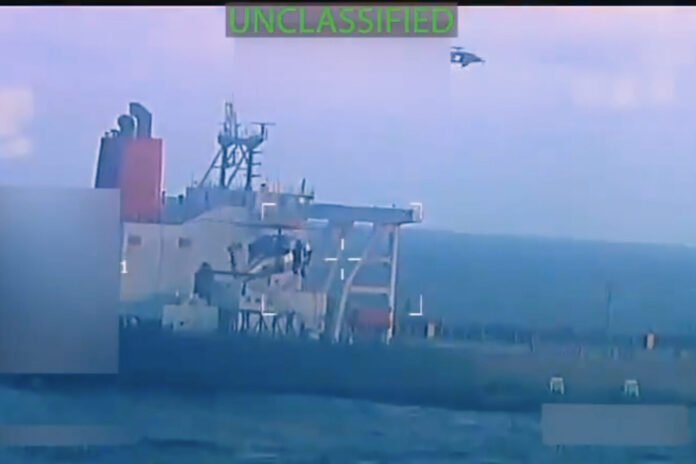
What happened is a major step beyond sanctions alone. Sanctions restrict finance and trade through legal prohibitions; a blockade suggests physical interdiction. Reuters reported the move helped push oil prices higher and raised immediate questions about authority and enforceability. Time also described the order as a sharp escalation in U.S. military pressure, coming amid heightened regional tensions and public debate about U.S. strikes and seizures related to Venezuelan maritime activity.
Why it matters is both economic and strategic. Venezuela still holds massive oil reserves, and any sustained disruption—even targeted to “sanctioned” vessels—can tighten supply expectations and widen risk premiums. Reuters noted analysts warning the pressure campaign could drive price increases and worsen conditions that can fuel outward migration.In other words: the policy hits Caracas, but it can also rebound onto U.S. political and economic terrain through energy costs and humanitarian knock-on effects.
Politically, this is Trump in a familiar mode: maximum pressure, clear messaging, and a willingness to accept confrontation if it advances U.S. leverage. Supporters will see a crackdown on a long-sanctioned authoritarian regime and a posture that treats sanctions evasion as a security issue, not just a finance issue. The administration can argue it is targeting sanctioned shipping—meaning vessels already tied to prohibited networks—rather than aiming indiscriminately at global commerce.
But the geopolitical implications are heavy. A blockade is viewed under international norms as one of the most escalatory tools short of open conflict. Reuters reported criticism from Rep. Joaquin Castro, who called it an unauthorized act of war. Castro himself posted a blunt warning on X that a naval blockade is “unquestionably an act of war” and not authorized by Congress. That line of argument can quickly become a formal congressional fight over war powers—especially if enforcement leads to confrontation at sea.
Another core question is implementation. Blockades require clarity: where, with what rules of engagement, and with what legal basis. Even if limited to sanctioned vessels, an interdiction regime can drag in insurers, ports, ship registries, and third-country actors who fear secondary consequences. And Venezuela’s allies—or states that purchase Venezuelan crude through opaque channels—may seek to test U.S. resolve. That turns a pressure campaign into a live operational contest.
Implications
Expect three parallel storylines: (1) market volatility as traders assess whether interdictions will materially reduce exports, (2) legal and constitutional debate over authority and congressional oversight, and (3) diplomatic turbulence across the hemisphere. If the U.S. enforces aggressively, the risk of confrontation rises; if enforcement is symbolic, the policy may still pressure shipping networks through fear and uncertainty. Either way, Trump is signaling that sanctions enforcement is shifting from paperwork to presence—and that alone can reshape behavior in global energy logistics.
Sources (exact headlines used)