Story Highlights
- President Trump said he has “no idea” how Senator Mitch McConnell is doing after weeks of hospitalization.
- McConnell has reportedly been hospitalized since June 14 after an unexplained medical emergency.
- The lack of clear public updates has sparked bipartisan pressure for more transparency about his condition.
What Happened
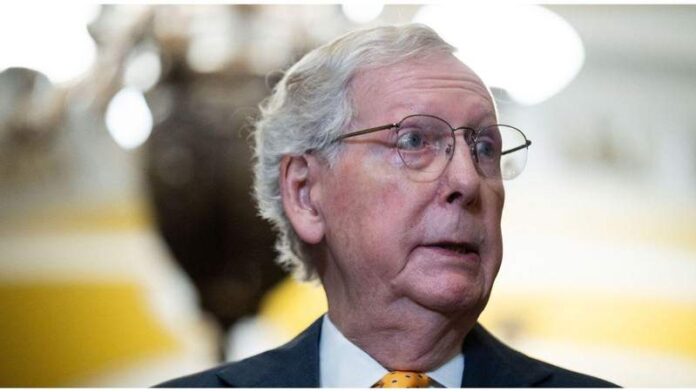
President Donald Trump said he has no information about Senator Mitch McConnell’s health, adding to growing questions about the Kentucky Republican’s prolonged hospitalization.
Speaking to reporters aboard Air Force One, Trump was asked about McConnell’s condition and responded bluntly: “I have no idea. I have no idea how he’s doing.”
Trump also said he had not spoken with McConnell since the hospitalization began.
- McConnell has reportedly been hospitalized since June 14.
- Trump said he has not spoken with him during that period.
- McConnell’s office has offered only limited public updates.
Emergency dispatch audio cited in reporting indicated that responders were called to McConnell’s Washington, D.C. home for an unconscious person. The dispatch reportedly included references to “cardiac arrest” and “CPR in progress,” though McConnell’s office has not confirmed those details.
Instead, his office has issued brief statements saying the senator continues to improve and remains engaged with staff on Kentucky and Senate matters.
Some Republican colleagues have offered reassurances. Senate Majority Leader John Thune and Senate GOP Whip John Barrasso said they had spoken with McConnell and described him as engaged. CNN commentator Scott Jennings also said McConnell’s voice sounded strong during a phone conversation.
But others have expressed concern about the lack of information. Senator Mike Lee wrote that many lawmakers are not speaking about McConnell’s condition because they do not know what his condition is.
Why It Matters
The situation matters because McConnell remains one of the most influential Republicans in the Senate, even as he prepares to retire when his term ends in January 2027.
For Trump and the Republican Party, the uncertainty creates a sensitive political issue. McConnell has played a major role in shaping Senate strategy, judicial confirmations, defense policy, and Republican leadership for decades.
Trump’s statement that even he does not know McConnell’s condition will likely intensify pressure on the senator’s office to provide a clearer update.
- McConnell’s absence could affect Senate votes once the chamber returns.
- Republicans hold a narrow majority, making every vote important.
- Kentucky voters are seeking clarity about their representation.
The concern is not only political. McConnell has previously faced health scrutiny, including public freezing episodes in 2023. His current hospitalization has revived broader debate over health transparency for aging lawmakers in both parties.
Kentucky Governor Andy Beshear has sent a letter demanding a fuller public update, arguing that continued speculation is not fair to McConnell or to Kentuckians.
Political and Public Context
McConnell’s hospitalization comes at a complicated moment for Senate Republicans.
The party is managing a narrow majority, major legislative fights, foreign policy tensions, and ongoing confirmation battles. McConnell’s absence from votes could become more significant once the Senate reconvenes.
For Trump, the matter is politically delicate. He and McConnell have had a strained relationship for years, but McConnell remains a senior Republican figure whose health and availability affect the party’s ability to govern.
The limited information from McConnell’s office has left space for speculation, including unsupported claims online. Republican leaders have tried to reassure the public, but the absence of detailed medical information has kept the issue alive.
For voters, the core question is simple: whether their elected senator is able to fully perform the duties of office.
Economic and Global Context
McConnell’s health is not primarily an economic issue, but his absence could affect policy areas with major national and global consequences.
He has long been influential on defense spending, foreign policy, NATO support, Ukraine aid, and national security legislation. His hospitalization comes during heightened tensions involving Iran and ongoing debates over war powers and defense authorization.
- McConnell remains a major Republican voice on national security.
- His absence could matter during close votes on defense and foreign policy.
- Allies and foreign policy observers may watch the situation because of his long-standing role in U.S. security debates.
Domestically, uncertainty over his condition could also affect Senate planning if major votes occur before he is able to return.
What Happens Next
Pressure is likely to grow on McConnell’s office to provide a clearer public explanation of his condition, especially as the Senate prepares to return from recess.
If McConnell returns soon and resumes active work, the political concern may fade. But if his absence continues, questions about representation, leadership, and succession planning will likely intensify.
- McConnell’s office may face more demands for a detailed health update.
- Senate Republicans will need to manage votes carefully if his absence continues.
- The episode may renew debate over health disclosure standards for aging lawmakers.
For Trump, the episode reinforces a broader political reality: even senior Republican leaders may be operating with limited information about McConnell’s status.
For Kentucky voters, the next update from McConnell’s office will be critical in determining whether concerns ease or the health mystery deepens further.