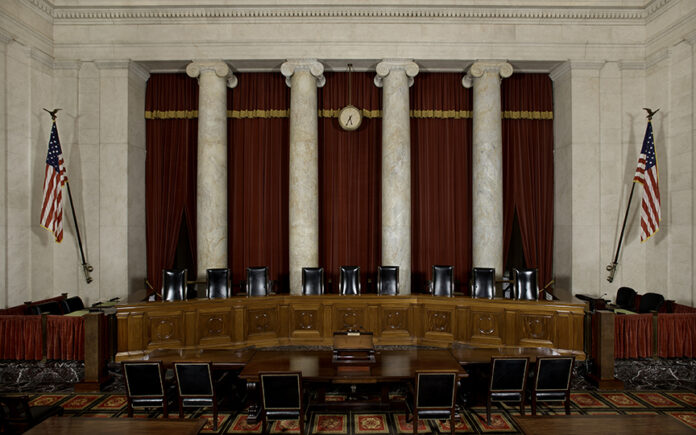
WASHINGTON — The U.S. Supreme Court is once again at the center of American politics as a series of recent and upcoming rulings begin to influence how elections are conducted, how federal agencies operate, and how executive power is interpreted. With the nation heading toward another high-stakes election cycle, the Court’s decisions are increasingly shaping political debate far beyond the courtroom.
Legal experts say the judiciary’s expanding role reflects both congressional gridlock and growing reliance on courts to resolve disputes that lawmakers have been unable or unwilling to settle.
Why the Supreme Court Is in Focus
Over the past year, the Supreme Court has heard cases touching on election rules, federal regulatory authority, executive discretion, and the balance of power between states and Washington. While each case is narrow in legal scope, collectively they carry wide political implications.
Several rulings have already affected how states manage voting procedures, how agencies enforce regulations, and how much authority presidents can exercise without explicit congressional approval. As more decisions are expected in the coming months, political strategists are closely watching the Court’s direction.
Election Rules and Democratic Processes
One of the most politically sensitive areas involves election administration. Court rulings related to voting access, ballot handling, and state authority over elections have sparked intense debate across party lines.
Supporters of stricter rules argue they are necessary to protect election integrity and public confidence. Critics counter that such measures risk suppressing turnout and disproportionately affecting certain voter groups. The Court has largely avoided sweeping nationwide mandates, instead issuing decisions that allow states significant discretion.
This approach, analysts say, ensures continued variation across states — a reality that campaigns must increasingly account for in their strategies.
Federal Agencies Under Scrutiny
Another major theme involves limits on federal agencies. The Court has signaled skepticism toward broad regulatory authority exercised without clear congressional authorization. This trend has implications for environmental policy, healthcare oversight, labor rules, and consumer protection.
Republican lawmakers have welcomed rulings that restrict agency power, calling them a necessary correction to bureaucratic overreach. Democrats warn that weakening agencies could undermine protections that Congress intended but struggles to update legislatively.
The long-term effect may be a shift of policy-making power back toward Congress — though critics note that congressional dysfunction makes that outcome uncertain.
Executive Power and Presidential Authority
Several cases have also examined the scope of presidential authority, including emergency powers and administrative decision-making. These rulings matter not only for the current administration but for future presidents of either party.
Legal scholars note that the Court appears focused on reinforcing constitutional boundaries, even if that limits executive flexibility. In a politically polarized environment, such decisions can either constrain unilateral action or force presidents to seek broader legislative consensus.
This dynamic is expected to play a significant role in campaign rhetoric, especially as candidates outline their governing philosophies.
Political Reactions Split Along Familiar Lines
Reactions to the Court’s actions largely reflect existing partisan divides. Conservatives praise the judiciary for restoring constitutional limits and reining in what they view as unchecked government expansion. Progressives argue that the Court is reshaping policy outcomes through legal interpretation rather than democratic processes.
Despite sharp rhetoric, both sides recognize the Court’s growing influence. Advocacy groups are increasingly investing in litigation strategies, viewing the judiciary as a key arena for advancing or blocking policy goals.
Public Trust and Institutional Legitimacy
Polling shows mixed public confidence in the Supreme Court. While many Americans respect the institution, concerns about partisanship and ethics have grown in recent years. High-profile cases amplify scrutiny of judicial appointments and confirmation processes.
Some lawmakers have proposed reforms, ranging from ethics rules to structural changes. However, such proposals face steep political and constitutional obstacles, making significant reform unlikely in the near term.
For now, the Court remains a powerful — and controversial — arbiter of political disputes.
What This Means for the 2026 and Beyond
As campaigns accelerate, Supreme Court rulings are expected to feature prominently in political messaging. Candidates may cite decisions to rally supporters, frame opponents, or argue for legislative change.
For voters, the impact is often indirect but substantial. Court decisions shape the rules of the political system itself, influencing how policies are made and how leaders govern once elected.
Why It Matters
The Supreme Court’s expanding role underscores a broader reality of modern U.S. politics: when legislative compromise falters, courts increasingly fill the void. Whether this trend strengthens constitutional governance or deepens political division remains a central question.
As the nation approaches another consequential election cycle, the Court’s influence will likely extend well beyond legal doctrine — shaping the future direction of American democracy itself.