

Story Highlights
- President Donald Trump said the latest inflation increase is tied largely to wartime energy pressures from the Iran conflict.
- The CPI rose 4.2 percent annually in May, with gasoline prices driving much of the increase.
- Trump argued that inflation will fall sharply once the war pressure eases and energy flows stabilize.
What Happened
President Donald Trump responded to the latest inflation report by arguing that rising prices are a temporary result of the Iran war and not a sign of long-term economic weakness.
The Bureau of Labor Statistics reported that the Consumer Price Index rose 4.2 percent annually in May, up from 3.8 percent the previous month. The increase marked the highest inflation reading since April 2023 and was driven heavily by energy prices.
- Annual CPI rose to 4.2 percent in May.
- Gasoline prices rose 7 percent month-over-month.
- Energy costs accounted for a large share of the overall increase.
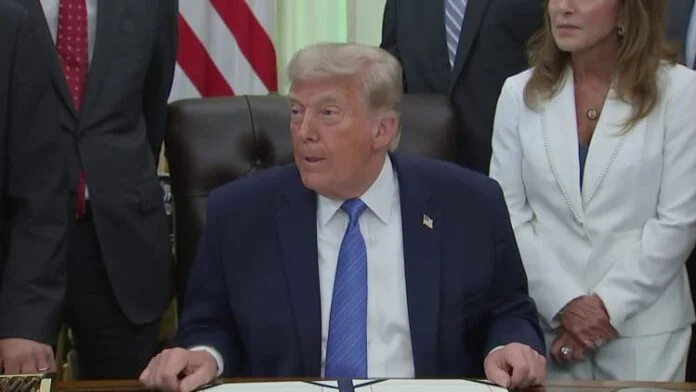
Asked about the numbers in the Oval Office, Trump said he was not worried and suggested the inflation report showed the economy was holding up better than expected despite wartime pressures.
Trump’s comment that he “loved” the inflation quickly drew criticism from Democrats, but the president later clarified that his point was that the numbers were lower than they could have been given the scale of the conflict and the disruption in global oil markets.
Why It Matters
The inflation report matters because prices remain one of the most important issues for American voters. Even when the broader economy shows strength, higher gas and grocery costs can quickly shape public opinion.
Trump is trying to frame the latest increase as a temporary wartime shock rather than a failure of economic management. His argument is simple: once the Iran conflict eases and energy markets stabilize, inflation should fall quickly.
- The White House is blaming energy pressure tied to the Iran war.
- Core inflation remains lower than the headline number.
- Trump is betting voters will see the price spike as temporary.
The distinction between headline inflation and core inflation is important. Core inflation, which excludes food and energy, stood at 2.9 percent annually, suggesting that the broader economy has not seen the same level of price acceleration as the energy sector.
That gives Trump a stronger case that the current inflation problem is being driven mainly by oil, gasoline, and war-related supply disruptions rather than a broad collapse in economic conditions.
Political and Public Context
Democrats quickly seized on Trump’s wording, arguing that the president was dismissing the pain families feel from higher prices. But the White House is likely to push back by saying Trump was expressing confidence in the economy, not celebrating hardship.
The administration’s message is that the United States is absorbing the economic cost of confronting Iran while keeping the domestic economy stable. Trump also suggested that seized Iranian oil and future energy stabilization could help bring prices down.
- Democrats will use Trump’s quote to attack him on cost-of-living issues.
- Republicans will argue the inflation spike is tied to wartime energy disruption.
- The White House will likely emphasize that core inflation remains more controlled.
The political challenge for Trump is timing. If gasoline prices fall before the midterms, the administration can argue that its strategy worked and that the price spike was temporary. If prices stay elevated, Democrats will use inflation as one of their strongest campaign issues.
The Iran war remains the central variable. Energy prices are closely tied to the Strait of Hormuz, oil shipping, and the broader risk of escalation in the Middle East.
What Happens Next
The next inflation reports will determine whether Trump’s prediction is correct. If energy prices begin to decline, the May CPI reading may look like a temporary wartime spike rather than the start of a longer inflation trend.
The Federal Reserve will also be watching closely. If inflation remains elevated, policymakers may face pressure to delay rate cuts or consider tighter policy. If the energy shock fades, the Fed may have more room to stay patient.
- Watch gasoline prices over the next several weeks.
- Track whether the Iran conflict moves closer to a ceasefire or escalates further.
- Follow the next CPI report for signs that inflation is cooling again.
For Trump, the issue is both economic and political. He is asking voters to view higher prices as a short-term cost of a broader national security strategy against Iran.
If inflation drops as he predicts, the White House will likely claim vindication. If it does not, Democrats will continue using the “I love the inflation” clip as a sharp attack line heading into the midterms.


