Story Highlights
• Secretary of State Marco Rubio publicly affirmed U.S. support for Iranian protesters.
• Washington condemned internet shutdowns and the use of force by Iranian authorities.
• The statement adds diplomatic weight to mounting international scrutiny of Tehran.
What Happened
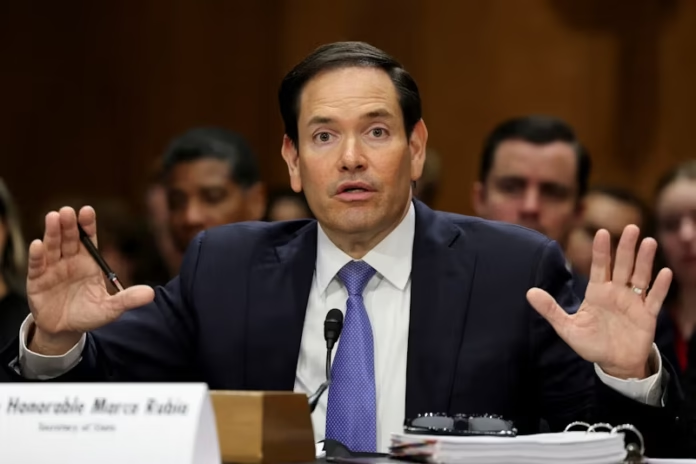
U.S. Secretary of State Marco Rubio publicly expressed support for Iranian protesters as nationwide demonstrations continued to spread across major cities. In formal statements and media comments, Rubio condemned Tehran’s internet shutdowns and the reported use of force against civilians, saying the United States stands with the Iranian people as they call for political and economic change. The remarks came as Iranian authorities tightened communications restrictions and expanded security deployments to contain unrest that began over economic hardship and rapidly evolved into broader political demands.
Rights groups and international monitors report that thousands of Iranians have been detained and that casualties have mounted as protests persist despite blackouts. Iranian officials have accused foreign governments of stirring unrest and warned against outside “interference,” while continuing to characterize demonstrations as threats to national security.
Why It Matters
Rubio’s public support reinforces Washington’s diplomatic posture at a sensitive moment. While U.S. administrations have long criticized Iran’s human‑rights record, high‑level, explicit backing for protesters signals a firmer tone and places added pressure on Tehran in international forums. The statements also encourage allied governments to consider coordinated responses, including potential sanctions, public condemnations, and multilateral initiatives focused on digital access and civil liberties.
For protesters and civil society, visible backing from senior U.S. officials can carry symbolic value, helping keep global attention on conditions inside Iran. At the same time, it may strengthen the Iranian government’s narrative that unrest is being encouraged from abroad, potentially influencing how authorities justify internal security measures.
Political and Geopolitical Implications
Domestically, Rubio’s remarks align with a broader U.S. political consensus that views Iran’s clerical leadership as a destabilizing regional actor. Internationally, the statements are being closely watched by European and Middle Eastern partners balancing diplomatic engagement with pressure tactics. Any escalation in rhetoric or policy could affect negotiations on regional security, sanctions enforcement, and humanitarian access.
Regionally, heightened U.S. visibility in Iran’s internal crisis raises sensitivities across the Middle East, where allies and adversaries alike track shifts in Washington’s posture. The episode underscores how domestic unrest in Iran can quickly reverberate through regional security calculations, energy markets, and diplomatic alignments.
Implications
If sustained, Washington’s public backing may catalyze broader international action focused on human rights and digital freedoms in Iran. However, it could also prompt Tehran to double down on security measures, intensifying a cycle of pressure and response. How both sides calibrate their next steps will shape near‑term stability and the longer‑term trajectory of U.S.–Iran relations.