Story Highlights
- Secretary of State Marco Rubio testified publicly for the first time since the Iran war began.
- Rubio told senators that Iran has agreed to discuss parts of its nuclear program.
- Lawmakers pressed the administration for a clearer strategy, cost estimate, and path to ending the conflict.
What Happened
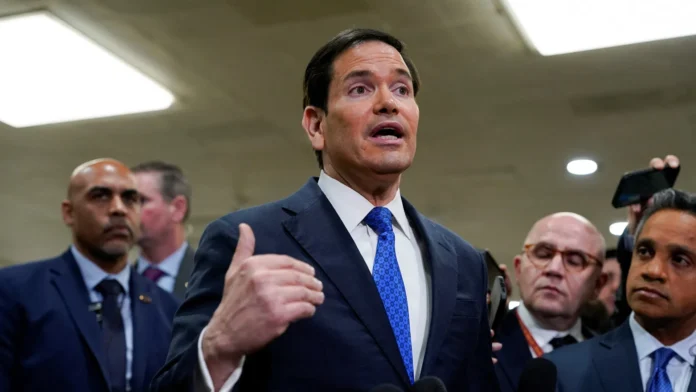
Secretary of State Marco Rubio appeared before the Senate Foreign Relations Committee for his first public testimony since the United States entered the war against Iran, telling lawmakers that a nuclear agreement may now be within reach.
The hearing was formally tied to the State Department’s fiscal year 2027 budget request, but it quickly became a broader review of the Trump administration’s Iran strategy. Senators from both parties pressed Rubio on the war’s goals, costs, legal basis, and possible endgame.
- Rubio defended the administration’s decision to launch military action against Iran.
- He said Tehran has shown new willingness to discuss nuclear commitments.
- He cautioned that no agreement has been finalized.
Rubio said Iran has agreed to negotiate aspects of its nuclear program that it had previously refused to discuss. He described the development as a potentially important diplomatic opening, though he warned that talks remain difficult and no outcome is guaranteed.
The secretary also said the administration is pursuing diplomacy through intermediaries while coordinating closely with regional partners. That process has become more complicated as ceasefire stability remains uncertain and lawmakers demand more transparency from the White House.
Why It Matters
Rubio’s testimony gave Congress and the public one of the clearest looks yet at the administration’s thinking on the Iran war. For months, lawmakers have complained that major decisions have been made by the executive branch with limited congressional input.
The possibility of a nuclear agreement is the most significant development. If Iran is genuinely willing to negotiate over parts of its nuclear program, the administration may have a diplomatic path to justify its pressure campaign and move toward ending the conflict.
- A nuclear deal could offer Trump a major foreign policy victory.
- Failure could deepen concerns that the war lacks a clear exit plan.
- Congress is likely to keep pressing for more oversight.
Rubio’s comments were consistent with fresh reporting that he expressed optimism about renewed Iran nuclear talks despite congressional skepticism. AP reported that Rubio told lawmakers Iran had agreed to negotiate nuclear points it had previously refused to discuss. :contentReference[oaicite:1]{index=1}
The testimony also comes as congressional pressure over war powers is growing. The House passed a resolution aimed at halting Trump’s military action against Iran, with several Republicans joining Democrats in support. :contentReference[oaicite:2]{index=2}
Political and Public Context
The hearing placed Rubio at the center of one of the administration’s most important political challenges. Trump has argued that his pressure campaign forced Iran closer to negotiations, but critics say the war has stretched on without a formal congressional authorization or a fully defined endpoint.
Democrats used the hearing to question whether the administration has respected Congress’s constitutional role in matters of war. Some Republicans also showed concern about mission creep, economic costs, and the long-term consequences of an extended conflict.
- Democrats are demanding stronger war powers oversight.
- Some Republicans are uneasy about the length and cost of the conflict.
- The White House is trying to present diplomacy as proof that pressure is working.
Rubio’s challenge is to defend the administration’s military decisions while convincing lawmakers that diplomacy remains real. That balance will become harder if talks stall, ceasefire violations continue, or energy prices rise again.
For the midterm campaign, the Iran war could become a major issue. Democrats are likely to argue that Trump overreached, while Republicans will argue that pressure forced Tehran to the table.
Economic and Global Context
The Iran conflict has affected global energy markets, shipping routes, and inflation concerns. Tensions around the Strait of Hormuz remain especially important because the region is central to global oil flows.
Any sign of progress in nuclear talks could help calm markets. But renewed escalation could quickly push oil prices higher, raise shipping insurance costs, and create additional pressure on U.S. consumers.
- Oil markets remain sensitive to Iran conflict developments.
- Shipping risk near the Gulf continues to affect global supply chains.
- A credible nuclear deal could reduce pressure on energy prices.
Rubio’s budget testimony also highlighted the administration’s broader foreign policy priorities. The State Department’s request covers diplomacy, embassy operations, foreign assistance, and the infrastructure needed to manage crises around the world.
Critics argue that diplomatic capacity is especially important during a war. Rubio and the administration argue that their approach prioritizes American interests while maintaining enough leverage to secure a stronger deal.
What Happens Next
Rubio is expected to face continued questioning from lawmakers as Congress pushes for more information about the Iran war and the diplomatic track. The administration will need to show whether the nuclear talks can produce real commitments or only vague promises.
If negotiations advance, Trump will likely present the talks as proof that his pressure campaign worked. If the talks fail, lawmakers may intensify efforts to limit the administration’s authority and demand a clearer exit strategy.
- Congress may continue advancing war powers measures.
- Rubio will remain the administration’s main public defender on Iran diplomacy.
- The next stage of nuclear talks could determine whether the conflict moves toward resolution or deeper escalation.
For now, Rubio’s testimony offered cautious optimism. He suggested that a nuclear deal may be possible, but he also made clear that the administration has not yet secured one.
The coming days will show whether Iran’s reported willingness to negotiate becomes a genuine breakthrough — or another fragile opening in a conflict still searching for an endgame.
Sources
- Rubio says U.S. is in talks with Iran over nuclear program as senators press for war endgame
- Rubio is optimistic on eventual Iran nuclear talks despite congressional skepticism
- Rubio testifies on Capitol Hill for the 1st time since start of Iran war
- House defies Trump and passes war powers resolution to halt military action against Iran
- Rubio details U.S. demands as Iran peace talks falter