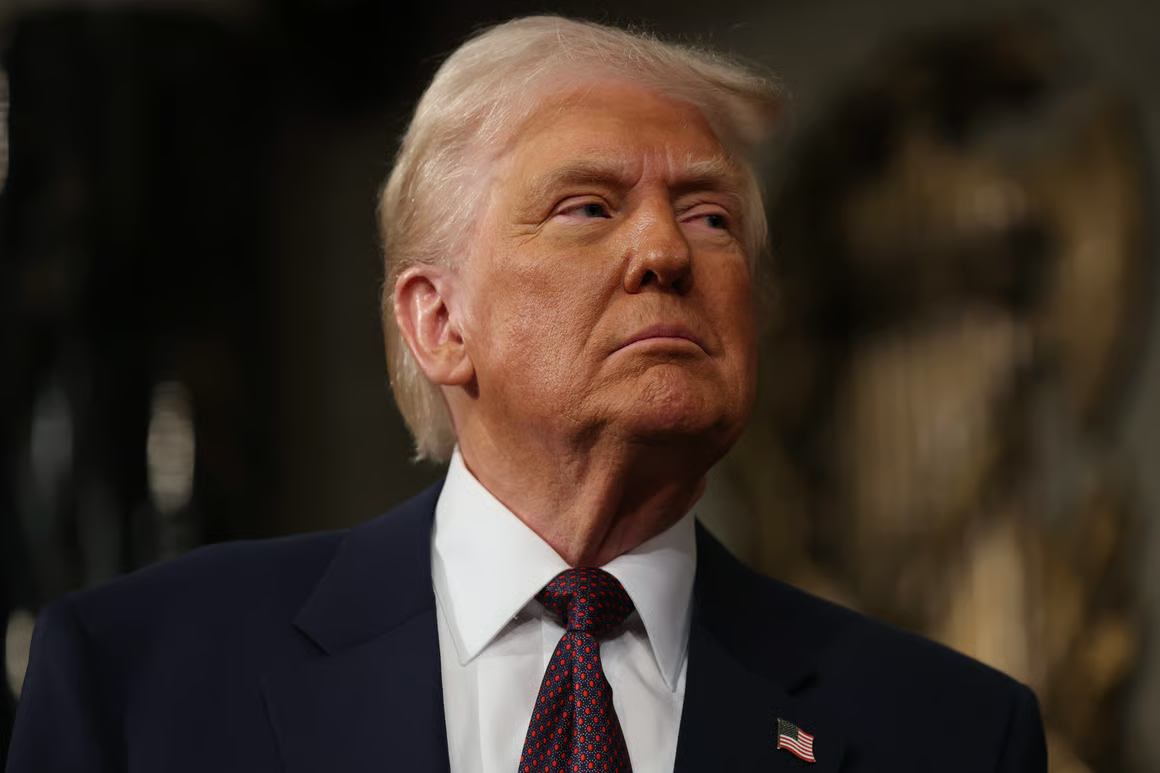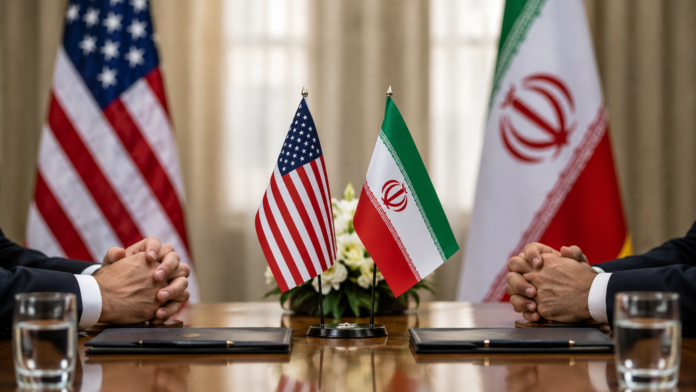
President Donald Trump said Monday that planned U.S. strikes on Iran have been called off in favor of new negotiations aimed at ending the ongoing conflict and reopening the Strait of Hormuz, a critical global shipping route. The announcement came just days after the United States and Israel were reportedly preparing one of the most extensive bombing campaigns yet against Iranian energy infrastructure. Hours later, Trump and Tehran offered conflicting accounts of whether talks were actually taking place, adding fresh uncertainty to an already volatile standoff.
Story Highlights
- Trump said Saturday night he was canceling a planned large-scale strike on Iran and that negotiations would begin Monday afternoon
- Iran’s foreign ministry publicly denied any active negotiations with the United States, saying it was dealing only with Oman
- The Strait of Hormuz, through which roughly a fifth of the world’s traded oil and natural gas once passed, remains a central point of dispute
What Happened
Trump announced late Saturday that he was calling off a planned U.S. and Israeli bombing campaign against Iranian energy infrastructure, telling reporters that negotiations with Tehran would instead begin Monday afternoon. The talks were intended to end the conflict and revive stalled cargo traffic through the Strait of Hormuz, a waterway through which about a fifth of all traded oil and natural gas passed before the war began. The reversal came after weeks of escalating military threats between Washington, Jerusalem, and Tehran.
By Monday, however, the situation had grown murkier. Iranian state media quoted the country’s foreign ministry as saying Tehran was not currently holding negotiations with the United States, directly contradicting Trump’s account. The president had said on Sunday that talks were already underway “in the form of a negotiation” and would begin “tomorrow afternoon,” but did not specify who from either government would be involved.
Trump’s response to Iran’s denial was combative. Writing on Truth Social, Trump accused Iranian leadership of being “unbelievably duplicitous,” claiming they had asked for a meeting and that talks had already begun, with more scheduled in the near future, even as Tehran publicly insisted nothing was being discussed and that it was dealing only with Oman as an intermediary. Trump further asserted that nothing would move through the Strait of Hormuz unless the U.S. permitted it, and that Iran’s only options were a deal or “total surrender.”
The dispute over the Strait of Hormuz sits at the heart of the standoff. Trump has said the U.S. will maintain its blockade of the passage unless a deal or total surrender is accomplished, while Iran has separately been discussing arrangements over the waterway with Oman, a longtime intermediary between Washington and Tehran. The contradictory messaging has left allies, oil markets, and Capitol Hill uncertain about whether a genuine diplomatic opening exists or whether the public statements are largely posturing ahead of further military action.
The broader military context remains tense. According to reporting cited in political newsletters tracking the conflict, at least one U.S. general has privately warned that American forces lack sufficient capacity in the region to fully protect Israel if hostilities resume at scale, underscoring the stakes of whether negotiations succeed or collapse in the coming days.
Why It Matters
The stakes of this standoff extend well beyond the immediate question of whether talks occur this week. The Strait of Hormuz is one of the most strategically important chokepoints in global energy markets, and any prolonged closure or blockade carries the potential to disrupt oil and gas flows to Asia, Europe, and beyond. For American consumers, continued instability in the region raises the risk of higher gasoline and energy prices at a time when inflation remains a central concern for households and policymakers alike.
For Congress and U.S. military planners, the conflicting signals from the White House and Tehran complicate strategic planning. If reports of insufficient U.S. force posture in the region are accurate, lawmakers on both sides of the aisle may push for greater clarity from the administration about troop deployments, munitions stockpiles, and the readiness of allied forces, particularly Israel’s, to withstand a prolonged campaign.
There is also a credibility dimension. Trump’s public claims of imminent talks, followed swiftly by Iran’s denial, raise questions about whether the administration is accurately characterizing diplomatic progress to the American public. For a White House that has repeatedly emphasized its dealmaking record, a mismatch between rhetoric and reality on an issue as consequential as a potential war with Iran could affect both domestic political standing and international negotiating leverage.
Economic and Global Context
Energy markets have been closely watching developments in the Gulf. Before the current conflict escalated, the Strait of Hormuz carried roughly one-fifth of globally traded oil and natural gas, making it one of the most consequential maritime corridors in the world economy. Prolonged disruption to shipping through the strait has historically triggered sharp swings in crude prices, with ripple effects across shipping insurance, airline fuel costs, and consumer energy bills worldwide.
Gulf allies, including Kuwait, Jordan, and the United Arab Emirates, have also found themselves affected by the broader instability, given their proximity to potential strike zones and their reliance on regional shipping lanes. Any resumption of large-scale U.S. or Israeli strikes on Iranian energy infrastructure would likely trigger renewed volatility in oil futures markets, as traders price in supply disruption risk.
Diplomatically, Oman’s continued role as an intermediary underscores the limited direct channels between Washington and Tehran. Iran’s insistence that it is negotiating only with Oman, rather than the United States directly, suggests Tehran may be seeking to control the narrative around any eventual agreement while avoiding the appearance of capitulating to American pressure ahead of a potential deal.
Implications
In the near term, all eyes will be on whether direct or indirect talks materialize this week, and if so, what terms might govern a reopening of the Strait of Hormuz. A durable de-escalation would likely be welcomed by global markets and could ease pressure on energy prices heading into the fall. Conversely, a breakdown in talks, particularly if Iran continues to deny their existence, could set the stage for the resumption of the strikes Trump said he called off.
For Israel, the outcome carries direct security implications, particularly if reports about strained U.S. force posture in the region prove accurate. Israeli officials will likely press Washington for clarity on America’s continued military commitment.
For American voters, the situation adds another variable to an already complex foreign policy landscape heading into the November midterms, with both the war’s economic fallout and questions about the administration’s transparency likely to factor into ongoing political debate.
Source
Iran war live: Trump says Iran’s choices limited to deal or total surrender