Story Highlights
- Congress is confronting mounting pressure over the nation’s rapidly growing debt.
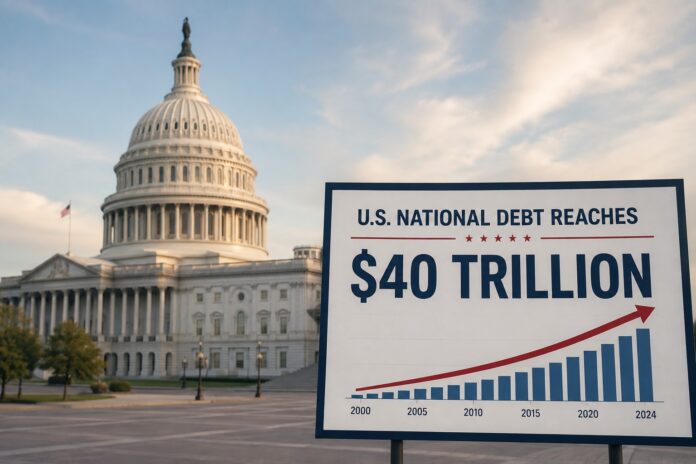
- The national debt has now surpassed $40 trillion.
- Lawmakers are weighing spending, budgeting and debt-management options.
- The issue could become increasingly important ahead of the midterm elections.
What Happened
Congress is facing renewed pressure to address the nation’s worsening fiscal position as the national debt reaches an unprecedented $40 trillion. The milestone has intensified debate among lawmakers over federal spending, borrowing and the long-term sustainability of government finances. Republican lawmakers and fiscal conservatives have continued calling for greater spending discipline, while Democrats and other lawmakers have emphasized the need to balance fiscal responsibility with funding for major government programs and priorities.
The debate comes as lawmakers also confront decisions involving government funding and future borrowing. A bipartisan group led by Rep. Steve Womack has promoted legislation that would require a biennial budget process and create a bipartisan fiscal commission, arguing that Congress needs stronger procedures for addressing the country’s financial outlook. At the same time, the Treasury Department faces the challenge of financing federal obligations as borrowing continues to rise.
- The national debt crossed the $40 trillion mark in August.
- Rep. Steve Womack is backing a bipartisan budget-reform proposal.
- The proposed legislation would establish a bipartisan fiscal commission.
- Congress continues to debate how to control spending while funding government priorities.
Why It Matters
The debt debate matters because higher federal borrowing can affect the government’s ability to respond to future economic challenges. Rising interest costs can consume more federal resources, leaving lawmakers with difficult choices about spending, taxes and major programs. The issue also places greater importance on how Congress structures budgets and evaluates the long-term consequences of new legislation.
The subject could become more politically significant as voters prepare to evaluate lawmakers in the midterm elections. Fiscal policy can influence debates over taxes, government programs, defense spending and economic growth, giving both parties an opportunity to present competing approaches. For Republicans, the growing debt strengthens arguments for spending restraint and budget reforms, while Democrats can emphasize protecting programs and examining revenue alongside spending.
- Rising debt increases pressure for responsible budgeting.
- Interest costs could compete with other federal priorities.
- Fiscal policy may become an important midterm election issue.
- Lawmakers face pressure to find sustainable bipartisan solutions.
Political and Public Context
The national debt has grown through administrations of both major parties, making fiscal responsibility a broader political issue rather than one confined to a single president or Congress. Republicans have generally placed greater emphasis on reducing federal spending and limiting the growth of government, while Democrats have often argued that deficit reduction must also consider investments, social programs and revenue. Those competing priorities have repeatedly complicated attempts at comprehensive fiscal reform.
The debate is also occurring as the Trump administration seeks to pursue its broader economic and budget agenda. President Donald Trump has urged lawmakers to pay attention to the debt ceiling and the country’s borrowing trajectory. Meanwhile, lawmakers from both parties have proposed different approaches to improving the federal budgeting process, highlighting the continuing disagreement over how aggressively Congress should act and which policies should be changed.
- Both parties have contributed to the nation’s long-term debt growth.
- Republicans are emphasizing spending restraint and fiscal reform.
- Democrats continue to debate spending priorities alongside revenue options.
- Bipartisan budget proposals show some lawmakers are seeking structural changes.
GOP, Democrats lament $40T debt as Congress struggles to acthttps://t.co/kw7mYJ73rs
— The Hill (@thehill) August 20, 2026
What Happens Next
Congress will continue facing decisions over federal funding, borrowing and the next debt-limit challenge. The current fiscal debate is likely to intensify as lawmakers assess how quickly federal borrowing is approaching the existing statutory debt limit. Budget negotiations and spending legislation could provide opportunities for lawmakers to pursue reductions or procedural reforms, although major changes would require agreement across competing factions.
The political stakes are also likely to increase as the midterm elections approach. Voters will have the opportunity to judge lawmakers on economic and fiscal issues, while congressional leaders will have to balance demands from fiscal conservatives with pressure to maintain government programs and other priorities. The administration and Congress will therefore face continued pressure to demonstrate how they intend to manage the country’s finances over the longer term.
- Watch for congressional action on budget and spending legislation.
- Lawmakers will face increasing attention on the debt limit.
- Fiscal policy is likely to feature in midterm campaign debates.
- Bipartisan budget-reform efforts could receive additional scrutiny.