

Story Highlights
- A federal judge expressed skepticism regarding the White House’s ban on CNN, Politico, and MS NOW.
- The judge emphasized that due process was not followed in the decision to revoke press credentials.
- This ruling underscores the importance of press freedom and transparency in government actions.
- The case raises significant questions about media access and the First Amendment rights of journalists.
What Happened
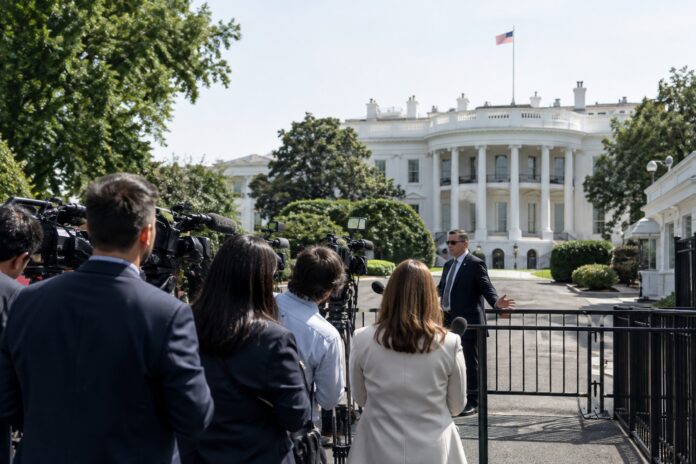
In a significant legal development, U.S. District Judge Timothy Kelly, appointed by President Trump, raised concerns about the administration’s recent decision to ban CNN, Politico, and MS NOW from the White House complex. The ban, which involved revoking the press badges of these outlets, has sparked a lawsuit grounded in First Amendment rights. During a hearing on Wednesday, Judge Kelly stated that due process ‘wasn’t followed here,’ indicating that the administration’s actions may not withstand judicial scrutiny.
The controversy erupted after the White House denied access to these media organizations, prompting them to file a lawsuit on the grounds that their First Amendment rights were violated. The hearing took place against the backdrop of President Trump’s anticipated return to Washington from New York, where he had been attending the United Nations General Assembly. The president was scheduled to meet with Chinese leader Xi Jinping, an event that typically garners significant media attention.
- Judge Timothy Kelly expressed skepticism about the legality of the press ban.
- CNN, Politico, and MS NOW filed a lawsuit claiming First Amendment violations.
- The ban was enacted just before a high-profile meeting between Trump and Xi Jinping.
- The Department of Justice defended the president’s right to control media access.
Why It Matters
This ruling is crucial as it highlights the delicate balance between presidential authority and the fundamental rights of the press. The skepticism expressed by Judge Kelly suggests that the administration’s rationale for the ban may not hold up in court, reinforcing the principle that media access is vital for a functioning democracy. The First Amendment guarantees freedom of the press, and any actions that appear to undermine this freedom warrant serious scrutiny.
Moreover, the implications of this case extend beyond the immediate parties involved. If the court sides with the media outlets, it could set a precedent that reinforces the rights of journalists to access government proceedings and hold public officials accountable. Conversely, a ruling in favor of the administration could embolden future attempts to restrict media access based on perceived bias or negative coverage.
- A ruling in favor of the media could strengthen press freedoms nationwide.
- It may set a precedent for future cases involving media access to government officials.
- The outcome could influence public perception of the administration’s transparency.
- Journalists and media organizations may feel more empowered to challenge similar bans.
Political and Public Context
The legal battle over media access is not new, and this case draws on precedents established in previous court rulings. Judge Kelly referenced two significant cases during the hearing: Karem v. Trump (2022) and Sherrill v. Knight (1977). These cases established that the Fifth Amendment’s right to due process applies when access to government facilities is denied. The implications of these precedents are profound, as they underscore the necessity for transparency and fairness in governmental actions.
In the past, the Trump administration has faced scrutiny over its relationship with the media. The president has often criticized news outlets for what he perceives as biased reporting, leading to tensions between the White House and various media organizations. However, the current legal challenge raises important questions about the limits of presidential power and the rights of journalists to report on government activities without fear of retribution.
- The Karem v. Trump case established important precedents regarding media access.
- Previous administrations have also faced legal challenges over press freedoms.
- The current case reflects ongoing tensions between the Trump administration and the media.
- Historical context shows that media access has been a contentious issue in U.S. politics.
Judge Blocks Trump’s White House Ban On CNN, MS NOW And Politicohttps://t.co/Y3cEoCucdF pic.twitter.com/4TRNTksFL4
— Forbes (@Forbes) September 24, 2026
What Happens Next
As the legal proceedings continue, several key questions remain unanswered. The court’s decision on whether to restore the press credentials of CNN, Politico, and MS NOW will be pivotal in determining the future of media access to the White House. Additionally, the case may prompt further discussions about the role of the press in a democratic society and the responsibilities of government officials to uphold constitutional rights.
Moving forward, the administration will need to carefully consider its approach to media relations, especially in light of the judge’s comments regarding due process. The outcome of this case could influence how future administrations handle press access and the extent to which they are willing to engage with media organizations that criticize their policies.
- The court will issue a ruling on the media outlets’ access in the coming weeks.
- The administration may need to reassess its media relations strategy.
- Future cases may arise that challenge media access based on similar grounds.
- Public opinion may shift based on the outcome of this legal battle.


