

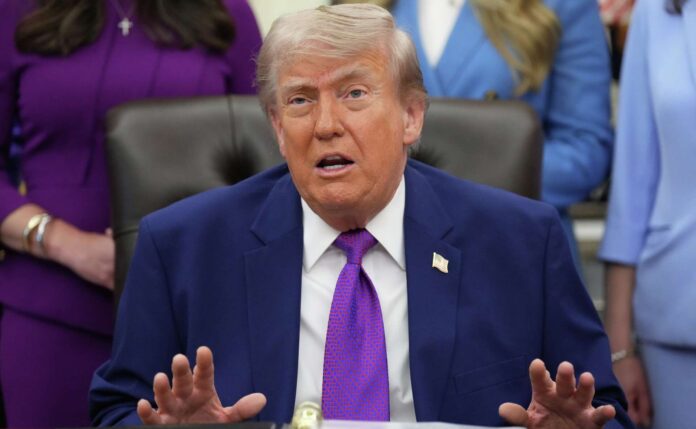
The fragile ceasefire between the United States and Iran is facing its most serious test yet, with peace negotiations effectively stalled and both sides trading fire in the Strait of Hormuz even as the truce nominally remains in place. Trump has called the ceasefire “on massive life support” after rejecting Iran’s 14-point counterproposal as “totally unacceptable,” and some White House aides say the president is now more seriously weighing a return to full-scale military operations.
Story Highlights
- Trump has rejected Iran’s 14-point peace counterproposal, calling it “unacceptable” and accusing Iran of “playing games” for 47 years.
- The U.S. naval blockade of Iran, imposed after ceasefire talks collapsed in April, is costing Iran an estimated $500 million per day, according to U.S. officials.
- Oil prices have risen more than 40 percent since the war began on February 28, with the U.S. Department of Energy warning prices could remain above $100 per barrel for weeks.
What Happened
The U.S.-Iran ceasefire, which took effect on April 8 and was mediated by Pakistan, has deteriorated significantly in recent weeks. Since then, the Strait of Hormuz has remained closed to most commercial shipping, the U.S. naval blockade of Iranian ports — which began on April 13 — has continued, and both sides have exchanged fire on multiple occasions in and around the strategic waterway.
Iran submitted a 14-point counterproposal to the United States, outlining its terms for a permanent end to the conflict. The proposal called for all issues to be resolved and the war ended within 30 days, along with guarantees against future U.S. military aggression, a full withdrawal of U.S. forces from Iran’s periphery, an end to the naval blockade, the release of frozen Iranian assets, payment of reparations, the lifting of all sanctions, and a new mechanism governing the Strait of Hormuz. Iran’s Deputy Foreign Minister Kazem Gharibabadi characterized the proposal as reasonable and aimed at permanent peace.
Donald Trump rejected the proposal in blunt terms. Writing on his Truth Social platform, he said Iran had been “playing games with the United States, and the rest of the World, for 47 years” and called the proposal “TOTALLY UNACCEPTABLE.” He later called it “stupid.” Some of Trump’s aides have told CNN that the president is now more seriously considering a resumption of major combat operations than at any point in recent weeks. Trump has grown increasingly frustrated with the continued closure of the Strait of Hormuz and with what he perceives as internal divisions within Iranian leadership that are preventing them from making meaningful concessions on nuclear talks.
A ship was also seized by unknown parties off the UAE coast near the Strait of Hormuz on Thursday and was heading toward Iranian waters, according to the UK Maritime Trade Operations center. The vessel had been at anchor about 38 nautical miles northeast of Fujairah before being taken. Multiple ships have now been attacked or seized in or near the waterway as both the U.S. and Iran enforce rival maritime restrictions.
Why It Matters
The Iran war represents the most significant armed conflict involving the United States since Iraq, and it has touched virtually every aspect of American economic and geopolitical life. The war began on February 28 with U.S. and Israeli airstrikes on Iranian targets, and it has since reshaped energy markets, strained alliances, and created a humanitarian crisis inside Iran. The question of whether the ceasefire holds — or whether the U.S. returns to full-scale bombing — will determine the arc of global politics for the months ahead.
For ordinary Americans, the most immediate impact is at the gas pump and in their energy bills. The Strait of Hormuz carries roughly 20 percent of the world’s seaborne oil supply and significant volumes of liquefied natural gas. With the waterway in dispute, energy prices have surged. The U.S. Department of Energy has warned that oil will likely stay above $100 a barrel in the near term, and some analysts project the national average for retail gasoline could hit $5 per gallon if the situation does not improve. That is already a political liability for the White House.
The Iran situation also looms over Trump’s Beijing summit this week. China is Iran’s largest trading partner and the top buyer of Iranian oil, giving Beijing significant leverage over both Tehran and the trajectory of peace talks. Trump has reportedly asked Xi to help resolve the conflict, though Secretary of State Rubio said the U.S. is not seeking direct assistance from China. The White House confirmed that the two leaders agreed on the importance of fully reopening the Strait of Hormuz, a signal of limited but real alignment.
The nuclear dimension of the conflict remains deeply unsettled. Under the U.S.’s original 15-point framework, Iran would halt all uranium enrichment for at least 12 years and hand over its estimated 440 kilograms of uranium enriched to 60 percent. Israel, which launched joint operations with the U.S. and is watching negotiations closely, is concerned that any deal might leave Iran’s nuclear program partially intact while bypassing its ballistic missile arsenal and its support for regional proxies.
Economic and Global Context
The economic toll of the Iran war is being felt across the globe. German shipping company Hapag-Lloyd reported a loss of approximately $256 million in the first quarter of 2026, citing the disruption caused by the U.S.-Israeli military campaign. The company currently has four vessels stranded in the Persian Gulf. Global supply chains that run through the Strait of Hormuz — including oil, liquefied natural gas, and container shipping — have been forced to reroute around Africa, dramatically increasing costs and transit times.
The U.S. military’s naval blockade is imposing severe financial pressure on Tehran. American officials estimate Iran is losing $500 million per day due to the blockade’s interference with oil exports and port operations. Analysts have estimated Iran held roughly 13 days of oil storage capacity when the blockade began, meaning its ability to continue exporting has been severely constrained. Iran’s oil fields risk structural damage if forced to shut down for extended periods, a complication that could persist long after any ceasefire.
Oil prices rising more than 40 percent since the war began have produced a significant, if uneven, windfall for major producers outside the conflict zone, including Gulf states, U.S. shale producers, and Russia. At the same time, energy-importing nations — including large swaths of Europe, Asia, and the developing world — are facing inflationary pressure and potential recession risks tied to high energy costs. The Iran war’s economic fallout has thus become a shared global problem rather than a bilateral American issue.
Implications
If Trump opts to resume major military operations against Iran, the consequences would be far-reaching. A fresh U.S. bombing campaign would almost certainly push oil prices even higher, potentially toward levels not seen since the energy crises of the 1970s. It would also further strain U.S. alliances, as NATO members have already declined Trump’s requests to help escort shipping through the Strait of Hormuz. The Pentagon has reportedly been preparing contingency plans and may rename the operation if hostilities resume.
If a deal is reached, its terms will matter enormously. A settlement that leaves Iran’s nuclear enrichment capacity intact would likely face fierce opposition in Israel and from hawkish members of the U.S. Congress. Israel has already signaled that it would view such an outcome as incomplete and potentially destabilizing. A deal that satisfies U.S. core demands — no enrichment, no nuclear weapons program, open strait — would be a significant achievement but may be unacceptable to Iranian leadership.
For American voters ahead of the 2026 midterms, the Iran war and its economic costs are already registering. Trump’s approval rating on the use of military force has declined 11 points over the past year, according to Pew Research Center data. The war’s resolution, or lack thereof, will be a central campaign issue for both parties.


