Story Highlights
- The House is preparing to debate a bipartisan bill imposing stricter sanctions on Russia.
- The legislation follows overwhelming Senate approval and aims to enhance economic pressure on Russia and Iran.
- House GOP leaders are seeking near-unanimous support to advance the bill.
- Potential resistance from Democrats may complicate the passage of the legislation.
What Happened
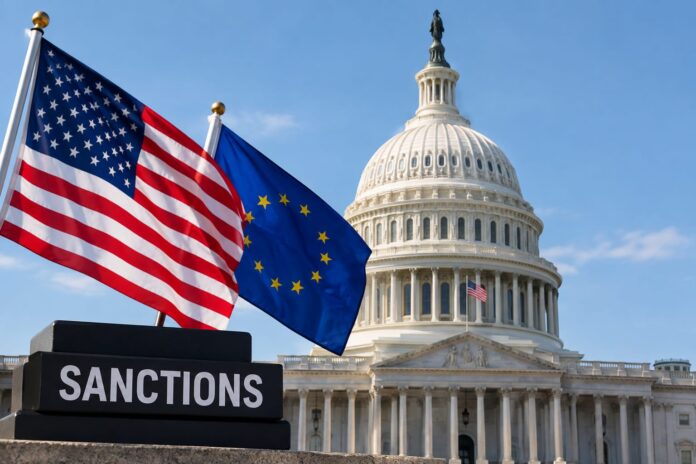
The House of Representatives is gearing up to take significant legislative action next week, focusing on a bill that seeks to impose tougher sanctions on Russia. This comes on the heels of the measure receiving overwhelming bipartisan support in the Senate last month, where it passed with a notable 86-11 vote. The bill is designed to enhance economic pressure on both Russia and Iran, reflecting a united front in Congress against perceived threats from these nations.
The House Rules Committee is scheduled to convene on Monday to deliberate on the Russia sanctions bill, which has been championed by the late Senator Lindsey Graham (R-S.C.) and has garnered backing from various political figures, including President Trump. House GOP leaders are aiming to navigate the legislative process through regular order, which necessitates near-unanimous Republican support for a procedural vote to advance the bill on the House floor. However, uncertainty looms over whether Speaker Mike Johnson (R-La.) can secure enough GOP votes to clear this initial hurdle, setting the stage for a potential test of unity among House Republicans.
- The House Rules Committee will meet on Monday to discuss the sanctions bill.
- The bill was previously passed by the Senate with an 86-11 vote.
- Speaker Mike Johnson needs near-unanimous GOP support for the procedural vote.
- Resistance from Democrats may complicate the bill’s passage.
Why It Matters
The implications of this legislation are significant, as it aims to impose harsher sanctions on Russia and its oil and gas buyers, extending existing sanctions on Iran. If enacted, the bill would represent a substantial escalation in the economic measures taken against these nations, which have been accused of various aggressive actions on the global stage. The bipartisan nature of the bill underscores a collective recognition among lawmakers of the need to respond decisively to the ongoing geopolitical challenges posed by Russia and Iran.
Moreover, the bill’s passage could have far-reaching consequences for U.S. foreign policy and international relations. It signals a commitment to supporting allies, particularly Ukraine, in their ongoing struggle against Russian aggression. The support from figures like Margus Tsahkna, Estonia’s Minister of Foreign Affairs, highlights the international dimension of this issue, as countries in Eastern Europe look to the U.S. for leadership and support in countering Russian influence.
- The bill aims to economically squeeze Russia and Iran through tougher sanctions.
- It reflects a bipartisan consensus on the need for a strong response to geopolitical threats.
- The legislation could bolster U.S. support for Ukraine amid ongoing conflict.
- International allies are closely monitoring the U.S. legislative process for implications on their own security.
Political and Public Context
Understanding the context surrounding this legislation is crucial for grasping its potential impact. The sanctions bill is part of a broader strategy by the U.S. government to counteract the actions of Russia and Iran, which have been viewed as destabilizing forces in various regions. The bipartisan support for the bill reflects a growing consensus among lawmakers that a robust response is necessary to deter further aggression.
In recent years, the U.S. has implemented a series of sanctions against Russia in response to its annexation of Crimea and its involvement in conflicts in Ukraine and Syria. Similarly, sanctions against Iran have been a cornerstone of U.S. foreign policy, particularly in light of concerns over its nuclear program and regional activities. The current legislation builds on these previous efforts, aiming to tighten the economic noose around both nations.
- The U.S. has previously imposed sanctions on Russia for its actions in Crimea and Ukraine.
- Sanctions against Iran have been a longstanding element of U.S. foreign policy.
- The bipartisan support for the bill indicates a shift towards a more aggressive stance against these nations.
- International allies are increasingly involved in discussions about sanctions and their implications.
The House is expected to take up a punishing Russian sanctions package next week, though prospects of passage are uncertain despite the overwhelming support the bill received in the Senate. https://t.co/CfSf71Sb9W
— ABC News (@ABC) September 12, 2026
What Happens Next
Looking ahead, the legislative process will be closely watched as the House prepares to debate the sanctions bill. The outcome of the procedural vote will be a critical indicator of Republican unity and the overall support for the legislation. If the bill advances, it will then be subject to further debate and potential amendments before a final vote is taken.
Moreover, the potential for resistance from Democrats adds another layer of complexity to the situation. While many Democrats support the idea of sanctions, there are concerns about granting the President additional tariff authorities. This could lead to negotiations and compromises that may alter the original intent of the bill. The coming days will be pivotal in determining the fate of this legislation and its implications for U.S. foreign policy.
- The House will debate the sanctions bill next week.
- A procedural vote will determine the level of GOP support for the legislation.
- Negotiations may occur to address Democratic concerns about tariff authorities.
- The outcome will have significant implications for U.S. foreign policy and international relations.