Story Highlights
- Democratic Senate candidate James Talarico resumed in-person campaigning on Friday after a prolonged absence due to influenza illness
- His absence from the trail drew sustained criticism from opponent Texas Attorney General Ken Paxton and other political figures
- Talarico had appeared virtually at events while recovering, later visiting urgent care where he was diagnosed with the flu
- The candidate’s return to active campaigning occurs during a critical period in the Texas Senate race
What Happened
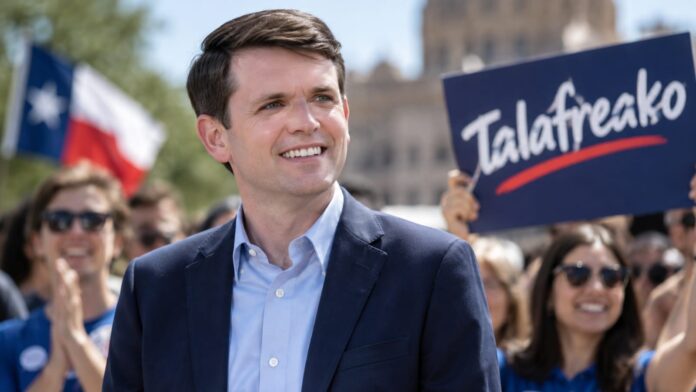
Democratic Senate candidate James Talarico returned to active campaigning on Friday after an extended absence from the campaign trail due to influenza. According to his campaign spokesman, Talarico appeared at the Austin City Limits festival on the grounds of the event, marking his return to direct voter engagement after several weeks of limited activity. Social media documentation confirmed his presence at the venue during the day.
The candidate’s illness had forced him to transition to virtual appearances beginning September 30, when he appeared remotely at a scheduled forum rather than attending in person. During his subsequent virtual appearance before the Hispanic Business Council, Talarico was visibly symptomatic, coughing and experiencing other signs of illness. He disclosed at that time that he had visited urgent care in Dallas and received a diagnosis of influenza, noting that he was running a fever and posed a transmission risk to others.
- Talarico’s last in-person campaign event occurred on September 26 before traveling to New York on September 29 for a private fundraising activity
- He disclosed his illness on September 30 when forced to appear virtually at a scheduled forum
- Campaign spokesman JT Ennis confirmed the candidate’s return to the trail at Austin City Limits on Friday
- The candidate visited urgent care in Dallas where medical professionals diagnosed him with influenza
Why It Matters
Talarico’s extended absence from campaigning during the final weeks of the Senate race raised concerns within Democratic circles about lost momentum during a critical election period. The timing of the illness, occurring during peak campaign season when voter contact and public appearances carry significant weight in electoral outcomes, created strategic disadvantages for the candidate’s campaign operation. His virtual-only status for an extended period limited his ability to engage directly with Texas voters and maintain the high-visibility presence typically necessary in competitive statewide races.
The prolonged nature of the absence also provided opening for opposition research and public criticism. Talarico’s opponents seized on his disappearance from public view to question his fitness and availability, transforming a health issue into a campaign narrative. This dynamic highlighted how any candidate absence, regardless of cause, can become weaponized in competitive political environments, particularly during late-stage campaigning when stakes are highest and media attention intensifies.
- Democrats expressed frustration about the timing of the illness during crucial final weeks before the election
- Talarico’s limited public presence allowed opposition to frame his absence as a campaign liability
- The health emergency disrupted the candidate’s direct voter contact strategy during peak campaign season
- Loss of momentum during the final weeks could impact vote totals and campaign effectiveness
Political and Public Context
The competitive Texas Senate race has drawn significant attention from national political figures and organizations on both sides of the partisan divide. Texas Attorney General Ken Paxton, representing the opposition campaign, used Talarico’s absence as an opportunity to raise questions about the candidate’s presence and availability. Paxton’s campaign requested evidence of the candidate’s existence, asking for photographic proof alongside a current newspaper to confirm Talarico remained in the state and active during his illness period.
Republican figures beyond the primary opponent also engaged with the narrative around Talarico’s absence. National Republican leaders utilized social media platforms to amplify the story, with commentary designed to reinforce messaging about the candidate being unavailable to voters. This multi-level engagement by Republican figures demonstrated how opposition campaigns coordinate messaging around candidate vulnerabilities, even those arising from health situations beyond the candidate’s control.
Democratic operatives involved in the Talarico campaign privately acknowledged the complications created by the extended absence, indicating concern about momentum loss and the inability to execute planned campaign activities during a time-sensitive period in the electoral cycle.
- Texas Attorney General Ken Paxton’s campaign responded to the absence with specific requests for proof of the candidate’s whereabouts
- National Republican figures amplified commentary about the candidate’s absence through social media platforms
- Democratic insiders expressed concern about campaign momentum and activity disruption during critical final weeks
- The incident demonstrated how health emergencies can become political narratives in competitive races
Democratic Senate nominee James Talarico mocked MAGA conspiracy theorists when he attended a popular music festival after almost two weeks off the campaign trail due to the flu.
https://t.co/TbNgj50pTq— The Daily Beast (@thedailybeast) October 10, 2026
What Happens Next
Talarico’s return to active campaigning marks the beginning of an intensive final push to connect with voters before the general election. The candidate will likely increase his public appearance schedule substantially to compensate for the lost time during his illness, attempting to rebuild momentum and voter contact that were disrupted during his absence. Campaign strategists will need to balance the candidate’s recovered health status with appropriate pacing to prevent relapse and further interruption to campaign activities.
The opposition is expected to continue referencing the absence period as a campaign issue, potentially incorporating the incident into broader messaging about candidate reliability and fitness for office. Talarico’s campaign will need to manage the narrative carefully, demonstrating sufficient recovery while avoiding situations that could result in renewed health complications that would trigger additional campaign disruptions. The remaining weeks before the election will likely see intensified activity from both campaigns as each side maximizes resources during the final phase of the race.
- Talarico is expected to significantly increase public appearances and voter contact activities to compensate for lost campaign time
- Opposition campaigns will likely continue referencing the absence in political messaging and communications
- Campaign strategists must balance intensive activity with health considerations to prevent additional disruptions
- Final weeks before election day will see accelerated campaign operations from both sides