Story Highlights
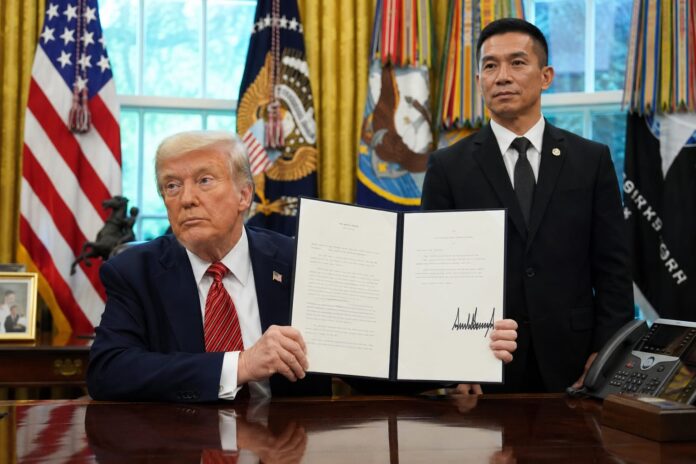
- President Trump nominates Hung Cao, a combat veteran, as the permanent Navy Secretary.
- Cao has been serving as acting Navy Secretary since April, following the unexpected departure of John Phelan.
- Concerns have arisen regarding the well-being of sailors amid the ongoing Iran war.
- Cao’s nomination reflects a commitment to military experience and leadership in the Navy.
What Happened
On Tuesday, President Trump announced his nomination of Hung Cao for the permanent position of Navy Secretary, a move that underscores the administration’s focus on military experience and leadership during a challenging time for the Navy. Cao, who has been serving as the acting Navy Secretary since the abrupt departure of John Phelan in late April, brings a wealth of experience to the role, having dedicated 25 years to the Navy as a special operations officer. His extensive background includes service with SEAL teams and special forces in Iraq and Afghanistan, making him a fitting candidate to lead the Navy during a period marked by heightened operational demands.
In his announcement, Trump expressed his confidence in Cao, stating, ‘I am pleased to nominate a true WARRIOR,’ and urged the Senate to confirm him as soon as possible. This nomination comes at a time when the Navy is facing scrutiny over the well-being of its sailors, particularly those deployed on the USS Abraham Lincoln, which has been on an extended mission in support of the Iran war. Reports have surfaced indicating that sailors are experiencing mental health challenges and shortages of essential supplies, raising concerns about the sustainability of such deployments.
- Trump nominated Hung Cao on September 1, 2026.
- Cao has been acting Navy Secretary since April 2026.
- The USS Abraham Lincoln has been deployed for nine months amid the Iran conflict.
- Democratic lawmakers are calling for accountability regarding sailors’ conditions.
Why It Matters
The nomination of Hung Cao as Navy Secretary is significant for several reasons. First and foremost, it highlights the Trump administration’s commitment to appointing leaders with military experience, particularly in a time of conflict. Cao’s background as a combat veteran positions him uniquely to understand the challenges faced by sailors and to advocate for their needs. His leadership is expected to prioritize the well-being of service members, especially as the Navy navigates the complexities of ongoing military operations.
Moreover, this nomination comes amid growing concerns from both lawmakers and the public regarding the mental health and overall welfare of sailors deployed in high-stress environments. The USS Abraham Lincoln’s prolonged deployment has raised alarms about the potential for burnout and the need for adequate support systems for the crew. By appointing a leader like Cao, who has firsthand experience in combat and understands the rigors of military life, the administration aims to address these concerns head-on.
- Cao’s leadership may lead to improved conditions for sailors deployed in challenging environments.
- The nomination reflects a broader strategy to prioritize military experience in leadership roles.
- Concerns about sailors’ mental health may prompt policy changes within the Navy.
- Democratic lawmakers’ scrutiny could influence future military policies and oversight.
Political and Public Context
To fully appreciate the implications of Cao’s nomination, it is essential to consider the broader context of military leadership and the challenges facing the Navy. The recent resignation of Army Secretary Dan Driscoll amid reported tensions with Defense Secretary Pete Hegseth highlights the instability within the upper echelons of military leadership. Such upheaval can create uncertainty and hinder effective decision-making during critical operations.
Additionally, the Biden administration’s policies, particularly regarding vaccine mandates for service members, have sparked controversy and dissent within the ranks. Cao’s previous advocacy for service members who refused the COVID-19 vaccine reflects a commitment to supporting the rights and choices of military personnel. This stance resonates with many in the armed forces who feel that their autonomy has been compromised by federal mandates.
- The resignation of Army Secretary Dan Driscoll underscores instability in military leadership.
- Cao’s advocacy for service members’ rights contrasts with Biden-era mandates.
- Concerns about sailors’ welfare have prompted discussions about military policy reform.
- The ongoing Iran conflict continues to shape Navy operations and personnel management.
President Trump said he’s nominating Navy veteran Hung Cao to become the service’s top civilian leader, a job that has been vacant since John Phelan was pushed out in the spring https://t.co/lPWNQfA9As
— The Wall Street Journal (@WSJ) September 2, 2026
What Happens Next
Looking ahead, the confirmation process for Hung Cao will be closely watched by both supporters and critics. The Senate’s decision will not only determine the future leadership of the Navy but also signal the administration’s commitment to addressing the pressing issues facing service members. If confirmed, Cao will likely prioritize initiatives aimed at improving the mental health and overall well-being of sailors, particularly those deployed in high-stress environments.
Moreover, the nomination may prompt further discussions about the Navy’s operational tempo and the sustainability of extended deployments. As lawmakers continue to scrutinize the conditions aboard ships like the USS Abraham Lincoln, Cao’s leadership will be pivotal in advocating for necessary changes and ensuring that sailors receive the support they need.
- The Senate will conduct hearings to confirm Cao’s nomination.
- Cao may implement policies to improve sailors’ mental health and welfare.
- Discussions about deployment sustainability will likely intensify.
- Lawmakers will continue to monitor the Navy’s response to concerns raised by sailors and their families.