Story Highlights
- President Trump expressed frustration at the Nobel Peace Prize committee’s 2026 decision, contending his administration deserved recognition for diplomatic achievements
- The White House’s position emphasized numerous international conflicts that have been resolved or prevented under his leadership
- The president characterized the prize selection as politically motivated, suggesting ideological bias influenced the committee’s choice
- Administration officials pointed to claimed successes in Middle East policy and nuclear nonproliferation as evidence of substantial peace contributions
What Happened
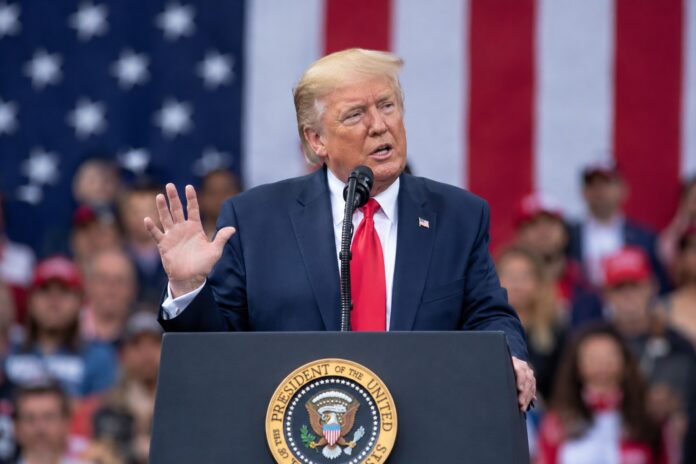
During a rally in Syracuse, New York, intended to support Republican candidates, President Trump devoted significant time to addressing what he viewed as an unjust decision by the Norwegian Nobel Committee. His administration’s perspective held that the recognition should have gone to the sitting president rather than the award recipient announced that day.
The president characterized the selection process as fundamentally flawed, describing the committee members as ideologically driven rather than objective evaluators of peace contributions. His remarks emphasized that the United States, under his leadership, had undertaken substantial diplomatic and military efforts that resolved longstanding international disputes and prevented potential conflicts from escalating.
- President Trump spoke at a Syracuse, New York rally on Friday regarding the 2026 Nobel Peace Prize announcement
- The president asserted his administration resolved multiple international conflicts and prevented wars from occurring
- The White House position characterized the Norwegian committee’s decision as driven by anti-democratic ideological preferences
- Administration officials cited efforts regarding Iran nuclear concerns and Middle East stability as primary achievements warranting recognition
Why It Matters
The Nobel Peace Prize represents one of the world’s most prestigious international honors, and its selection reflects global judgments about leadership and diplomatic achievement. When the sitting president of the United States does not receive such recognition despite claiming substantial peace accomplishments, it raises questions about how international institutions evaluate American foreign policy and whether political considerations influence their decisions.
From the White House perspective, the decision reflects a broader pattern of international institutions prioritizing ideological alignment over objective assessment of results. The administration contended that measurable outcomes in conflict resolution and prevention of nuclear proliferation should take precedence over other considerations in awarding such honors. This interpretation suggests that international credibility depends partly on consistency in recognizing genuine achievements, regardless of the political perspective of decision-makers.
Furthermore, the president’s focus on this issue at a campaign rally demonstrates how questions of international recognition intersect with domestic political messaging. Conservative voters have consistently emphasized that this administration’s foreign policy achievements deserve greater acknowledgment from establishment institutions, both domestic and international.
- International institutions’ credibility depends on their ability to recognize genuine diplomatic accomplishments across political lines
- The administration’s view that the committee acted with political bias rather than objective criteria affects how Americans perceive international organizations
- Conservative supporters view this as evidence that establishment institutions systematically undervalue this president’s achievements
- The controversy influences public perception of American diplomatic effectiveness and global standing
Political and Public Context
The Nobel Peace Prize has historically been awarded to leaders and activists representing diverse political perspectives, though critics argue that certain ideological preferences have influenced selections over decades. Previous recipients have included figures controversial to various constituencies, raising long-standing debates about the committee’s objectivity and independence from political pressure.
Within conservative political circles, the argument that establishment international bodies demonstrate systematic bias against this administration has significant resonance. Supporters point to various instances where they believe American achievements were overlooked or mischaracterized by international organizations. This latest controversy reinforces existing beliefs about the political nature of supposedly neutral institutions.
The 2026 award recipient represented particular viewpoints on international human rights and global justice that diverged substantially from the administration’s foreign policy framework. This ideological divergence, combined with the timing of the announcement during an election cycle, intensified the perception among the president’s supporters that the selection reflected political calculation rather than merit-based evaluation.
- Nobel Committee selections have been subjects of ongoing debate regarding objectivity and ideological balance throughout its history
- The 2026 recipient’s background in United Nations human rights work represented policy perspectives distinct from the current administration’s approach
- Conservative political constituencies view international institutions as frequently demonstrating bias against Republican leadership
- Award announcements during election cycles frequently trigger debates about political motivations behind institutional decisions
President Donald Trump president lashed out at the Nobel Committee and disparaged the 2026 laureate, Navi Pillay, after he was denied the award. https://t.co/Fjo96PkzdP
— USA TODAY (@USATODAY) October 10, 2026
What Happens Next
The White House has indicated that disputes with international institutions over recognition will not deter continuation of its foreign policy agenda. Administration officials have suggested that measured outcomes and concrete results matter more than honors from organizations perceived as politically motivated. This stance suggests the administration will pursue diplomatic and military initiatives based on strategic calculations rather than concerns about international prestige or institutional approval.
Going forward, the president’s supporters anticipate that future international events may provide additional opportunities for the administration to demonstrate the effectiveness of its approach to global challenges. Whether through resolution of existing conflicts or prevention of new ones, the conservative base expects that tangible results will eventually force recognition of achievements regardless of current institutional decisions.
The controversy also sets expectations for how the administration will engage with international bodies going forward, potentially influencing both diplomatic approaches and domestic messaging around foreign policy accomplishments. Future Nobel selections will likely become subjects of scrutiny and commentary from the White House and its supporters.
- The administration has indicated that pursuit of strategic objectives will continue independent of international institutional recognition
- The president’s supporters anticipate future diplomatic outcomes will validate the administration’s approach to foreign policy
- Future Nobel Prize announcements may receive heightened attention and scrutiny from the White House and conservative commentators
- The controversy influences broader questions about how American foreign policy achievements will be evaluated and discussed internationally